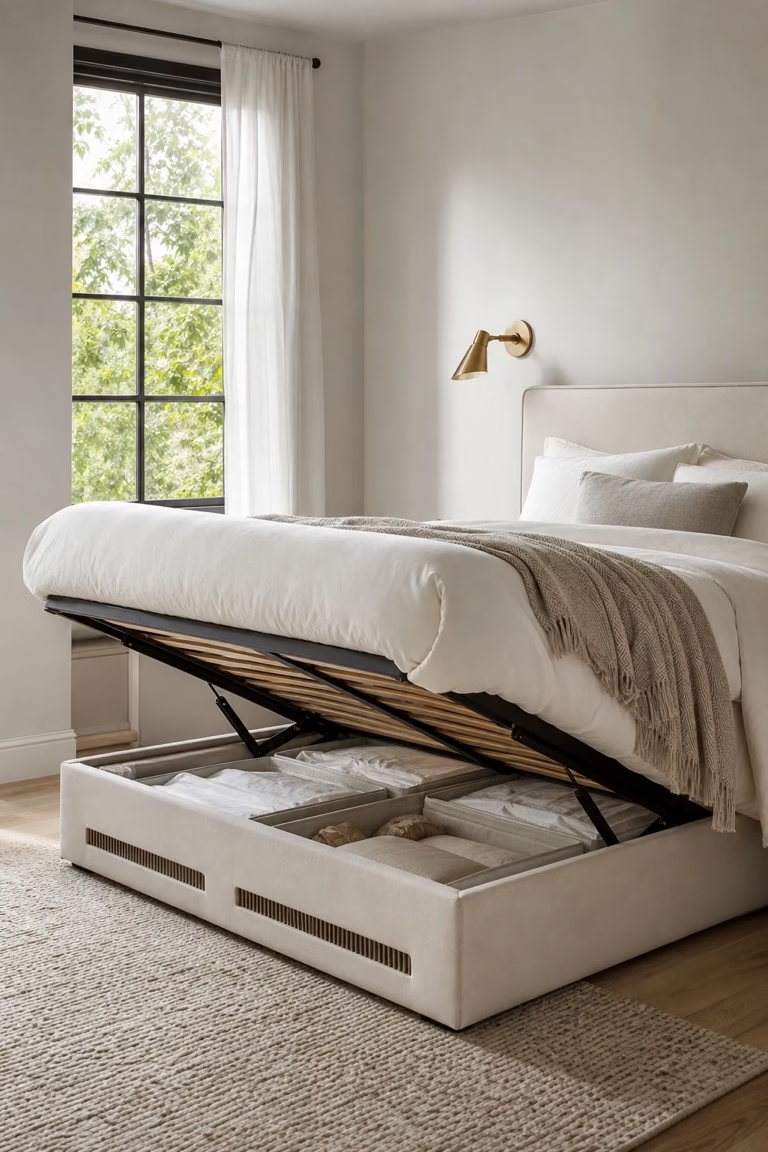
A good storage bed can replace bulky furniture, organize hidden textiles, and make a bedroom easier to reset without sacrificing comfort or style.
- Choose Deep Drawers for Everyday Linens
- Use a Lift-Up Base for Bulky Seasonal Pieces
- Pick Side Drawers When the Room Has Walking Space
- Try Footboard Storage in a Narrow Layout
- Keep a Bookcase Headboard Shallow and Tidy
- Choose Upholstery for a Softer Guest Room
- Use Wood Frames to Warm a Minimal Bedroom
- Label Hidden Compartments for Shared Bedrooms
- Pair the Bed With Wall Storage Instead of More Furniture
- Reserve One Drawer for Fast Reset Items
- Check Ventilation Before Storing Textiles
Choose Deep Drawers for Everyday Linens
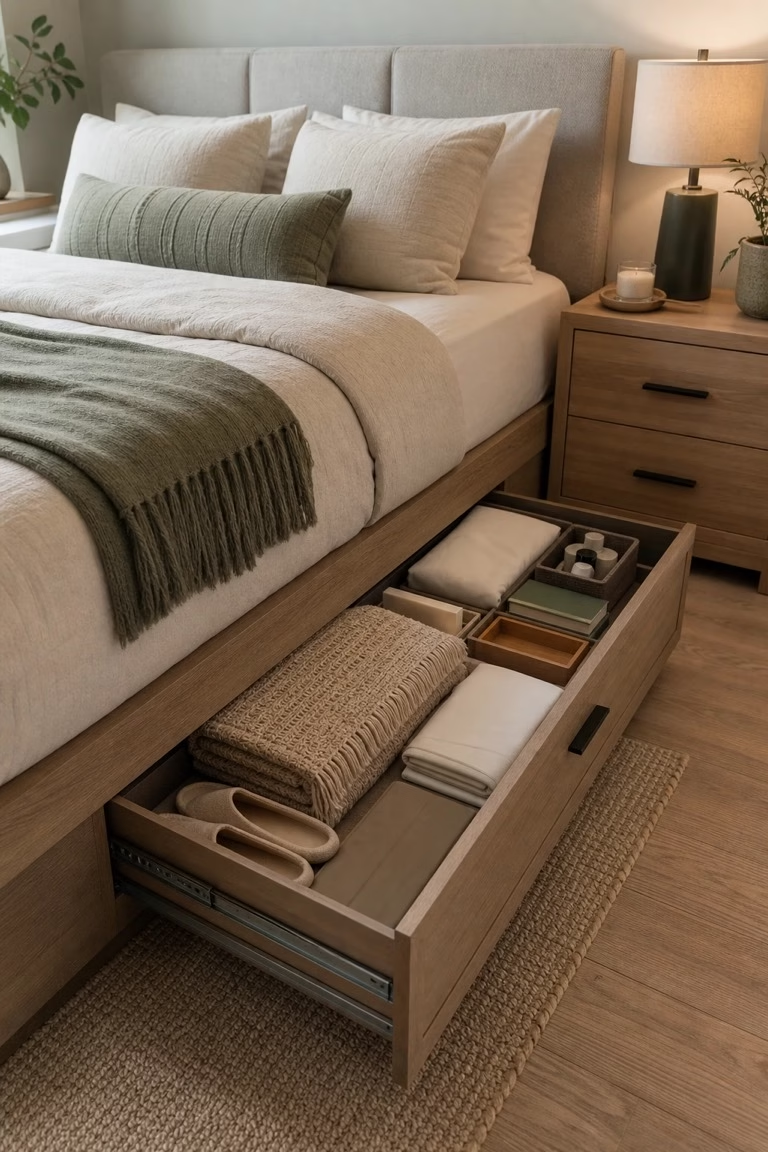
Deep under-bed drawers work best when they store the things you reach for every week, not forgotten overflow. Use them for extra sheets, pillowcases, quilts, and off-season blanket layers that need to stay clean but close. Look for drawers mounted on smooth runners with recessed pulls so bedding does not snag when you walk past. In a small bedroom, leave at least enough side clearance to open the drawer fully; otherwise the storage will become frustrating. A platform bed with two broad drawers often feels calmer than a base crowded with many small compartments. Add slim fabric bins inside the drawer so linens stay stacked instead of sliding into a compressed pile.
Use a Lift-Up Base for Bulky Seasonal Pieces
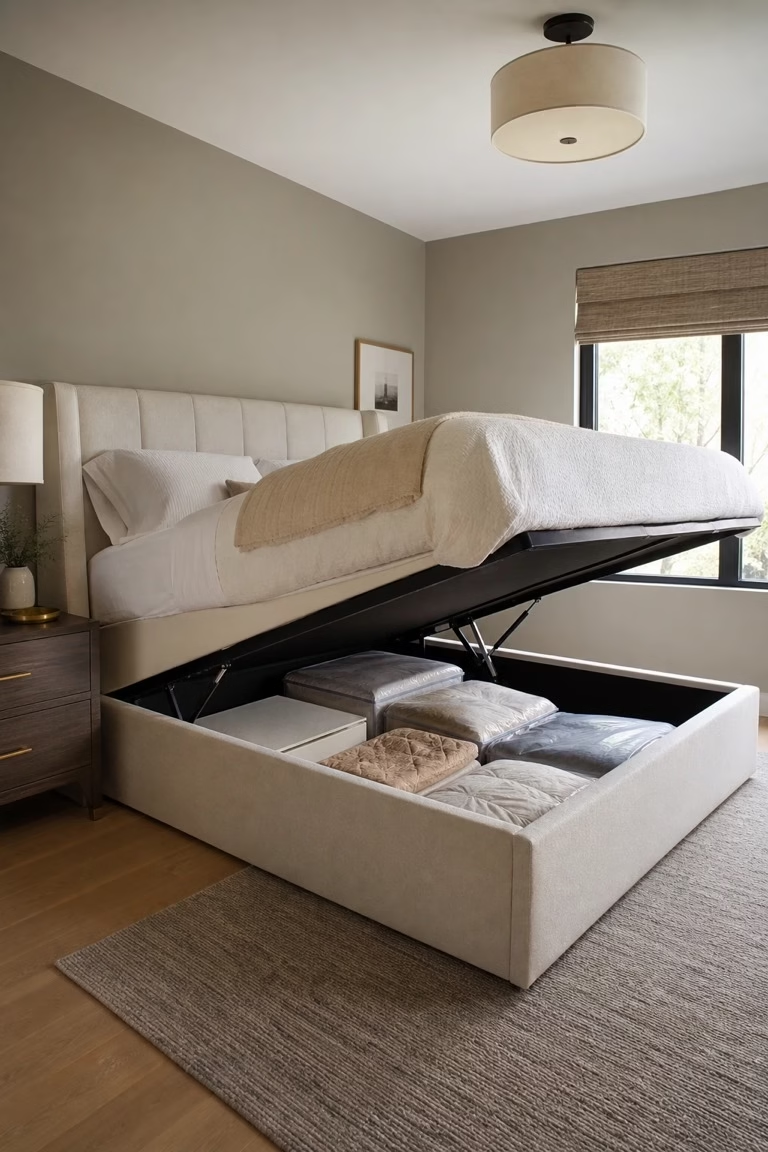
A lift-up storage bed is ideal for items that are too bulky for drawers, such as winter duvets, guest pillows, spare mattress pads, and vacuum bags. The best versions use sturdy gas lifts so the mattress rises smoothly and stays open while you organize. This style is especially useful when side drawers would hit a wall, nightstand, or wardrobe. Keep the interior divided with soft boxes so the entire base does not become one giant mixed bin. Because lift storage is less convenient than a drawer, reserve it for things you do not need daily. It gives a compact room real capacity without adding another visible cabinet.
Pick Side Drawers When the Room Has Walking Space
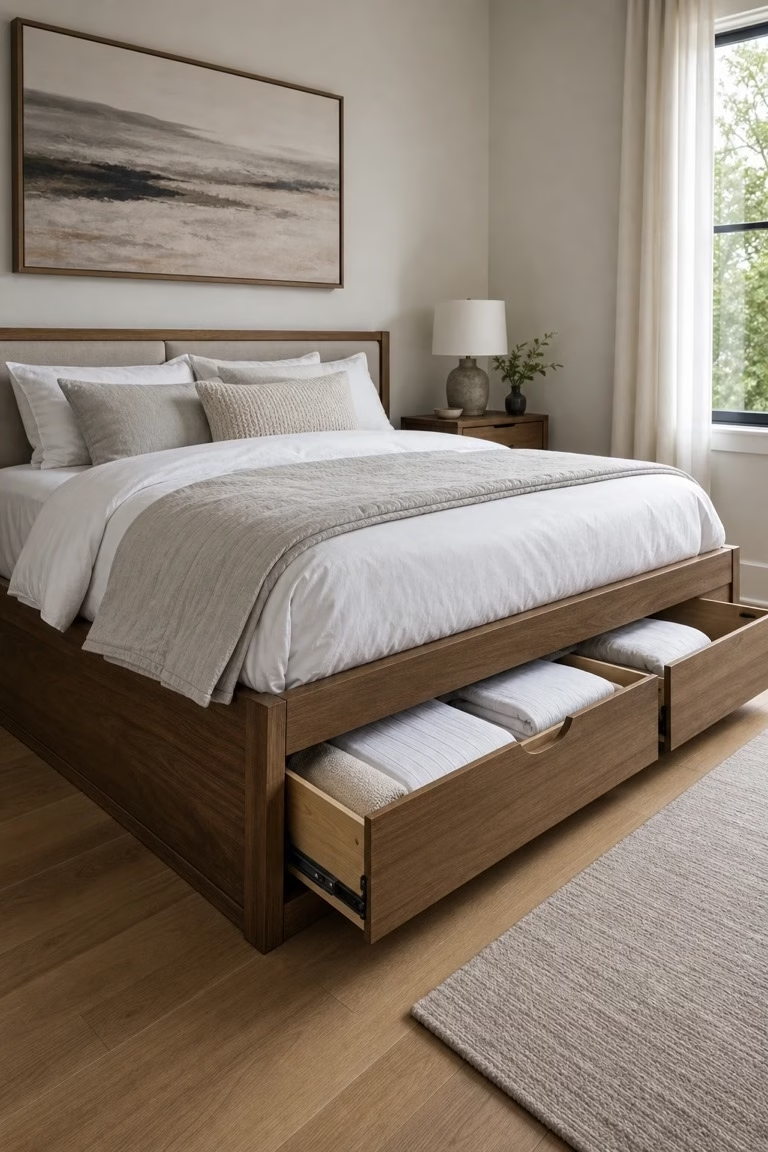
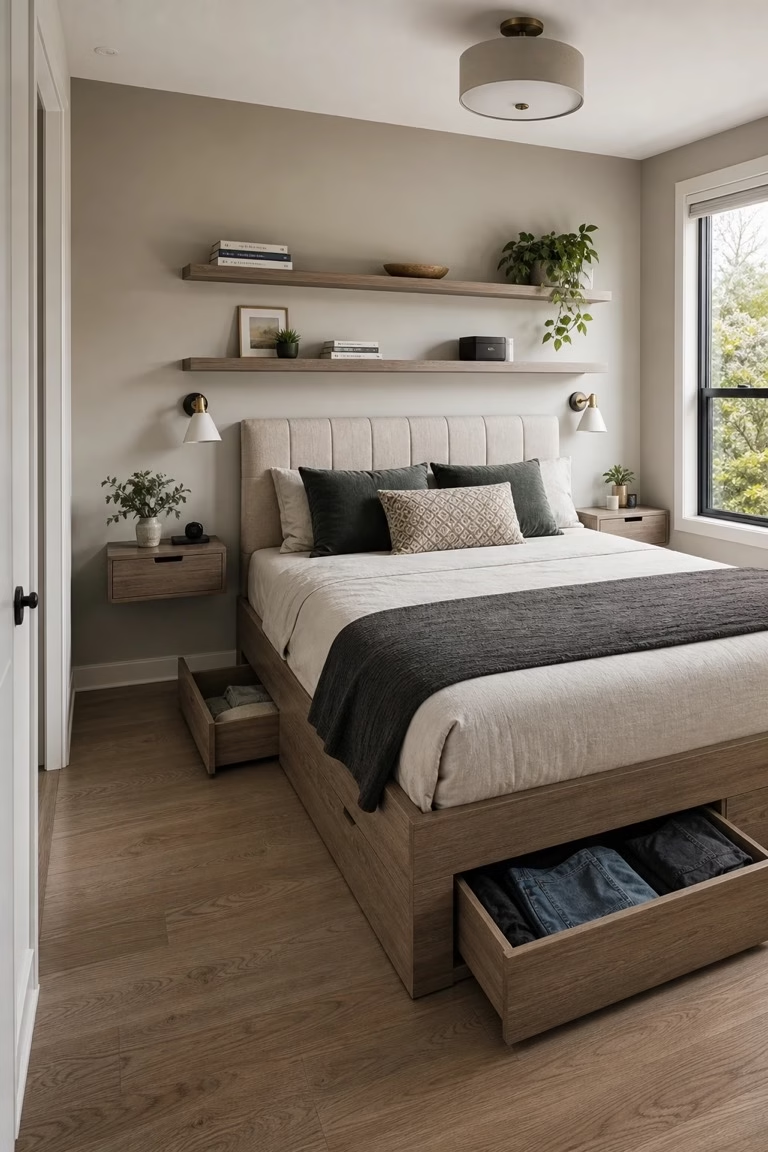
Side drawers are the most intuitive storage-bed layout when both sides of the bed have a comfortable walkway. They let each sleeper keep personal items close without filling the room with extra dressers. Before buying, measure the open drawer depth, not only the bed frame. A nightstand, radiator, closet door, or rug edge can make a good bed impractical if the drawer cannot clear it. For a polished look, match the drawer fronts to the frame and choose hardware that sits flush. Use the drawers for pajamas, throws, workout clothes, or extra towels. The storage should support the room's daily rhythm rather than hide random clutter.

Try Footboard Storage in a Narrow Layout
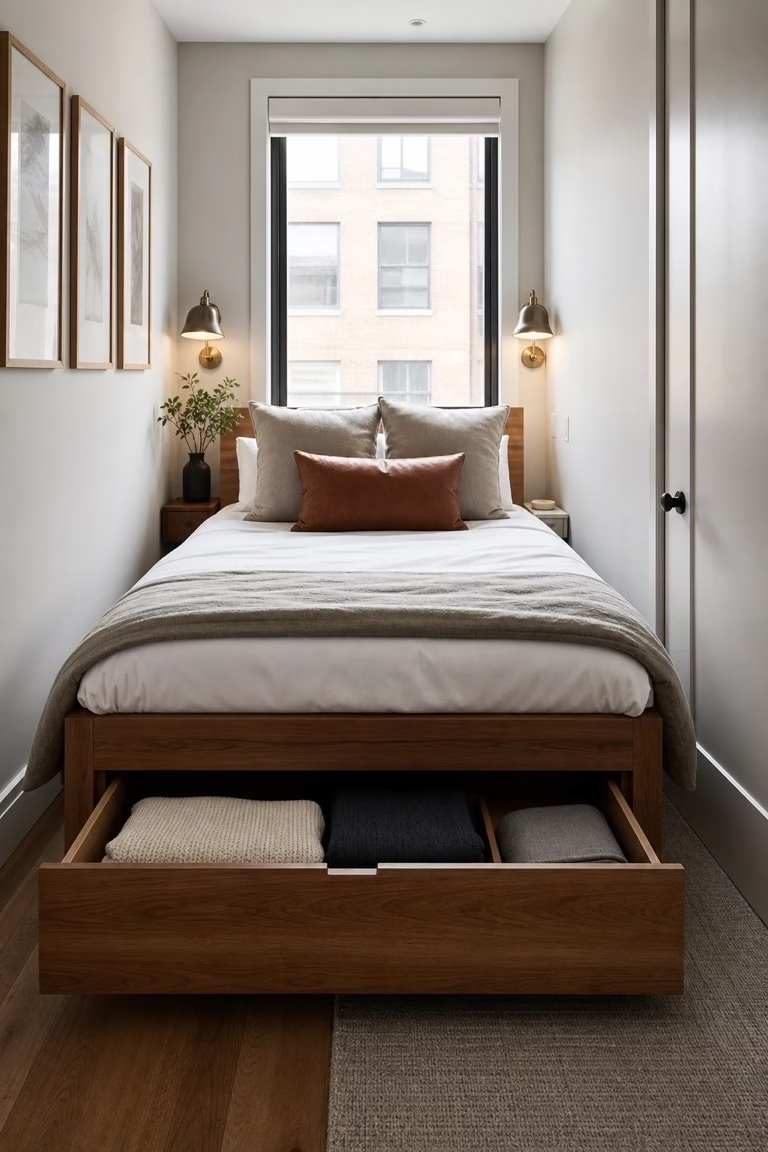
In a narrow bedroom, side drawers may be impossible, but footboard storage can still add useful capacity. A drawer or hinged compartment at the foot of the bed is excellent for spare blankets, shoes, bags, or exercise gear. This layout works best when the bed faces a clear wall or window and the foot traffic path remains open. Avoid tall footboards in very small rooms because they can visually shorten the space. A low drawer front, matching wood grain, and quiet hardware keep the detail integrated. Measure the distance to the opposite wall carefully. You need enough room to stand, pull the drawer, and see what is inside.
Keep a Bookcase Headboard Shallow and Tidy
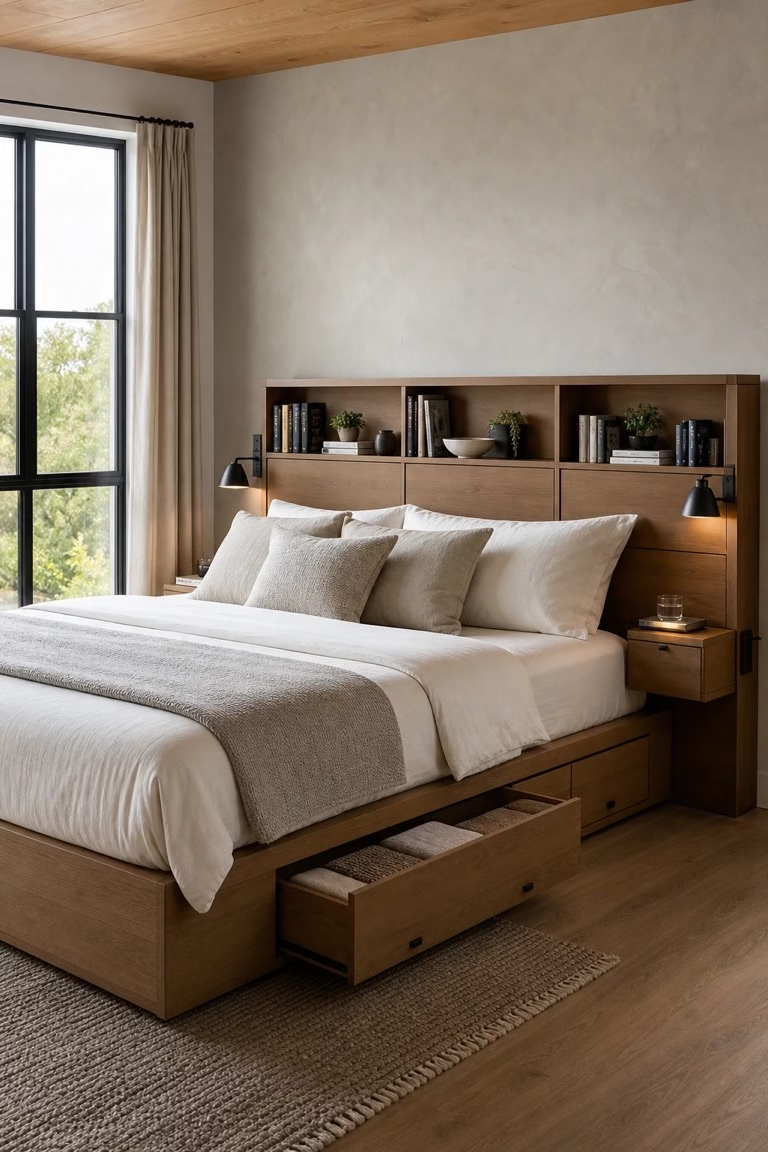
A bookcase headboard can replace a nightstand, but it needs restraint to feel designed. Choose a shallow headboard with closed lower cubbies, a ledge for a book and glasses, and discreet charging access. Open shelves should hold only a few attractive essentials because everything sits close to your face when you sleep. If the bed already has drawers, the headboard can handle smaller personal items while the base stores bulkier pieces. Built-in reading lights make the arrangement feel intentional and reduce cord clutter. Keep the headboard height proportional to the room; oversized storage around the pillow can feel heavy in a standard bedroom.
Choose Upholstery for a Softer Guest Room
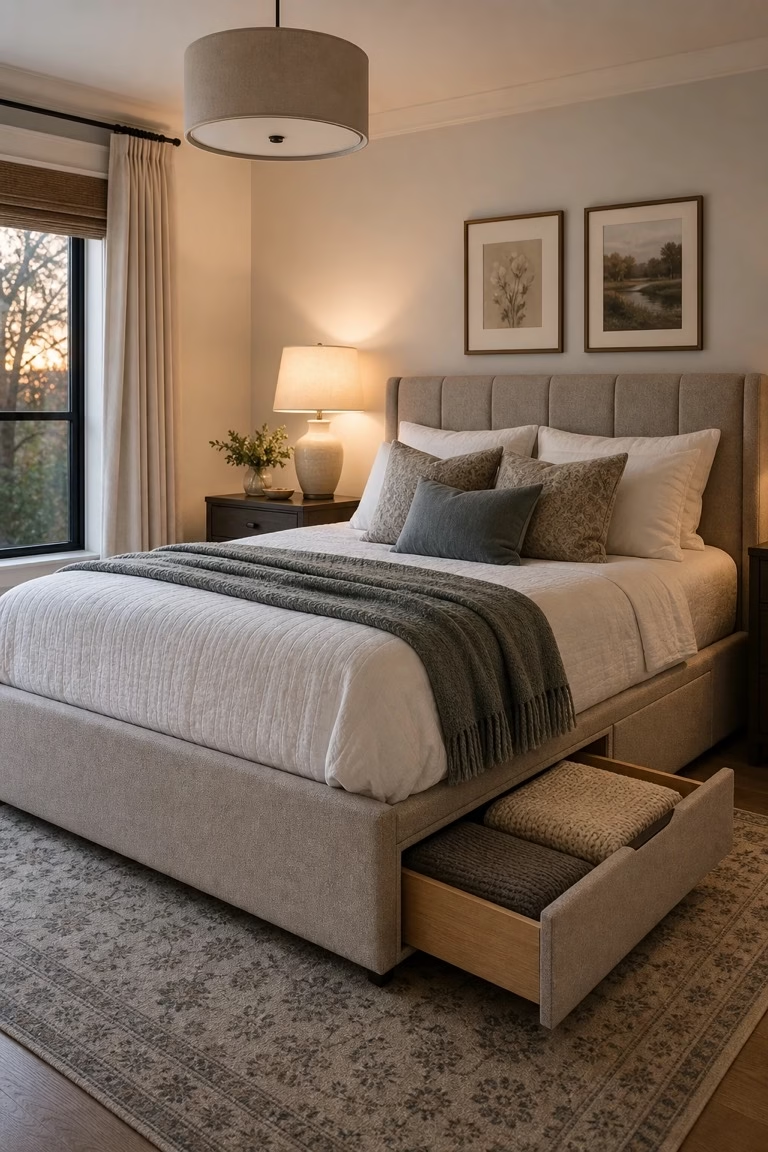
Upholstered storage beds make guest rooms feel finished while quietly holding extra bedding. Linen, performance velvet, boucle, and woven textures can soften a room that has hard floors or plain walls. The storage mechanism should still matter more than the fabric; test whether drawers glide cleanly or the lift base opens without strain. In a guest room, use the hidden space for pillows, mattress protectors, and folded throws so visitors can find what they need without searching a closet. Pick a neutral fabric with a slight weave to disguise wear. A tailored upholstered frame gives the room comfort without adding a bulky bench or chest.
Use Wood Frames to Warm a Minimal Bedroom
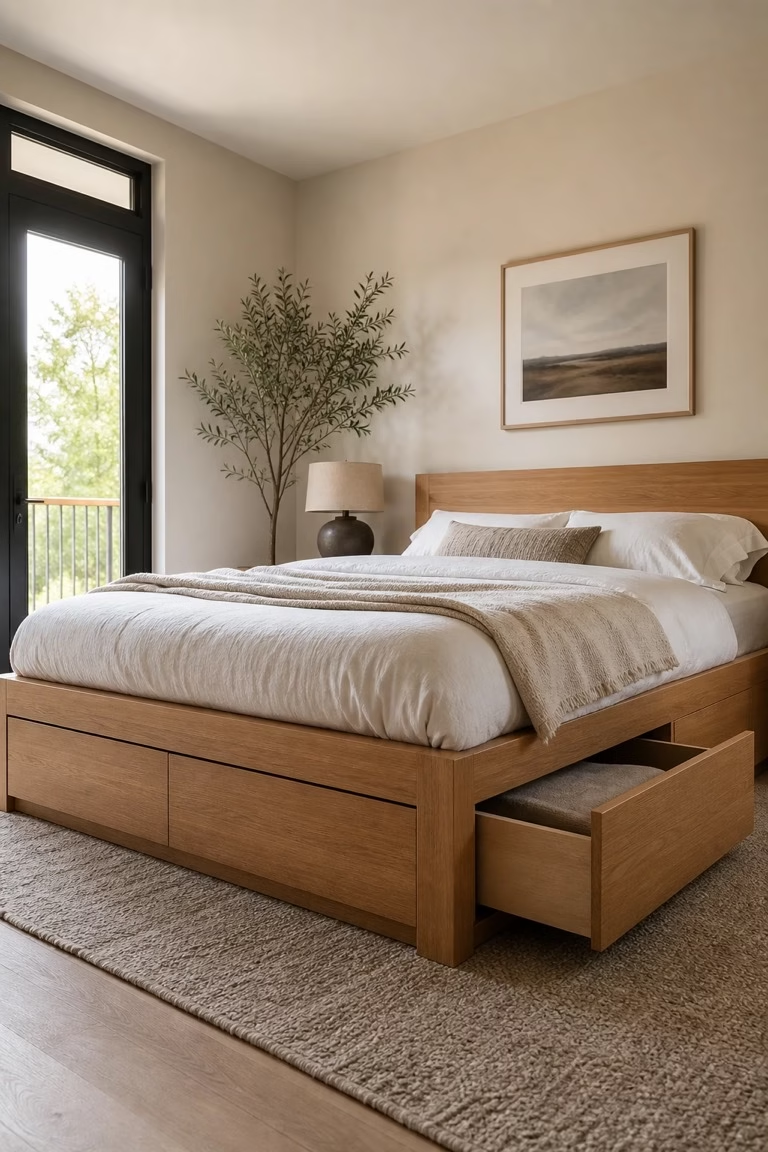
A storage bed can look utilitarian if the materials are too flat. Warm wood solves that by making the base feel like furniture rather than a hidden box. Oak, walnut, ash, and teak-style finishes work especially well with simple bedding and matte walls. Look for continuous grain across drawer fronts, mitered corners, and a recessed plinth that keeps the base from looking heavy. Wood storage beds are practical in bedrooms where every visible piece must earn its place. Pair them with quiet nightstands and one textured rug so the room stays uncluttered. The warmth comes from proportion and material, not from extra accessories.
Label Hidden Compartments for Shared Bedrooms
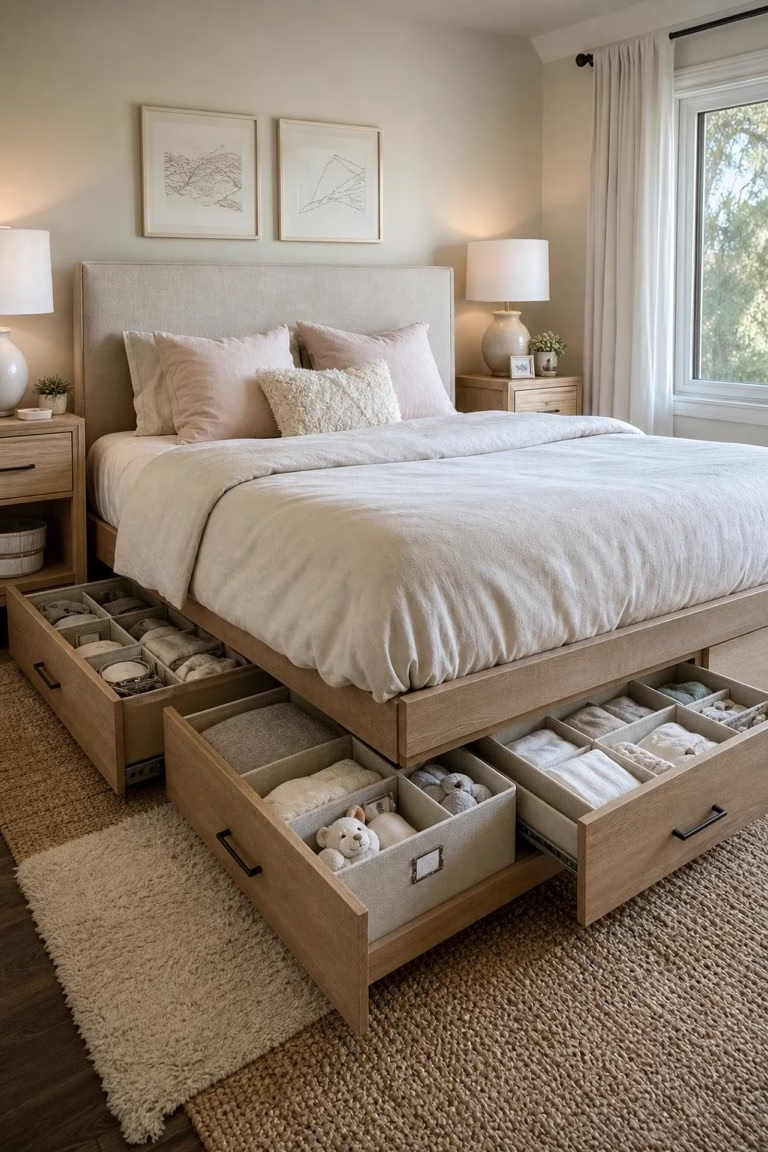
Shared bedrooms become easier to maintain when storage zones are obvious. If two children, roommates, or partners use the same room, divide the storage bed by person or purpose. Small clip labels, fabric bins, or colored zipper pouches can keep drawers from turning into mixed territory. The labels do not need to be visible from across the room; they just need to make putting things away automatic. Store daily items in the most accessible drawer and rarely used pieces toward the back or under a lift base. Clear ownership reduces friction and keeps the bed from becoming a hidden dumping ground. Organization works when the system is visible to the people using it.
Pair the Bed With Wall Storage Instead of More Furniture
The biggest advantage of a storage bed is that it can reduce the number of freestanding pieces in the room. Instead of adding a second dresser, pair the bed with wall-mounted shelves, a slim wardrobe, or a floating nightstand. This keeps floor area open and makes cleaning easier. The room will feel larger when the storage is distributed vertically and under the mattress rather than piled around the perimeter. Keep the visual weight balanced: if the bed base is solid, choose lighter wall pieces with open space beneath them. A storage bed should make the bedroom breathe, not invite more furniture because there is a little extra room.
Reserve One Drawer for Fast Reset Items
A storage bed is most useful when one compartment is kept deliberately flexible. Reserve a drawer for quick-reset items such as a lint roller, spare pillowcases, bedtime books, slippers, a folded throw, or a small tray for electronics. This prevents everyday clutter from spreading across the nightstand and floor. The drawer should be easy to open from your usual side of the bed and should not require moving baskets or shoes first. Use a shallow organizer inside so small items do not disappear. Treat this drawer like a command center for the bedroom. It makes the room easier to tidy in five minutes without hiding mess in random places.
Check Ventilation Before Storing Textiles
Hidden storage needs airflow, especially when it holds textiles. Avoid packing damp towels, shoes, or freshly laundered bedding into a sealed bed base before everything is fully dry. Choose breathable bags, cedar blocks, or fabric bins instead of trapping every item in plastic. If the bed sits on a cold exterior wall or a slab floor, check occasionally for condensation and dust. A slatted or ventilated base is better for long-term storage than a completely sealed box. This practical step protects both the mattress and the items underneath. An organized bedroom should feel fresh when you open the drawer, not stale or musty.