
When you think about transforming your dining table, you might overlook the impact of thoughtful decor and centerpieces. From fresh floral arrangements to elegant candle displays, each choice can greatly enhance your dining atmosphere. Have you considered incorporating seasonal elements or even interactive features that engage your guests? These details not only elevate the setting but also create memorable dining experiences. So, what are some specific ideas that can truly make your table stand out?
Fresh Floral Arrangements

When it comes to fresh floral arrangements, nothing elevates your dining table quite like a vibrant bouquet. Choose seasonal blooms that complement your dining room's color scheme. For a casual look, go for a wildflower mix; for something more refined, select classic roses or elegant orchids. Don't forget about the greenery—filling your arrangement with lush leaves adds depth and texture.
Keep the size in mind; you want your flowers to enhance your table without obstructing conversation. Use a stylish vase that suits your decor style, whether it's modern, rustic, or traditional. Change out your flowers regularly to keep things fresh and lively. With the right arrangement, you'll create a warm and inviting atmosphere for every meal.
Elegant Candle Centerpieces

While fresh flowers bring vibrancy, elegant candle centerpieces add a touch of warmth and sophistication to your dining table. You can create a stunning display by using various heights and styles of candles. Contemplate mixing pillar candles with tapered ones, placing them on sleek candle holders for a modern look. For a cozy ambiance, opt for soft, warm-hued candles that emit a gentle glow. You might also incorporate decorative elements like glass beads or natural greenery around the base to enhance the visual appeal. Don't forget to reflect on the scent—choose lightly fragrant candles to avoid overpowering your meal. With thoughtful arrangement and selection, your elegant candle centerpiece will elevate any dining experience.
Seasonal Fruit Displays

After enjoying the warmth and ambiance of candlelight, consider adding a burst of color and freshness with seasonal fruit displays. Fresh fruit not only enhances the visual appeal of your dining table but also invites guests to indulge in healthy snacking. Choose a variety of fruits that reflect the season—think vibrant berries in summer, rich oranges in autumn, or festive pomegranates in winter.
Arrange the fruits in a decorative bowl or create an eye-catching centerpiece by stacking them in varying heights. You can even complement the display with greenery for added texture. Don't forget to use fruits that smell good, like citrus or apples, to engage multiple senses. This simple touch can transform an ordinary meal into a delightful experience.
Rustic Wooden Accents

Rustic wooden accents bring a charming, earthy feel to your dining table decor, instantly creating a warm and inviting atmosphere. You can easily incorporate these elements to enhance your table's aesthetic. Here are some ideas to get you started:
- Wooden Placemats: Use handcrafted wooden placemats for a unique touch that adds texture.
- Rustic Centerpieces: Opt for a wooden tray or a slab as a base for your centerpiece, displaying candles or seasonal decor.
- Wooden Utensil Holders: Choose a rustic utensil holder to keep your silverware organized while adding character.
- Natural Wood Coasters: Incorporate coasters made from tree slices to protect your table while maintaining the rustic theme.
These accents will surely elevate your dining experience!
Stylish Table Runners

Wooden accents set a beautiful backdrop for your dining table, but adding a stylish table runner can elevate the look even further. Choose a runner that complements your wooden features, whether it's a bold color or a subtle pattern. You can play with textures, too—think linen for a relaxed vibe or silk for a touch of elegance.
Position the runner down the center of the table, and let it drape over the edges for added drama. If you're hosting a dinner party, consider layering different runners for a unique effect. Don't forget to match your runner with seasonal decor; floral prints work wonders in spring, while rich hues shine during fall. It's all about expressing your style!
Minimalist Geometric Designs
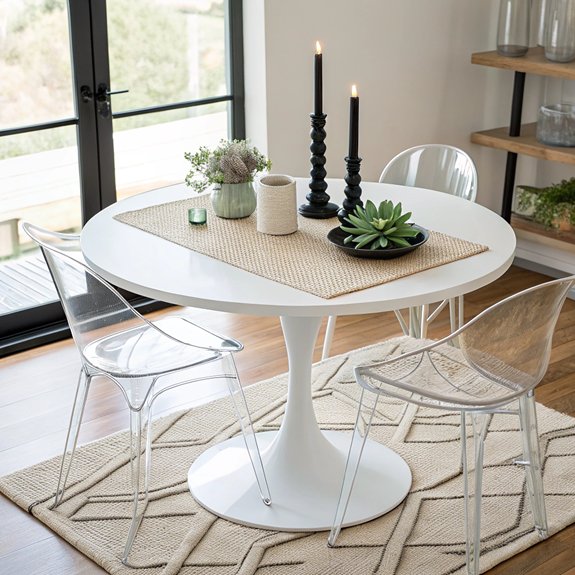
Embracing minimalist geometric designs can transform your dining table into a modern masterpiece. By focusing on clean lines and simple shapes, you can create an inviting yet sophisticated atmosphere. Here are some ideas to elevate your table decor:
- Geometric Candle Holders: Opt for sleek metal or ceramic pieces to add warmth with a modern touch.
- Angular Vases: Choose vases with sharp angles or asymmetrical shapes for a striking centerpiece.
- Simple Tableware: Use plates and bowls with geometric patterns or solid colors to maintain a cohesive look.
- Decorative Trays: Incorporate trays with geometric designs to organize condiments or serve appetizers stylishly.
These elements combine to create a balanced and visually appealing dining experience that's both functional and artistic.
Vintage Tableware Collections

When it comes to adding character and charm to your dining table, vintage tableware collections can make a significant impact. These unique pieces tell stories and evoke nostalgia, creating a warm, inviting atmosphere. You can mix and match different patterns and styles to showcase your personal taste. Look for colorful plates, delicate teacups, or ornate serving dishes that catch your eye. When setting your table, layer your vintage finds with modern elements for a balanced look. Don't forget to include unique serving utensils or decorative bowls that complement your collection. By incorporating vintage tableware, you're not just setting a table; you're creating a memorable dining experience that sparks conversation and delight among your guests.
Colorful Tablecloth Combinations

A vibrant tablecloth can instantly transform your dining experience, setting the tone for any occasion. By mixing colors and patterns, you can create a visually appealing setup that enhances your meal. Here are some colorful tablecloth combinations to take into account:
- Bright Yellow with Blue Accents: This combination brings warmth and energy, perfect for casual gatherings.
- Rich Red and Gold: Ideal for festive occasions, this pairing exudes elegance and celebration.
- Turquoise with Coral: A fresh look that's great for summer parties, it adds a fun, beachy vibe.
- Lavender and Mint Green: Soft and soothing, this combo works beautifully for brunches or intimate dinners.
Experimenting with these combinations will elevate your table setting, making every meal special.
Dramatic Centerpiece Vases

After setting the stage with colorful tablecloths, it's time to elevate your dining experience even further with dramatic centerpiece vases. Choose bold, oversized vases that draw attention and create a focal point on your table. Opt for unique shapes or materials, like glass, ceramic, or metal, to add texture and intrigue. Fill these vases with striking floral arrangements—think bright blooms or lush greenery. Alternatively, consider using seasonal elements like branches or fruit for a fresh twist. Don't shy away from mixing heights; varying the vase sizes adds visual interest. You can also incorporate candles or lights within the vases for a warm, inviting glow. With the right dramatic centerpiece, your table will not only impress but also inspire conversation.
Whimsical Place Settings

How can you transform an ordinary meal into a delightful experience? Whimsical place settings can add charm and personality to your dining table. Start by incorporating playful elements that spark joy and conversation. Here are four ideas to get you started:
- Mismatched Plates: Use a mix of colorful or patterned plates for a fun, eclectic vibe.
- Unique Napkin Holders: Choose quirky napkin rings, like miniature animal figures or vintage trinkets, to surprise your guests.
- Personalized Name Cards: Create custom name cards with a playful font or doodles to make each guest feel special.
- Themed Centerpieces: Incorporate small, themed decorations that tie into your dinner's theme, like tiny pumpkins for a fall gathering.
With these whimsical touches, every meal becomes a memorable occasion!
Layered Textures and Fabrics

Transforming your dining table into an inviting space can be as simple as layering textures and fabrics. Start with a tablecloth or runner that sets the tone; choose something soft and inviting, like linen or cotton. Next, add placemats to create visual interest and define each setting. Consider mixing different materials—like a woven placemat paired with a smooth dishware—for a dynamic look.
Don't forget about napkins! Cloth napkins in various colors or patterns can add depth. You can also drape a textured throw across a corner for a cozy touch. Finally, mix in decorative elements like candles or vases that complement your fabric choices. This careful layering invites warmth and style, making every meal feel special.
Nature-Inspired Decor

Bringing the outdoors inside can elevate your dining experience, creating a revitalizing atmosphere that encourages connection. Nature-inspired decor not only enhances the aesthetic but also brings a sense of calm. Here are four ideas to incorporate this theme into your dining table:
- Fresh Flowers: Use seasonal blooms in a simple vase for a vibrant touch.
- Greenery Accents: Add small potted plants or succulents to your table for a lively vibe.
- Natural Materials: Opt for wooden serving dishes or woven placemats to enhance the organic feel.
- Stone or Gravel: Incorporate stones or decorative gravel in your centerpiece for a rustic look.
With these elements, you'll create a beautiful and inviting dining space that feels connected to nature.
Artistic Centerpiece Sculptures

An artistic centerpiece sculpture can serve as the focal point of your dining table, instantly elevating the room's ambiance. Choose a piece that resonates with your style—whether it's modern, abstract, or classical. A well-crafted sculpture can spark conversation and draw your guests' attention. Consider materials like metal, wood, or glass to complement your existing decor.
Position the sculpture at the center, ensuring it's proportionate to the table size. If it's large, keep other decorations minimal to maintain balance. You can also switch sculptures seasonally to refresh your decor and keep things interesting. Remember, the right piece not only enhances your dining experience but also reflects your personality and taste, making every meal feel special.
Themed Dining Experiences

Creating memorable dining experiences goes beyond just the food; it's about setting the scene. A themed dining experience can transport your guests to another world, making the meal unforgettable. Here are some ideas to get you started:
- Italian Night: Use checkered tablecloths, candles, and serve classic dishes like pasta and tiramisu.
- Tropical Luau: Incorporate vibrant colors, leis, and fruity drinks to evoke a beachy vibe.
- Vintage Tea Party: Set out mismatched china, lace tablecloths, and an assortment of teas with delicate pastries.
- Fiesta Celebration: Decorate with bright papel picado banners, serve tacos, and enjoy margaritas for a lively atmosphere.
With these themes, you'll create an exciting ambiance that enhances your dining experience.
Creative Use of Glassware

Elevating your dining experience can also be achieved through the creative use of glassware. Instead of sticking to standard wine glasses and water tumblers, think outside the box. Use colorful or patterned glassware to add a pop of personality to your table. Consider stacking small dessert glasses filled with seasonal fruits or flowers as an eye-catching centerpiece. You can also repurpose vintage jars as candle holders or vases, creating a rustic charm. Mixing different styles of glassware can create visual interest; try combining clear, frosted, and colored pieces. Don't forget about height; vary the sizes of your glassware to add dimension. With a little creativity, you can transform ordinary glassware into stunning focal points that enhance your dining atmosphere.
Personal Touches and Mementos

Incorporating personal touches and mementos into your dining table decor instantly makes the space feel more inviting and unique. These elements not only reflect your personality but also spark meaningful conversations among your guests. Here are some ideas to get you started:
- Family Heirlooms: Use a cherished vase or serving dish passed down through generations to add a touch of history.
- Travel Souvenirs: Display small souvenirs from your travels, like a decorative plate or a unique figurine, to share your adventures.
- Personalized Candles: Create or buy candles with your family's initials or special dates for a warm ambiance.
- Photographs: Frame memorable photos of loved ones or special occasions to bring nostalgia to the table.
These simple additions will make your dining experience more personal and memorable.
Outdoor Dining Inspirations

When you think about making your dining experiences memorable, consider the allure of outdoor settings. Picture yourself dining under a canopy of twinkling fairy lights or surrounded by lush greenery. To enhance the ambiance, use natural elements like wooden serving boards or stone coasters. Opt for a vibrant tablecloth that complements your garden's colors, and incorporate fresh flowers or potted herbs as centerpieces. Don't forget to set the mood with soft music and comfortable seating, which invites relaxation. For a touch of warmth, consider adding lanterns or candles that flicker gently in the evening breeze. With these inspirations, your outdoor dining will transform into an enchanting experience that you and your guests won't soon forget.
Luxurious Metallic Elements

Metallic elements can instantly elevate your dining table decor, adding a touch of opulence and sophistication. Whether you're hosting a dinner party or enjoying a casual meal, incorporating metallics can create a stunning visual impact. Here are four ideas to get you started:
- Gold or Silver Flatware: Using metallic utensils not only enhances the table's aesthetics but also adds a luxurious feel to your dining experience.
- Metallic Chargers: Placing chargers under your plates can create an eye-catching base that reflects light beautifully.
- Candle Holders: Opt for metallic candle holders to create a warm, inviting ambiance while adding elegance.
- Decorative Bowls: Choose metallic bowls for serving or as centerpieces, combining functionality with style.
Embrace these elements to make your dining table unforgettable!
Monochromatic Color Schemes

A stunning way to create a cohesive and sophisticated look on your dining table is through monochromatic color schemes. By choosing varying shades of a single color, you can establish a serene and elegant atmosphere. Start with a neutral base, like whites or grays, and layer in deeper or lighter tones to add depth. Use tableware, linens, and decor items that complement your chosen hue. For instance, if you opt for blue, mix navy napkins with sky blue plates and accents in teal. Don't forget texture; incorporating different materials, like glass, ceramics, and textiles, enhances visual interest. This approach not only looks refined but also makes it easy to switch up your decor with seasonal color variations, keeping your dining experience fresh and inviting.
Statement Centerpiece Flowers

To elevate your monochromatic dining table decor, consider incorporating statement centerpiece flowers that add a vibrant focal point. These bold blooms can transform your space, drawing attention and creating a lively atmosphere. Choose flowers that contrast with your table's color scheme for maximum impact. Here are some ideas to inspire you:
- Sunflowers: Their bright yellow petals bring warmth and cheer.
- Red Roses: Classic and elegant, they add romance to any setting.
- Orchids: Exotic and striking, they create a sophisticated touch.
- Dahlias: Available in various colors, their unique shapes catch the eye.
DIY Table Decor Ideas

Crafting your own table decor can be a fun and rewarding way to personalize your dining space. Start by creating a unique centerpiece using mason jars filled with seasonal flowers or candles. You can easily paint the jars to match your theme. For an added touch, consider layering different textures; a burlap runner can contrast beautifully with elegant tableware.
Next, try your hand at making placemats or coasters from cork or felt. Stenciling designs or quotes can elevate these simple pieces. You might also gather twigs, pinecones, or pebbles to create a rustic table display. Finally, don't forget about lighting—string lights or tea candles can add warmth and charm, making your dining experience that much more special.
Interactive Dining Experiences

If you're looking to elevate your dining experience, consider incorporating interactive elements that engage your guests. These unique touches not only spark conversation but also create lasting memories. Here are some ideas to make your dining table truly interactive:
- DIY Cocktail Station: Set up a bar where guests can mix their own drinks, complete with various mixers, garnishes, and recipes.
- Build-Your-Own Tacos: Offer a selection of fillings and toppings, allowing guests to customize their tacos for a fun, personal touch.
- Interactive Place Cards: Use QR codes that link to fun facts or stories about each guest, making introductions more engaging.
- Food Pairing Challenges: Encourage guests to guess the best wine or side to pair with your main dish, adding an element of friendly competition.
Conclusion
Incorporating these dining table decor and centerpiece ideas can truly transform your dining experience into something special. Whether you opt for fresh flowers, elegant candles, or rustic accents, each element adds personality and charm. Don't hesitate to mix and match styles or create interactive experiences to engage your guests. Remember, the key is to have fun and let your creativity shine, making every meal a memorable occasion filled with warmth and beauty. Enjoy setting the perfect table!