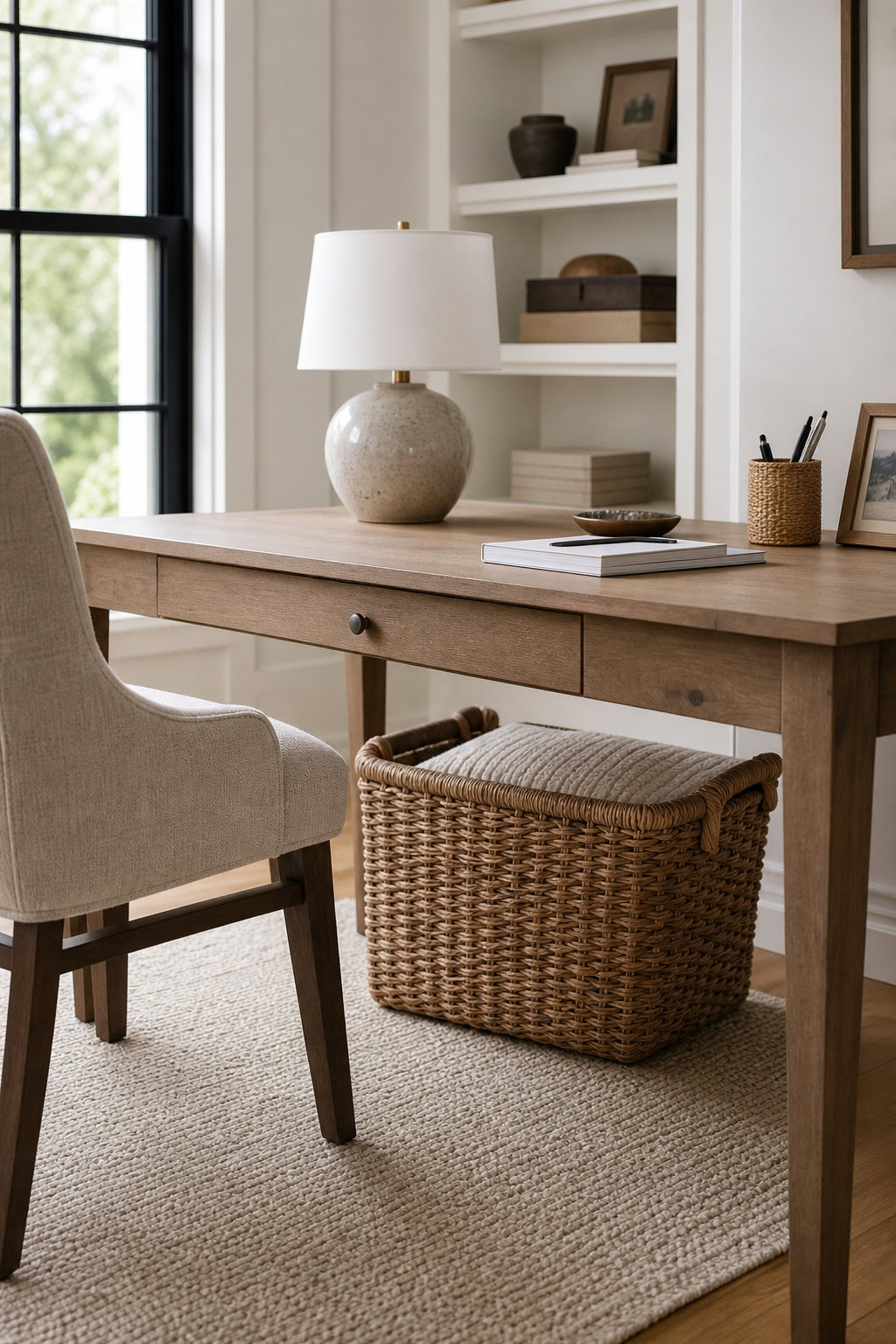
Start With a Clear Desktop Zone
A productive desk begins with one clear working zone, not a surface crowded with attractive objects. Keep the center open for a laptop, notebook, or keyboard, then move decor to the edges where it can support the workday without interrupting it. A lamp on one side, a tray on the other, and one vertical element such as art or a plant are usually enough. This structure makes the desk feel styled while preserving room to think. The goal is a desktop that can reset quickly at the end of the day, so the beautiful pieces never become obstacles. If the surface is small, this open zone matters more than any accessory you add.
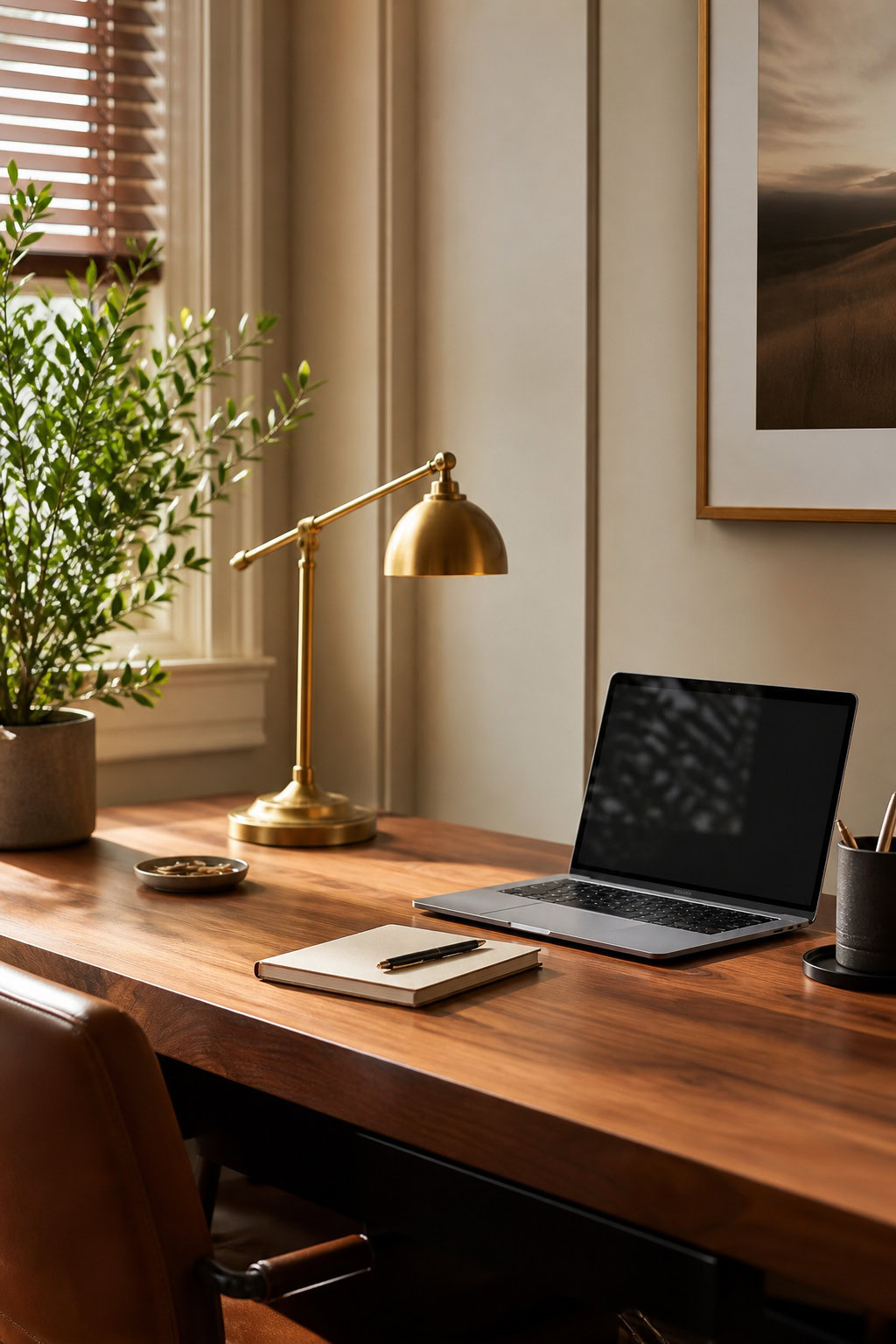
Choose a Task Lamp With Warm Light
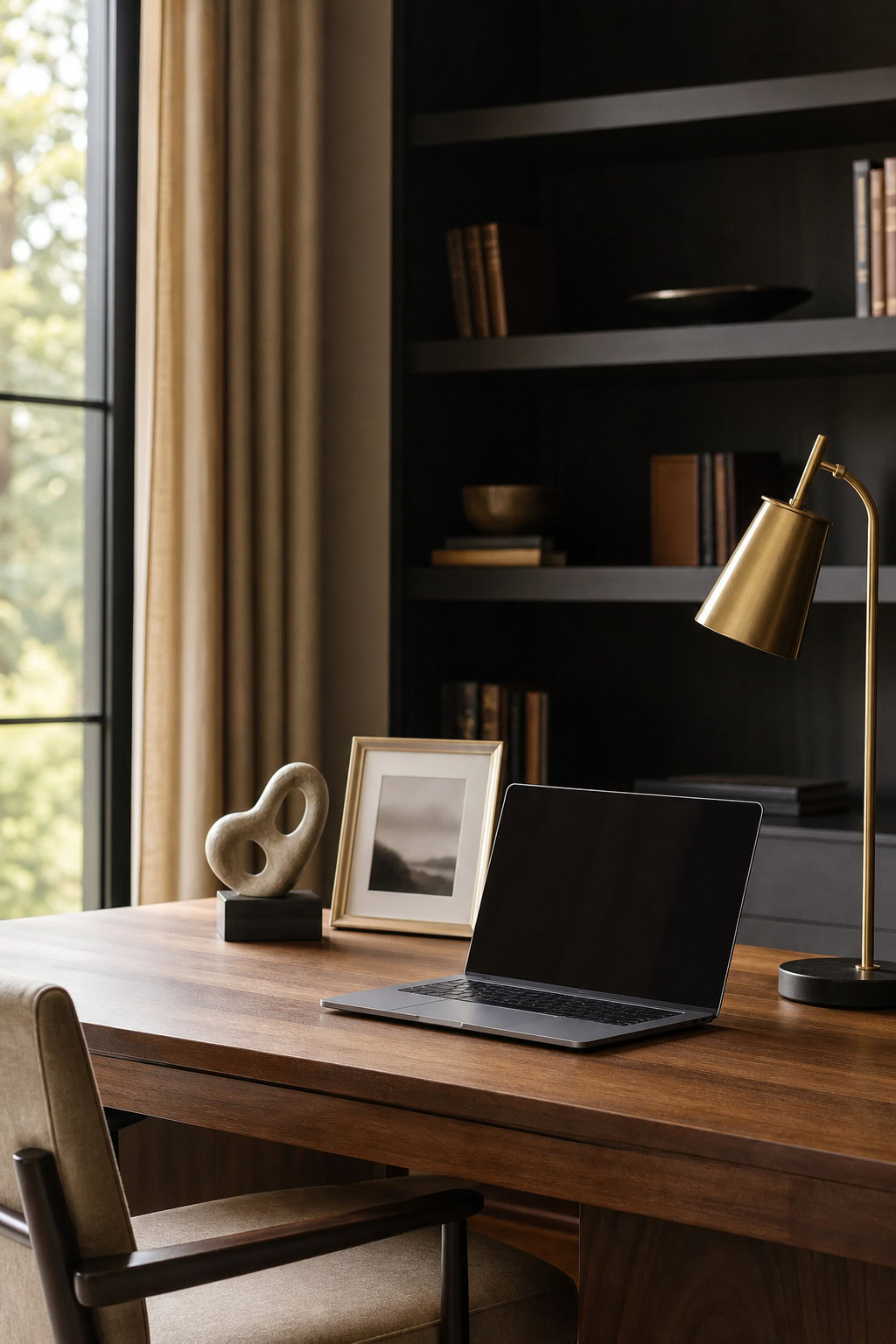
A good task lamp is both decor and equipment. Choose one with a stable base, adjustable shade, and warm bulb so the desk feels inviting rather than clinical. Brass, matte black, ceramic, and powder-coated finishes can all work if they connect to nearby hardware or furniture. Place the lamp opposite your writing hand when possible to reduce shadows across paper. The shade should direct light downward without glaring into your eyes. At night, the lamp gives the workspace a focused pool of light, which helps separate productive time from the rest of the room. A dimmer or smart bulb can make the same lamp work for calls, reading, and late emails.
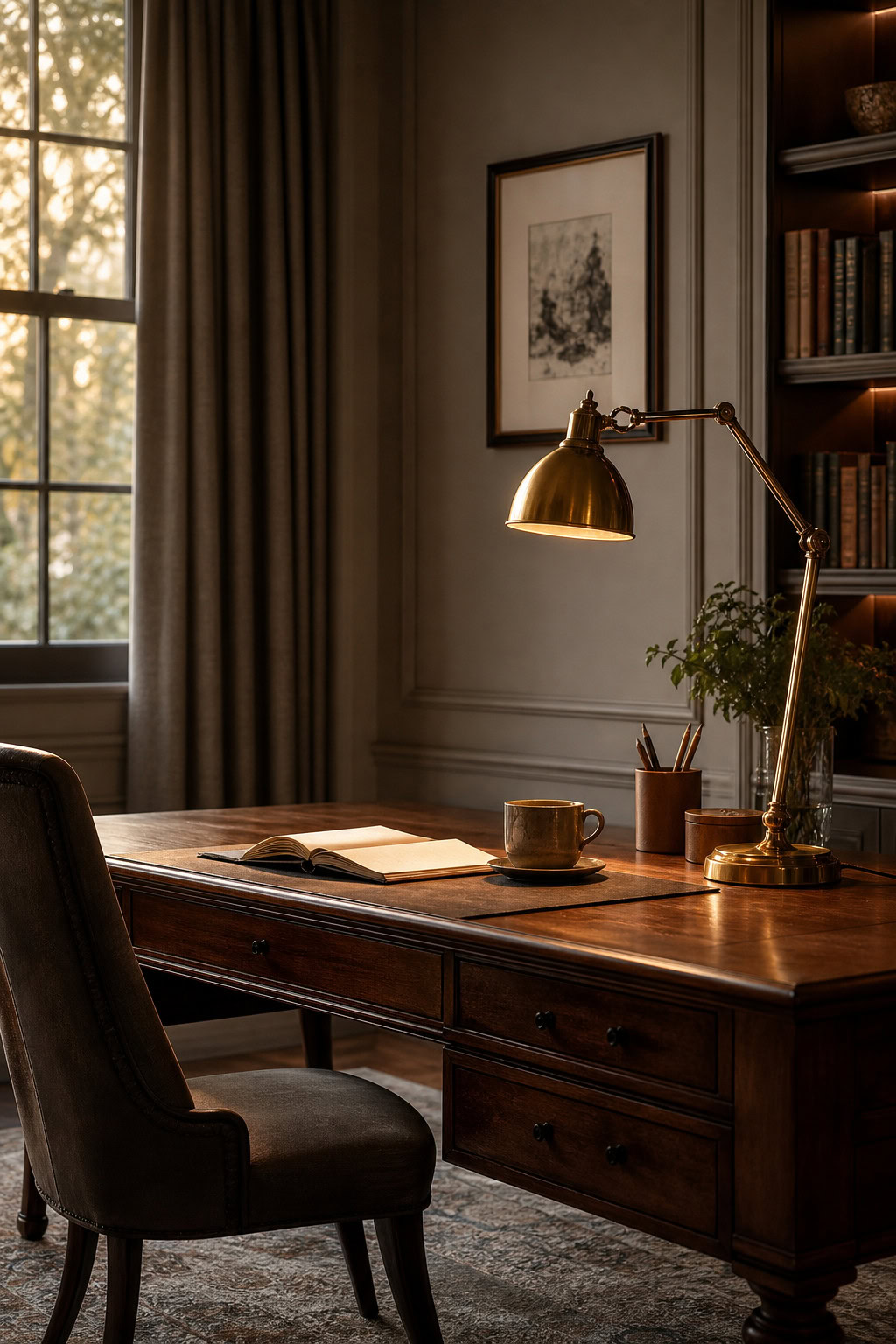
Use a Tray to Control Small Items
A tray makes desk decor feel deliberate because it gathers the small things that would otherwise scatter. Use it for a candle, hand cream, glasses, charging case, paper clips, or a small dish. The best tray is shallow enough to keep items visible and sized so it does not consume the work surface. Stone, leather, wood, lacquer, or metal can each shift the mood of the desk. Keep the tray edited; if it becomes a junk drawer without sides, it stops helping. One contained grouping brings polish and makes the desktop easier to clear. Empty it weekly so the grouping stays useful instead of quietly collecting unrelated odds and ends.
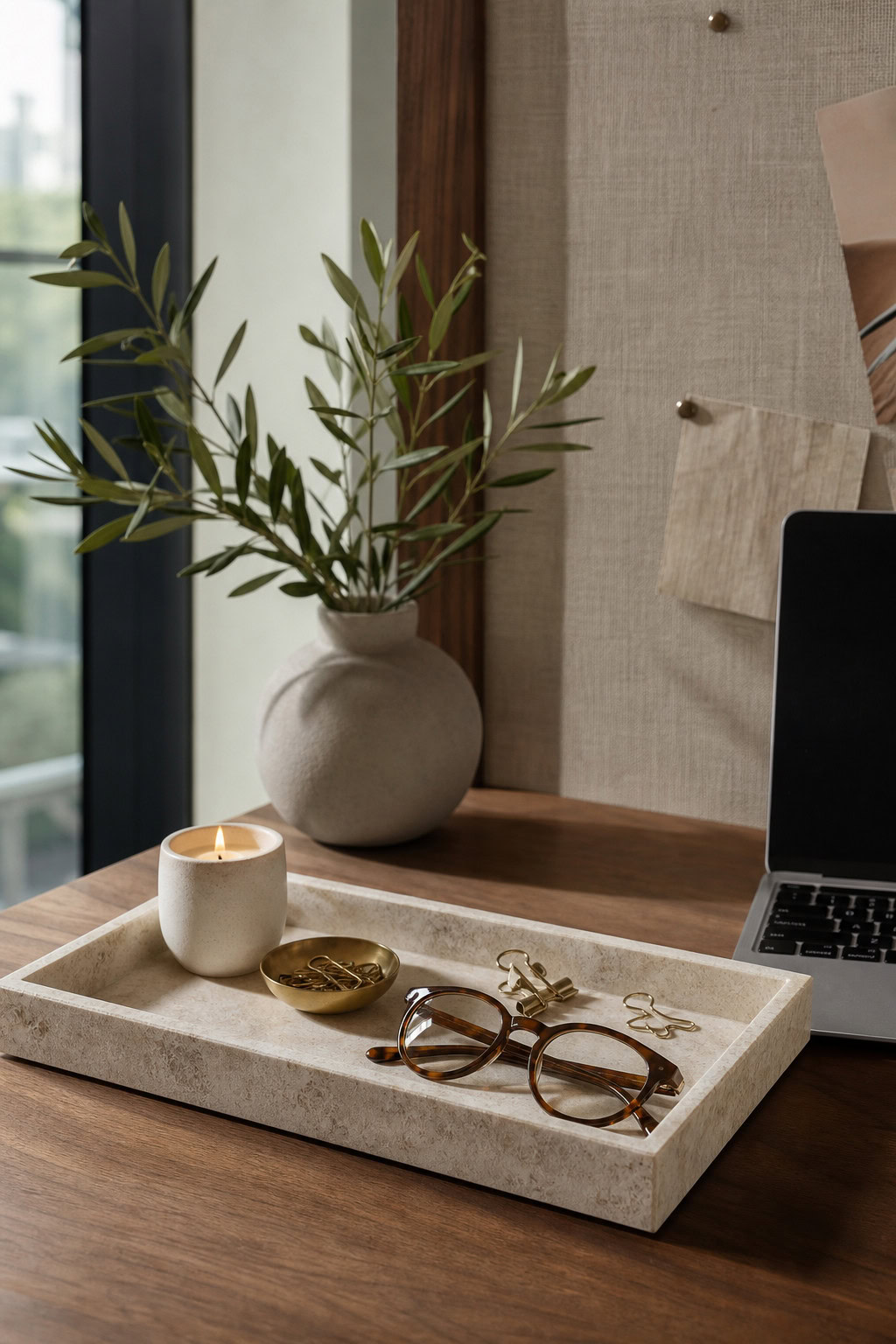
Add a Low Plant for Natural Texture
A plant can soften a workspace, but scale matters. On a desk, choose a low, compact plant that will not block the screen, window, or task light. A small pothos, peperomia, fern, olive topiary, or preserved moss bowl can bring texture without demanding constant attention. Use a planter that relates to the room's materials, such as ceramic, terracotta, stone, or matte metal. If the desk is narrow, place the plant on a shelf just above the surface. The greenery should refresh the view when your eyes leave the screen, not compete with your work. Rotate the planter occasionally so the plant grows evenly and the desk view stays fresh.
Frame One Piece of Quiet Art
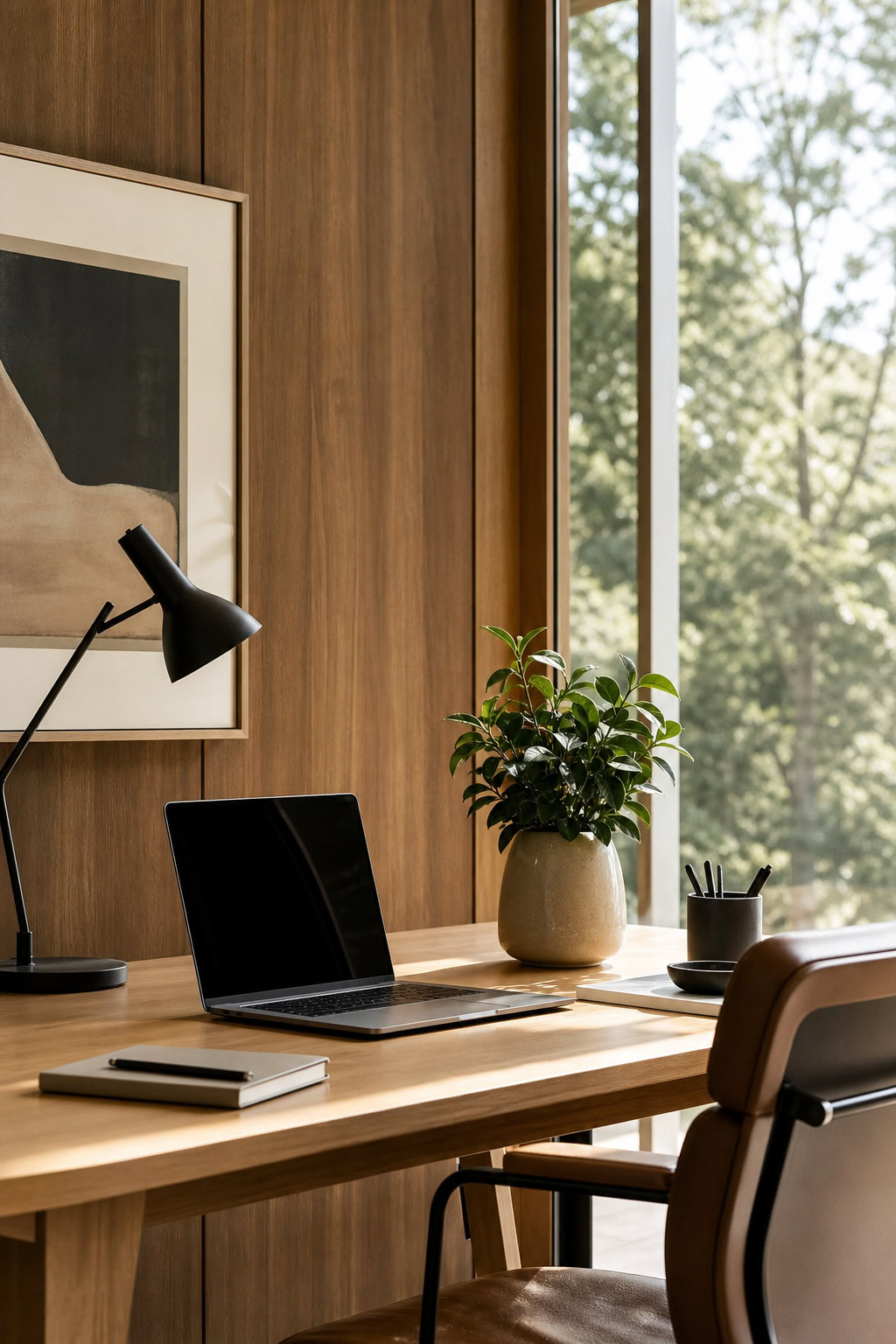
Art near a desk should give the eye somewhere pleasant to land without making the workspace visually noisy. Choose one framed piece with a soft landscape, abstract line work, architectural photograph, or muted textile study. The frame can echo the desk finish or lamp metal for a cohesive look. Hang it low enough to relate to the desktop, or lean it on a shelf if you rent. Avoid busy gallery walls directly in your main line of sight if they pull focus. One quiet piece can make the desk feel personal while still supporting concentration. The art should calm your peripheral vision during calls instead of pulling attention away from work.
Keep Cables Hidden From the Front View
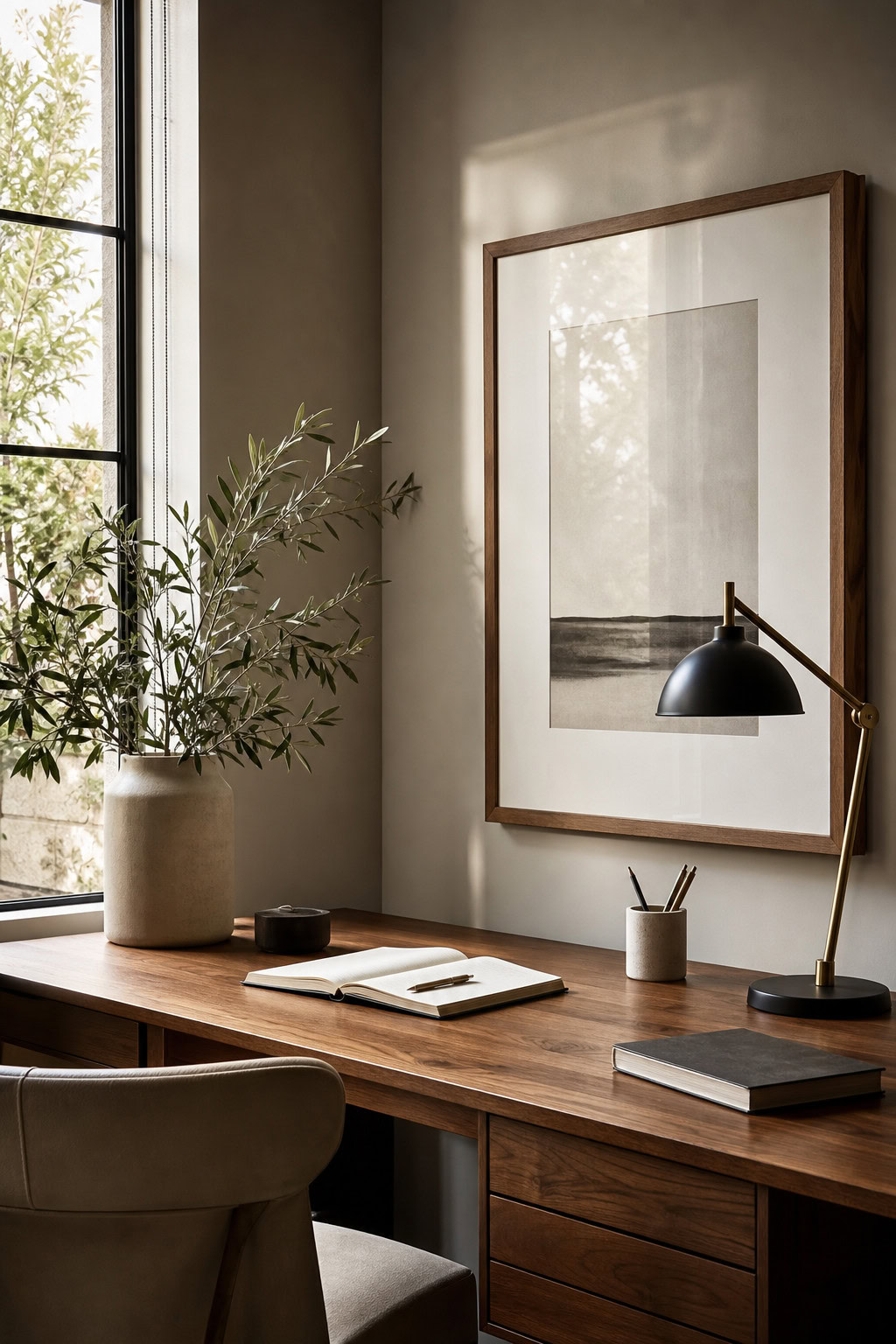
Cable control is one of the least glamorous desk decor ideas, but it has the biggest visual payoff. Route cords behind the desk leg, through a cable tray, or into a mounted channel so the front view stays clean. Use a charging block inside a drawer or box if the desk has no built-in outlet access. Match visible cords to the furniture when possible, and bundle only what truly belongs on the desk. Once cables disappear, the lamp, chair, artwork, and desktop materials can read clearly. A tidy workspace feels calmer before you even sit down. Photograph the desk from the doorway; visible cords usually show up immediately in that wider view.
Use Matching Desk Cups Sparingly
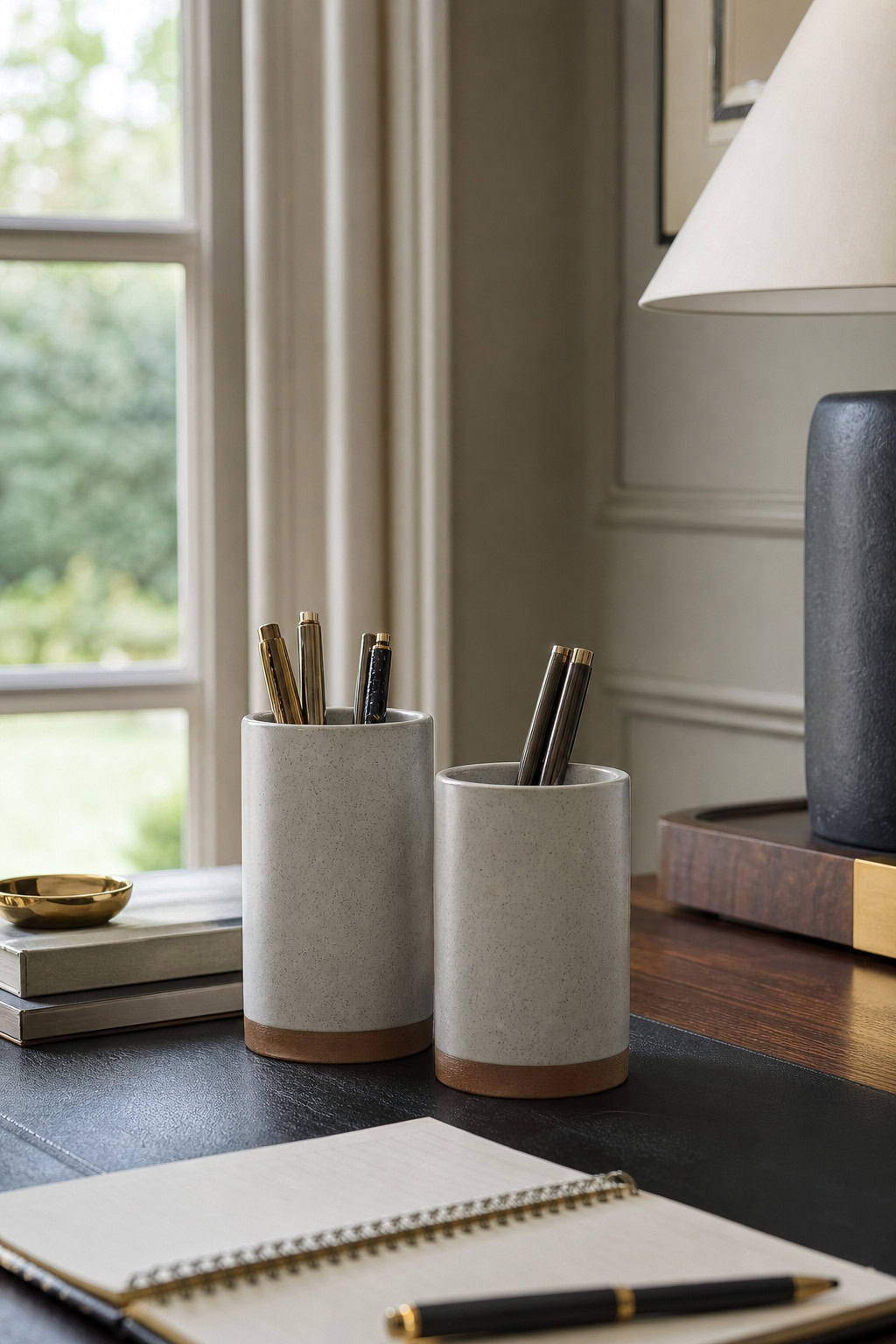
Pen cups can look elegant when they are treated as part of the material palette instead of a dumping ground. Choose one or two matching cups in ceramic, leather, metal, wood, or tinted glass, then keep only the tools you actually use. Pens, scissors, ruler, and one highlighter are enough for most desks. Place the cups near the dominant hand and away from the monitor base. If you need many supplies, store the overflow in a drawer. A restrained cup arrangement makes the desk feel equipped and adult, while too many containers make it feel like a supply closet. Matching the cups to the lamp or tray helps the arrangement feel less accidental.
Bring in a Soft Desk Mat
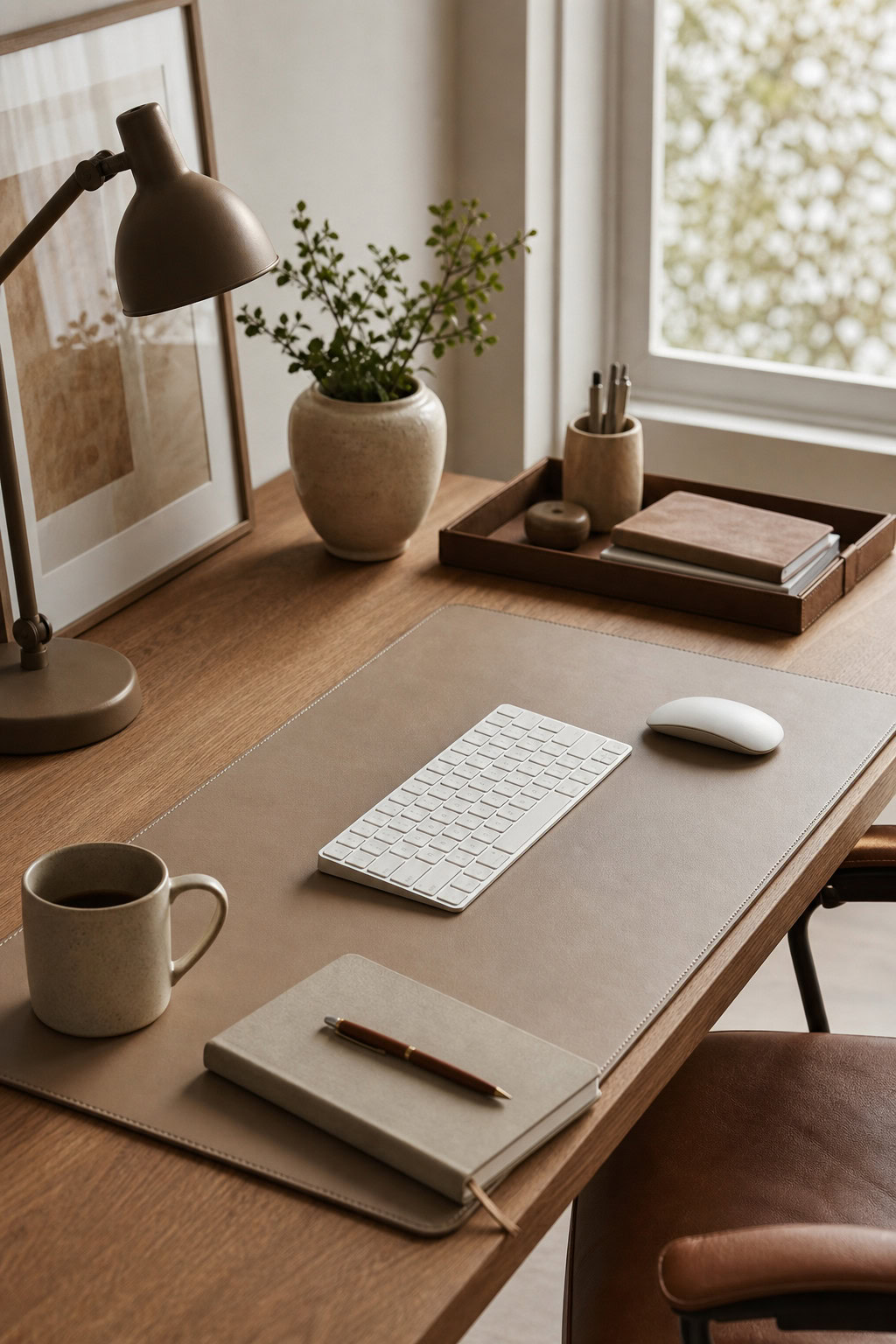
A desk mat visually anchors the work area and makes daily tasks feel smoother. Leather, felt, cork, wool-blend, or vegan leather mats can protect the desktop while adding texture. Choose a size that fits the keyboard, mouse, and notebook without running into the lamp or tray. The color should calm the surface, not dominate it; taupe, olive, charcoal, tan, or deep brown often works better than a bright accent. A mat also helps define where work happens, which is useful in bedrooms or living rooms where the desk must blend into a larger space. This simple boundary also protects nicer desktops from scratches, ink marks, and daily wear.
Choose Closed Storage Over Visual Clutter
Open organizers can look busy when every file, cable, and notebook is visible. Closed storage gives a desk area a calmer baseline. Use drawers, lidded boxes, small cabinets, or fabric-covered document bins to hide supplies that do not need to be seen. Keep one open shelf or tray for the items you use daily, then let the rest disappear. If your desk has no drawers, a low cabinet beside it can make the whole workspace function better. The room will feel more polished when storage looks like furniture rather than office equipment. Label hidden files lightly if needed, but keep visible fronts plain and architectural.
Lean a Pinboard With Linen Texture
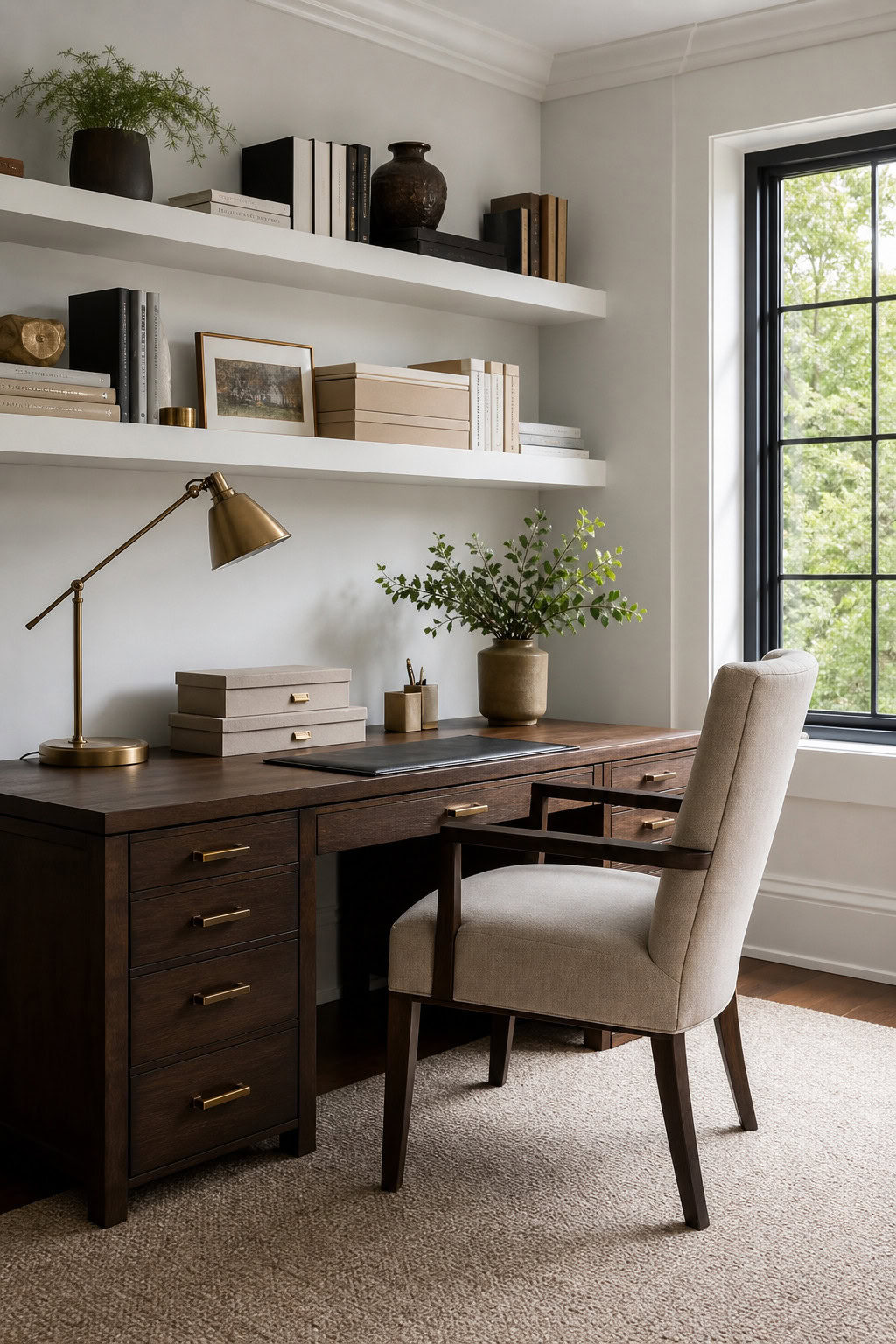
A linen pinboard adds vertical texture and keeps important notes off the desktop. Choose a simple frame in oak, black, brass, or walnut, then pin only the items that deserve daily visibility. A calendar, fabric swatch, small print, and two reminders can look composed; a crowded board quickly becomes visual static. Lean the board on a shelf or mount it above the desk so it relates to the lamp and monitor height. The fabric surface softens the workspace, absorbs a bit of sound, and gives practical information a more elevated place to live. Use tonal pushpins or clips so the practical pieces do not become visual clutter.
Add a Small Catchall Bowl
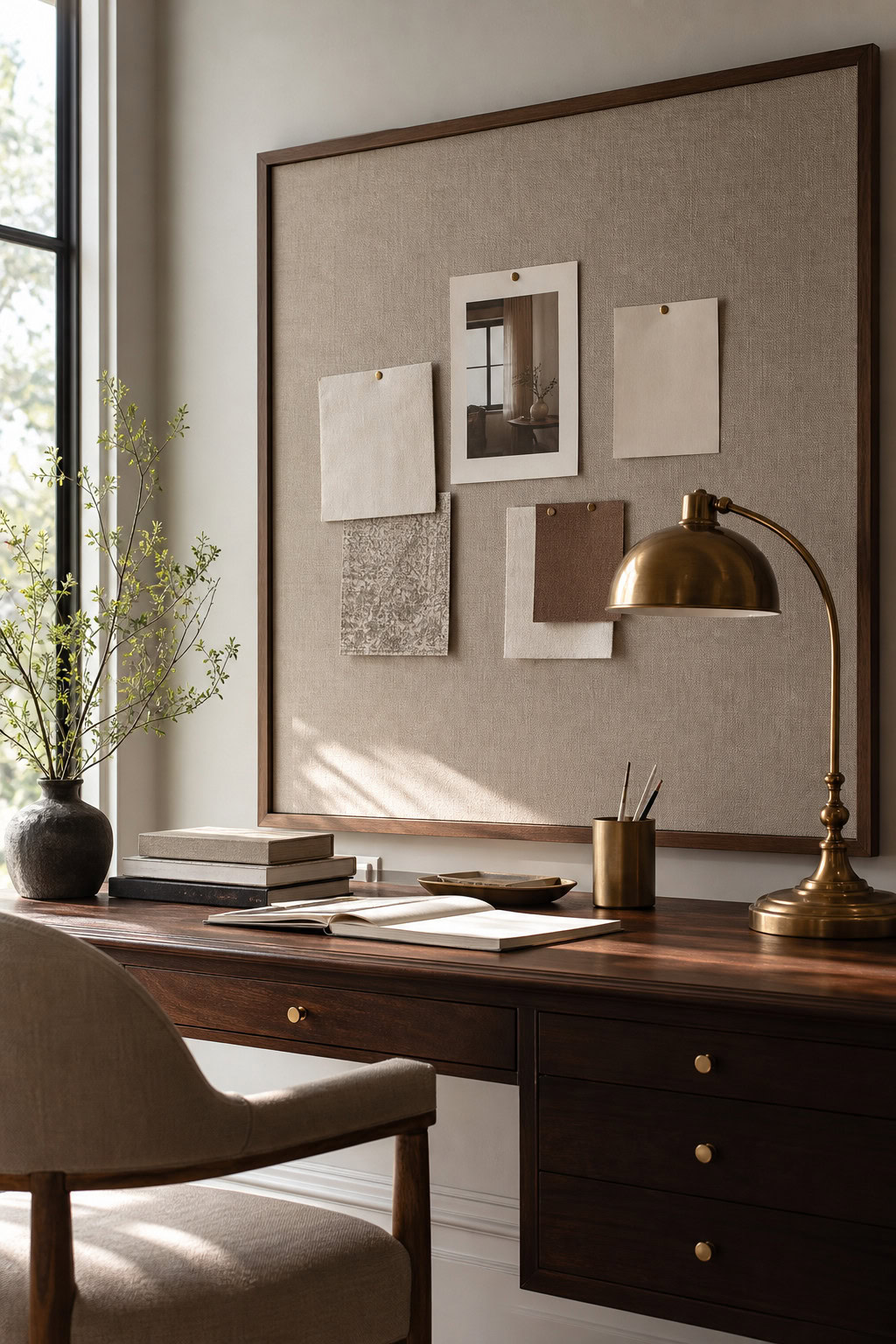
A small catchall bowl can prevent the tiny daily objects from taking over the desk. Use it for earbuds, clips, rings, stamps, or flash drives, depending on how you work. Ceramic, marble, wood, glass, or metal bowls each add a different note, so choose one that feels connected to the lamp, tray, or hardware. Keep the bowl small enough that it cannot become a storage problem of its own. Placed near the tray or monitor, it gives loose items a home and helps the desktop reset in seconds before a meeting or focused work block. Choose a bowl with enough weight that it stays put when you reach across the desk.
Use Books as a Functional Riser
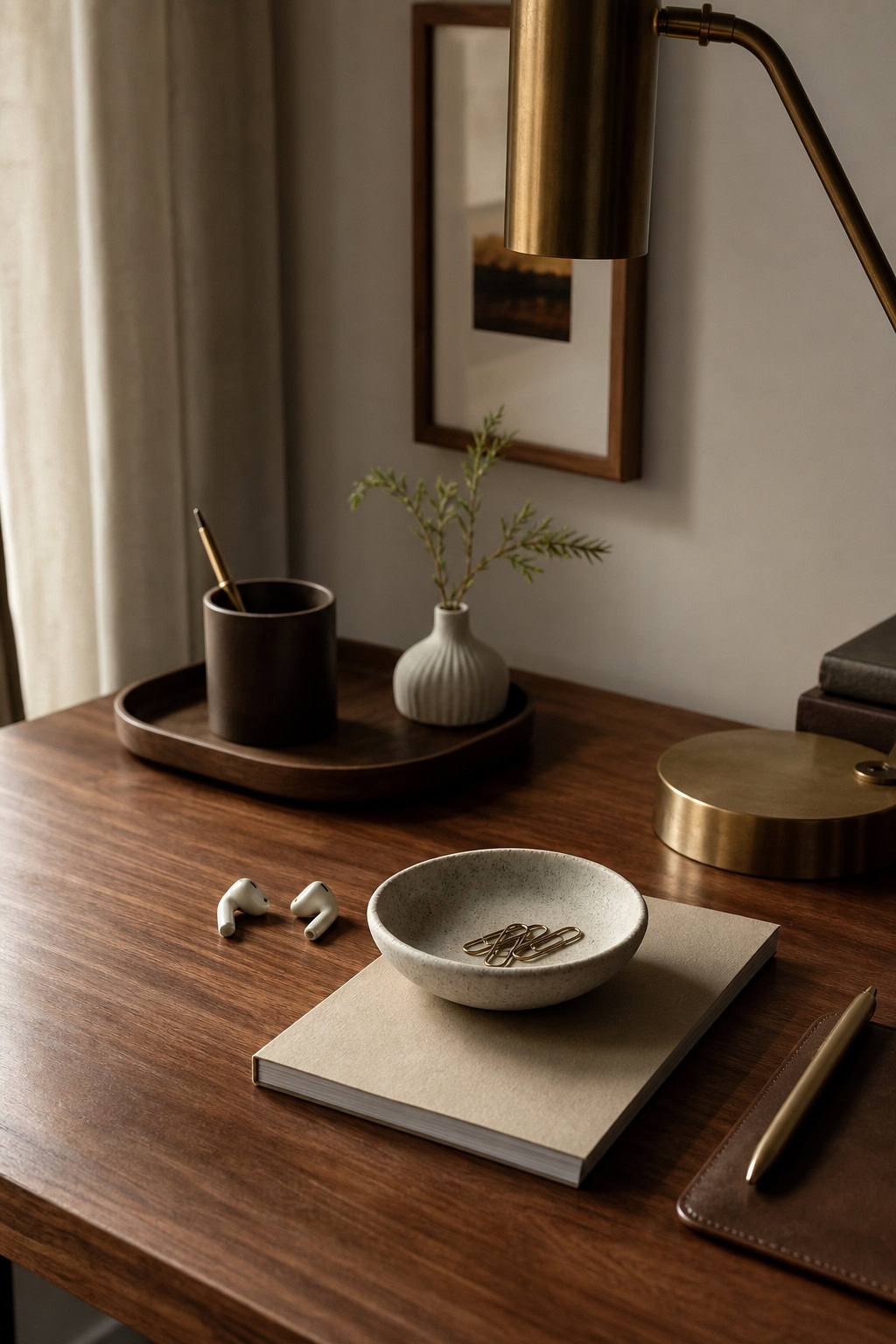
A short stack of books can add height and character while serving a practical purpose. Use two or three design, business, or reference books under a small object, lamp, or monitor accessory, but avoid building an unstable tower. The covers should relate to the room's palette so the stack looks intentional. Books are especially useful on deeper desks where the back corner needs a little elevation. Keep frequently used notebooks separate so the stack does not have to be dismantled every day. This small layer makes the desk feel more personal without adding another container. This works best when the books are attractive but not so precious that you avoid using them.
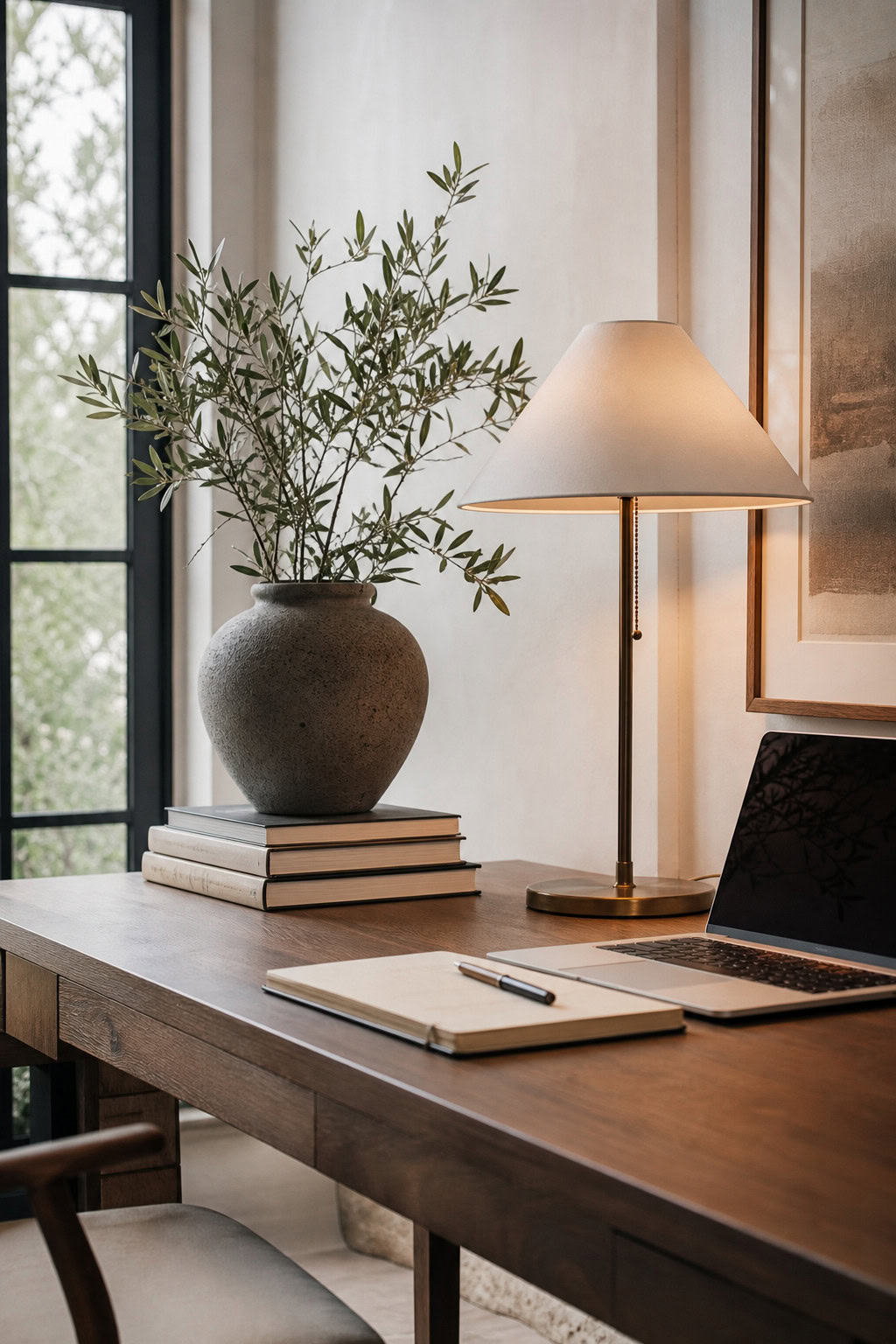
Place the Monitor on a Beautiful Stand
A monitor stand improves ergonomics and gives the desk a more finished silhouette. Choose wood, metal, acrylic, or upholstered styles with enough width for the screen and enough clearance for a keyboard or notebook below. The stand should look like part of the desk, not an afterthought from an office supply aisle. If you use a laptop, a matching riser can make video calls and posture better. Keep the area underneath neat, because open space below the stand can easily become clutter. When the screen sits at the right height, the whole workspace feels more deliberate. Measure eye height while seated before choosing the stand, not while standing in the room.
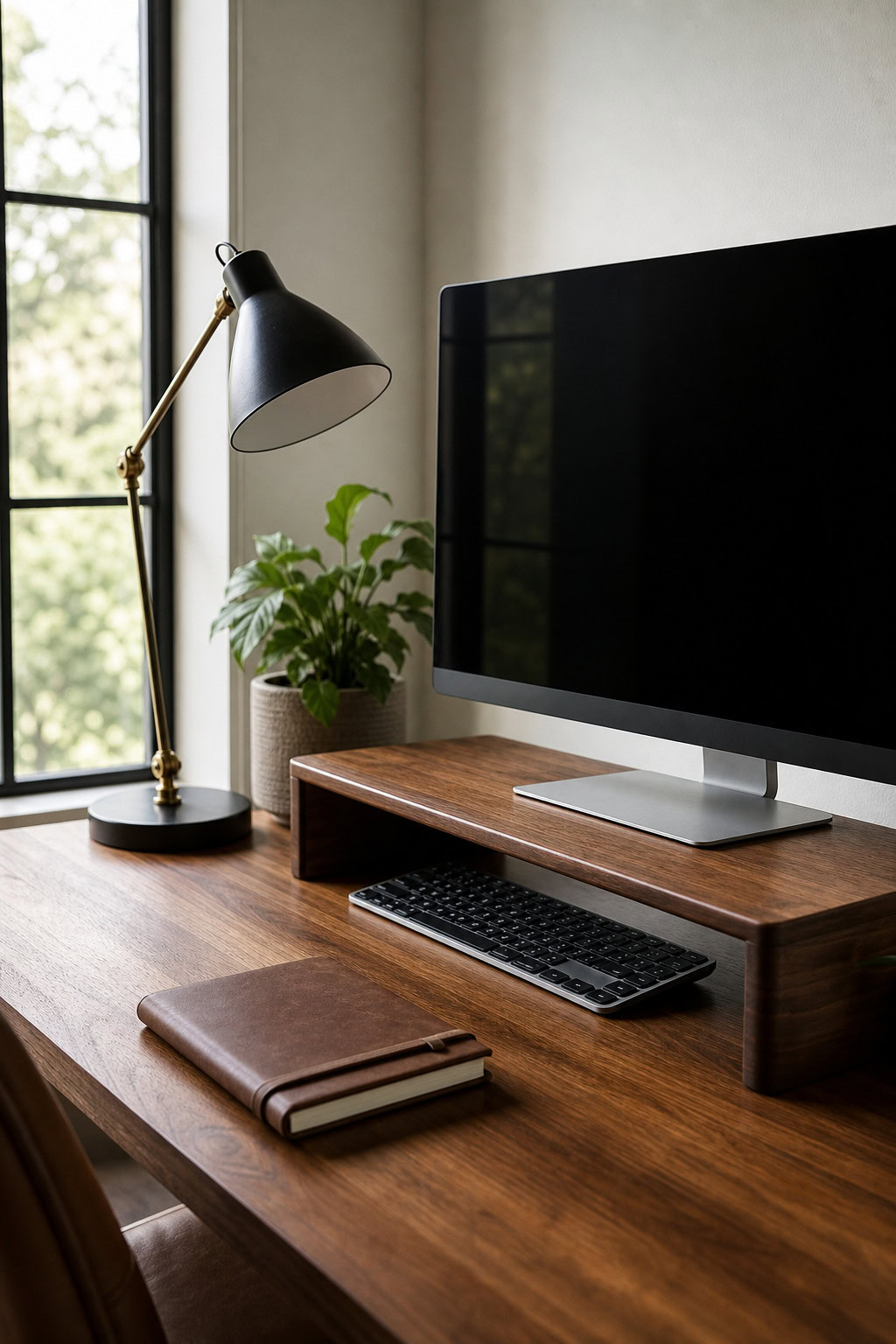
Choose a Chair That Looks Residential
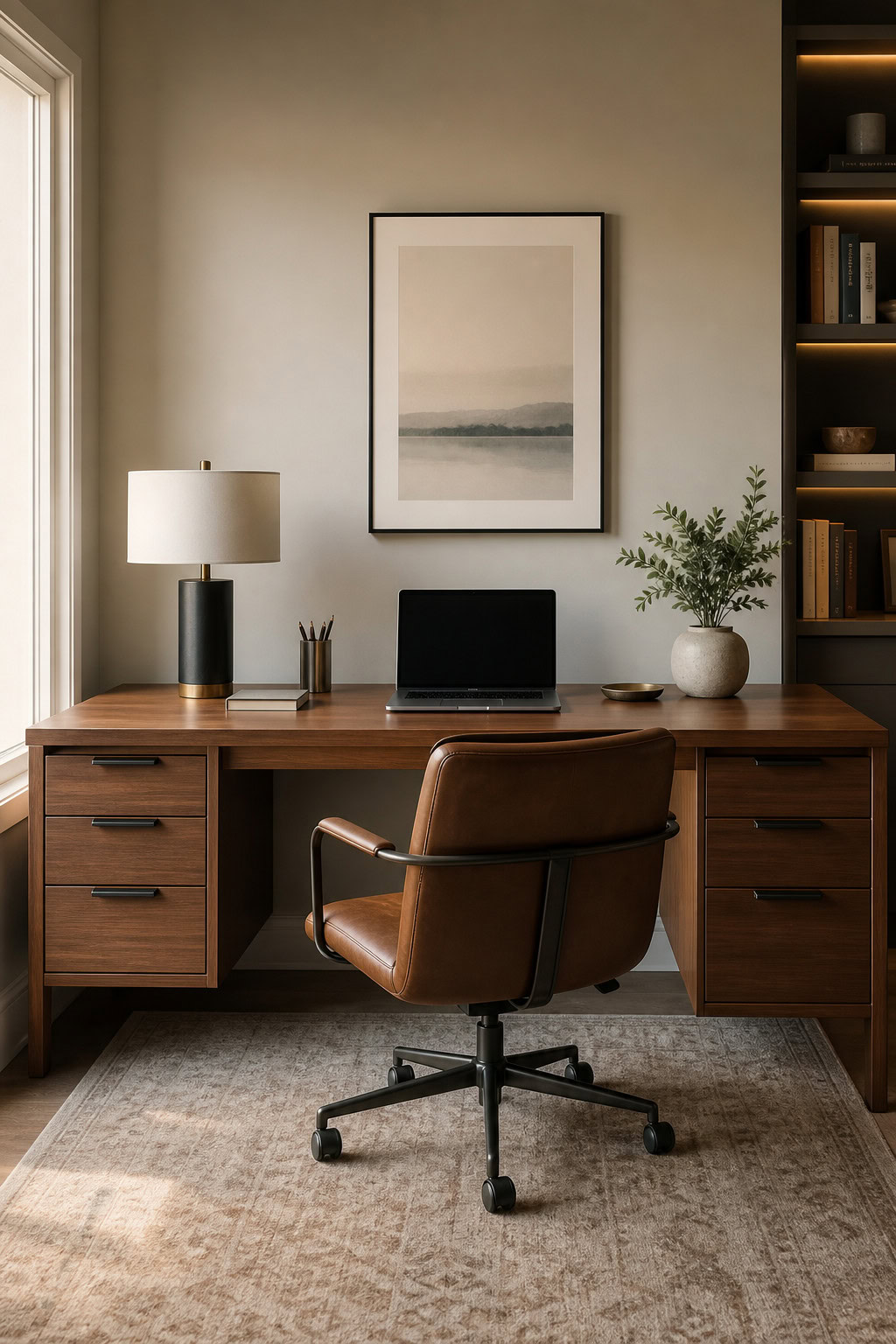
The chair is part of the decor, especially when the desk sits in a bedroom, living room, or open home office. Look for ergonomic support in a residential shape: upholstered task chairs, leather swivel chairs, bentwood frames, or tailored silhouettes with quiet casters. The seat height and arm clearance still need to work with the desk, but the finish can feel warm and architectural. Avoid a bulky chair that overwhelms a small desk. A comfortable, good-looking chair makes the workspace feel integrated with the home rather than borrowed from a corporate office. If the chair back is visible from another room, treat its fabric color as part of the palette.
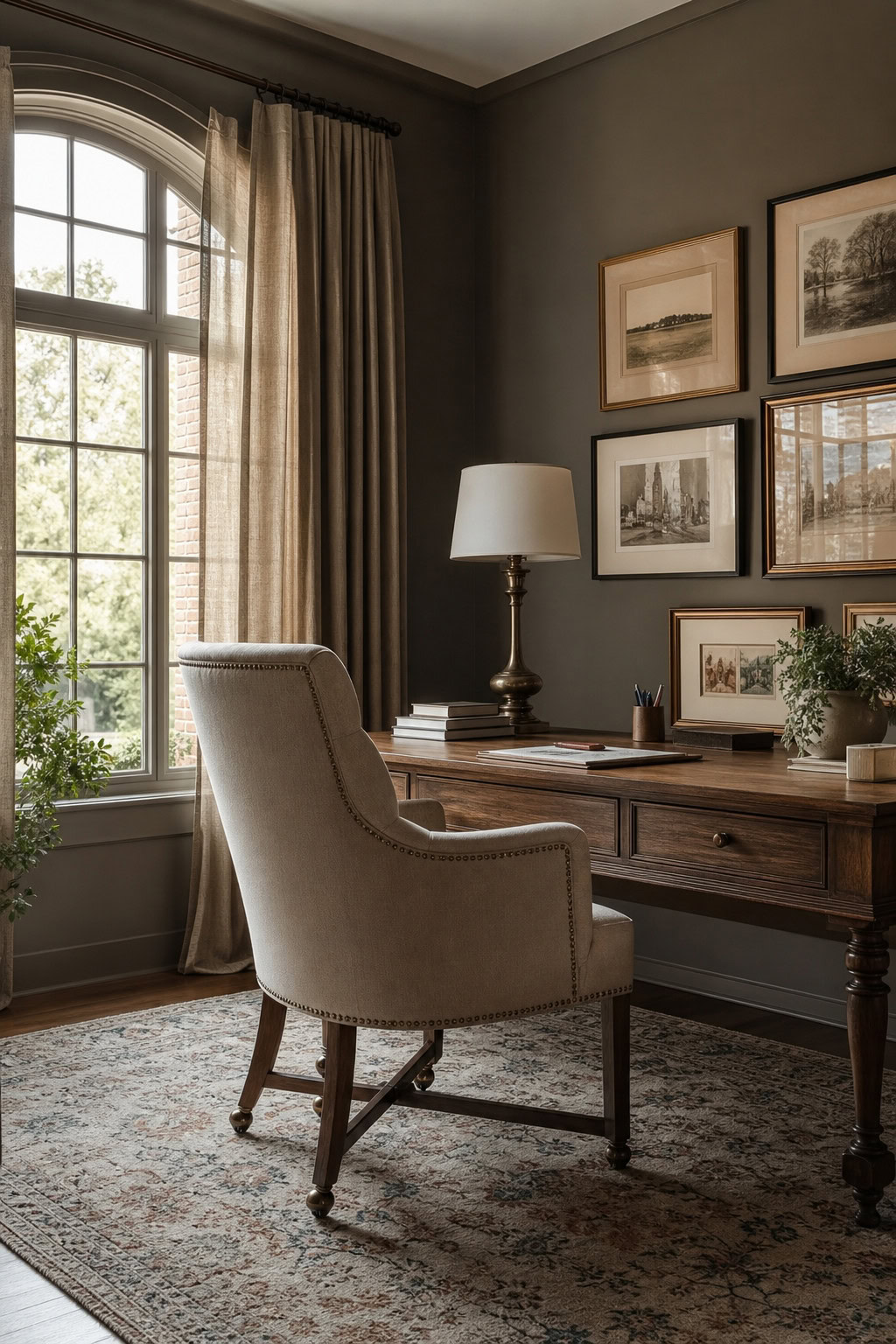
Add a Candle Only If It Has Space
A candle can make a desk feel calmer, but it should never crowd papers, cords, or the keyboard. Choose a simple vessel in glass, ceramic, or metal, and place it on a tray or far corner where it has clear space around it. Subtle scents such as cedar, linen, fig, tea, or citrus tend to work better for focus than heavy perfume. A flameless candle or diffuser can be safer if you work with documents or leave the desk often. The point is atmosphere, not distraction. One carefully placed candle can soften a workspace without turning it into vanity styling. Keep matches or remotes in the tray so the atmosphere layer never creates extra mess.
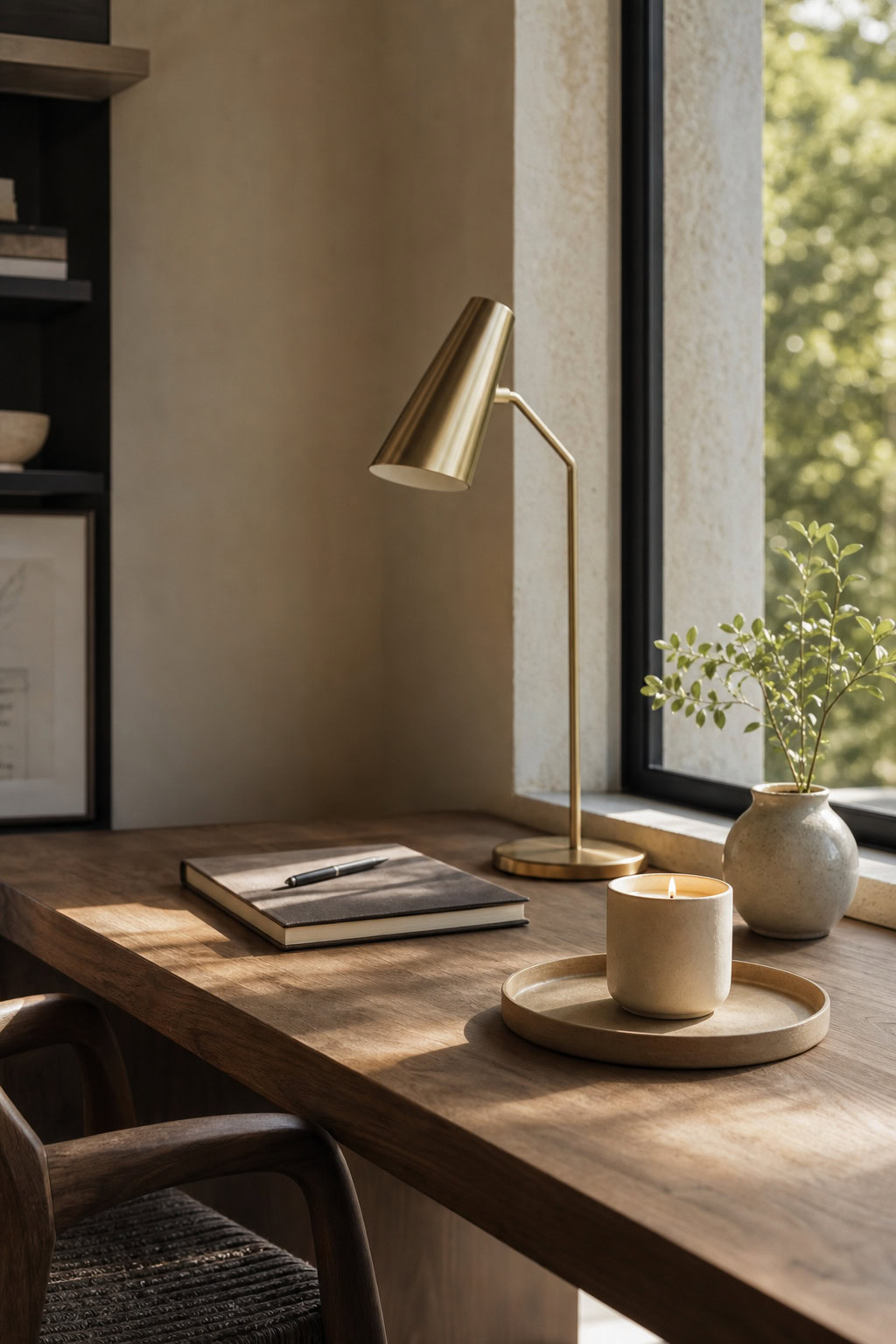
Use a Desktop File Holder With Structure
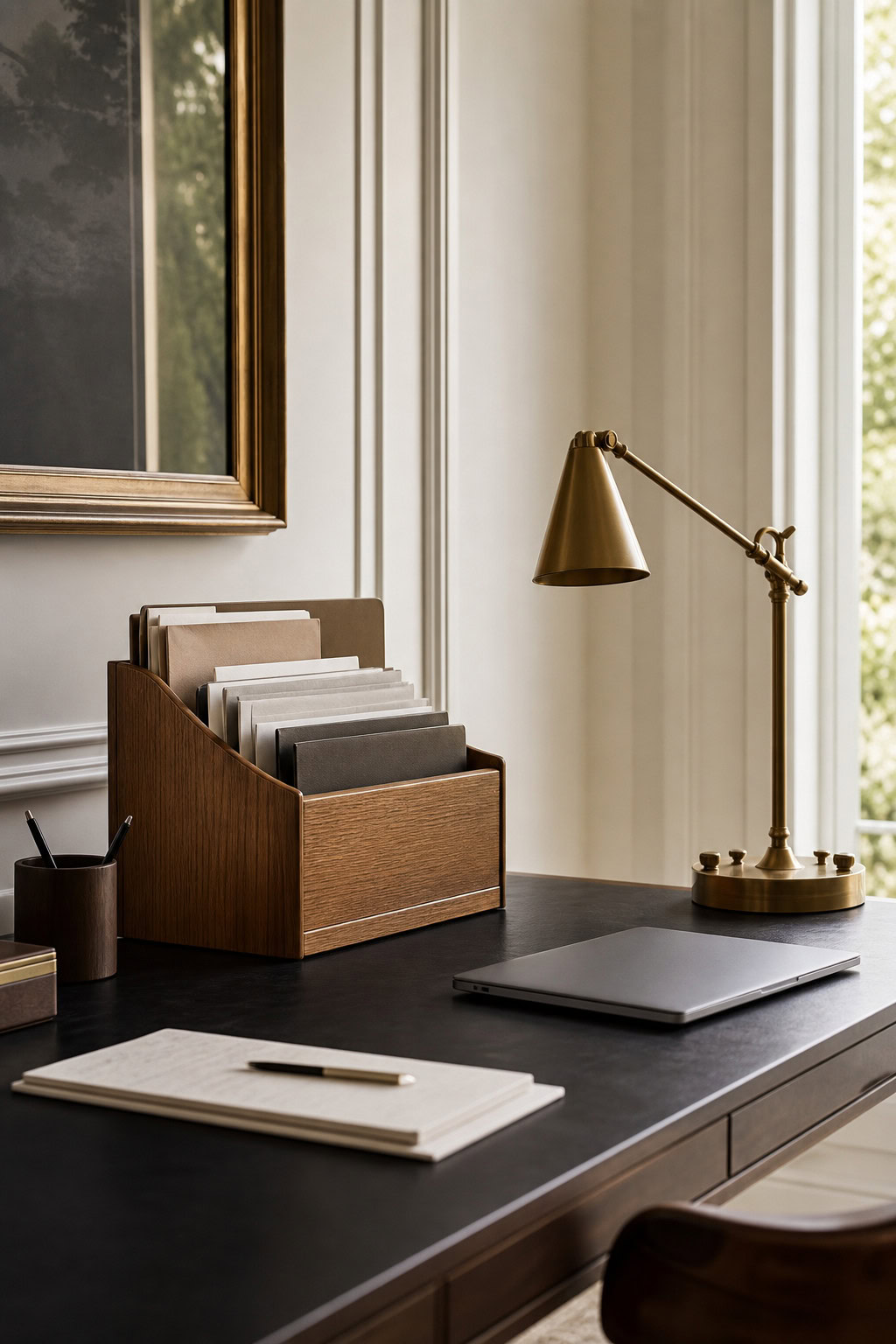
Paper piles make a desk feel unfinished faster than almost anything else. A structured file holder gives active documents a place to stand upright without spreading across the surface. Choose a finish that suits the room, such as matte metal, oak, leather, acrylic, or woven material. Keep only current files in it; archive the rest in closed storage. Position it at the back corner or beside the monitor so it is accessible but not visually dominant. A good holder creates a boundary for paperwork, which makes the desk look more composed and keeps important documents from disappearing. Review the holder every Friday so old paperwork does not become permanent decoration.
Let a Wall Shelf Carry the Decor
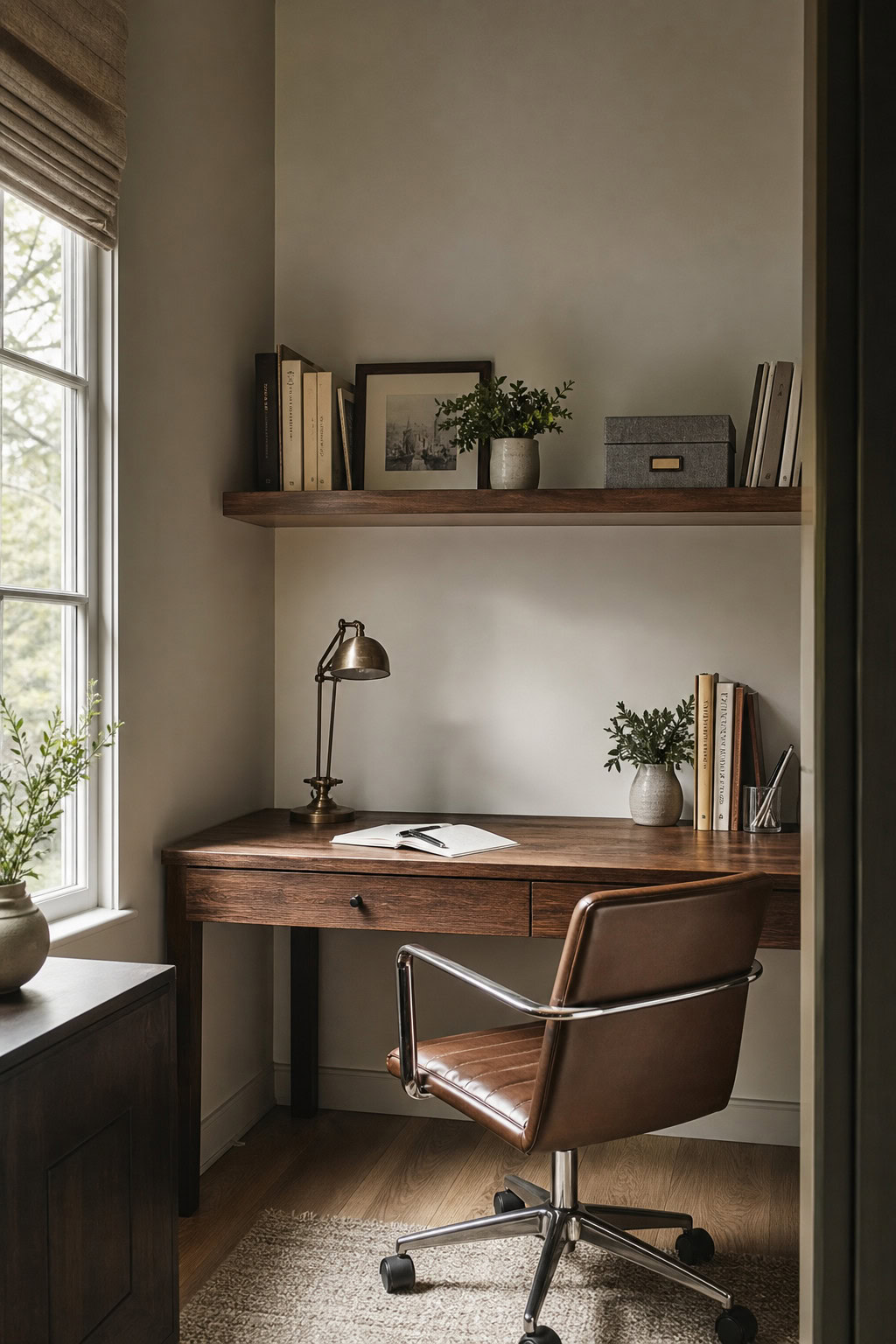
If the desktop is small, move decorative layers to a wall shelf above it. A shallow shelf can hold art, books, a plant, a box, or a small lamp while keeping the work surface open. Install it high enough that it does not crowd the monitor, but low enough to feel connected to the desk zone. Keep the shelf arrangement light, with varied heights and enough blank wall around it. This is especially helpful in apartments and bedrooms where a full bookcase would be too heavy. The desk stays functional while the wall provides personality and depth. Leave one section of the shelf empty so the wall still has breathing room.
Pick a Palette That Reduces Friction
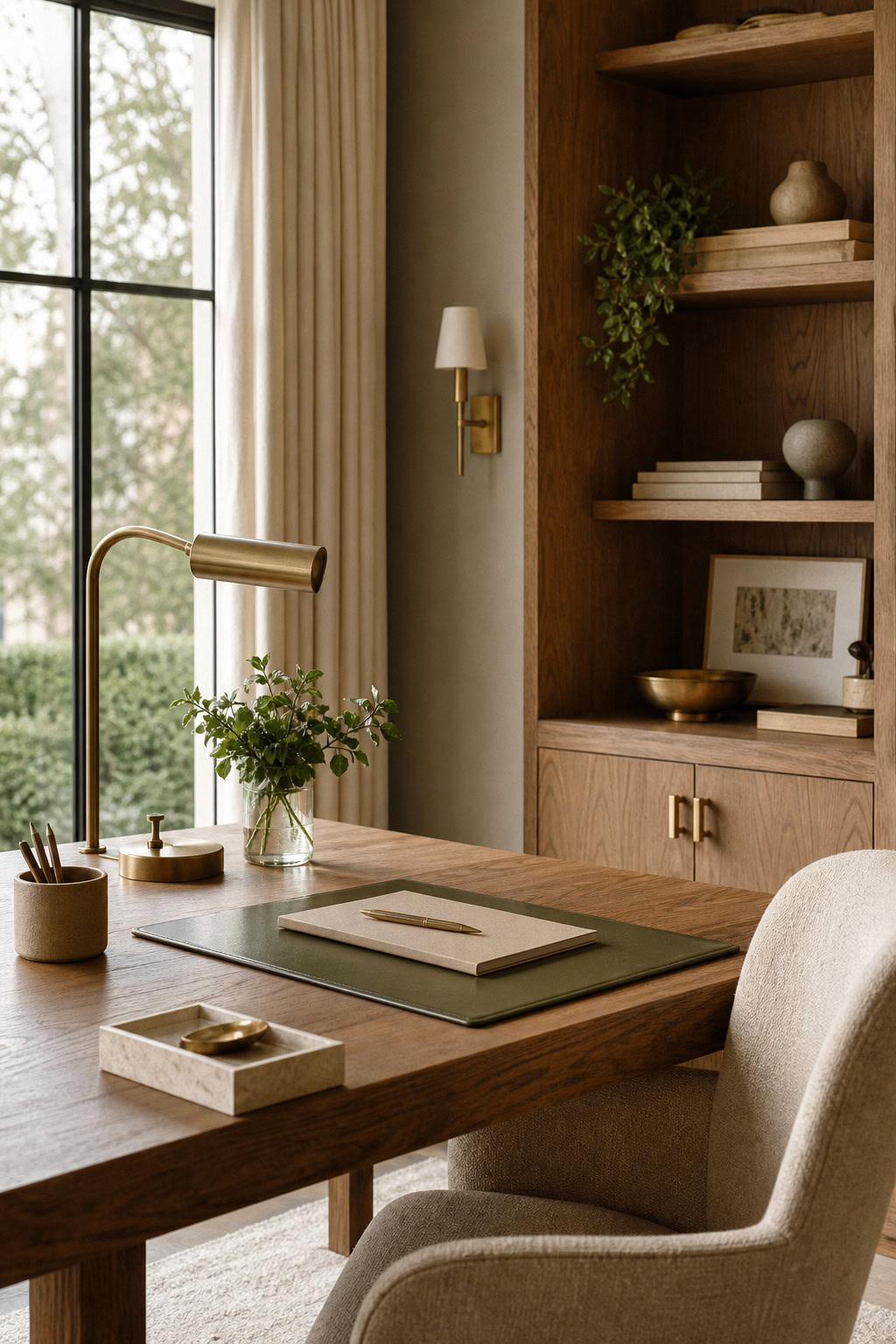
Desk decor should make decisions easier, not add another layer of visual noise. Choose a small palette of three or four materials and colors, then repeat them. Warm wood, black metal, ivory ceramic, and olive fabric might suit one space; oak, brass, linen, and stone might suit another. This repetition helps the lamp, tray, storage, and art feel connected even if they were bought separately. Avoid introducing a new color with every accessory. A controlled palette makes the workspace feel calmer, which can make it easier to return to deep work after interruptions. When the palette is settled, shopping becomes easier because each new piece has to earn its place.
Use a Small Mirror to Borrow Light
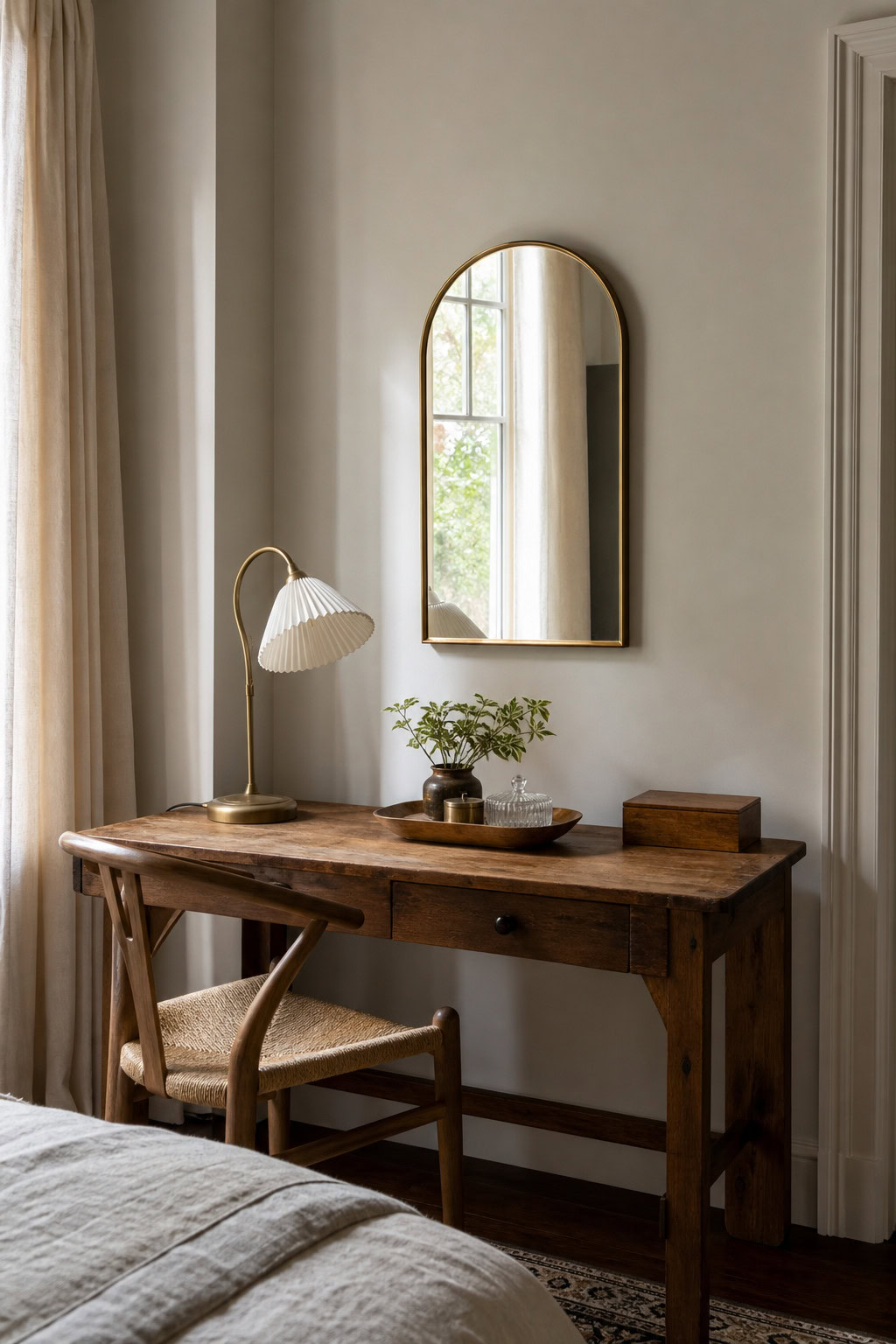
A small mirror can brighten a desk area when it is placed with intention. Hang or lean it where it reflects a window, lamp, or attractive wall detail rather than a cluttered corner. Round, arched, or slim rectangular mirrors work well above compact desks because they add shape without demanding much depth. Keep the frame finish tied to the lamp or hardware. This is especially useful for workspaces tucked into bedrooms or hallways where natural light may be limited. The mirror should make the desk feel more open, not become another distracting object in your direct sightline. Avoid placing the mirror where it reflects the screen, because glare will make work harder.
Add Texture Underfoot
The area beneath the desk affects how the workspace feels, even if it is not on the desktop. A flat-weave rug, low-pile wool rug, or textured mat can soften sound and make the desk zone feel more intentional. Choose a rug that allows the chair to move easily and is large enough that the front legs do not constantly catch the edge. Pattern can hide wear, but keep it quiet if the desktop already has several materials. The right rug turns a floating desk into a defined workspace and makes long work sessions feel more comfortable. A good rug also makes the desk feel less temporary in a multipurpose room.
Style a Water Carafe or Glass
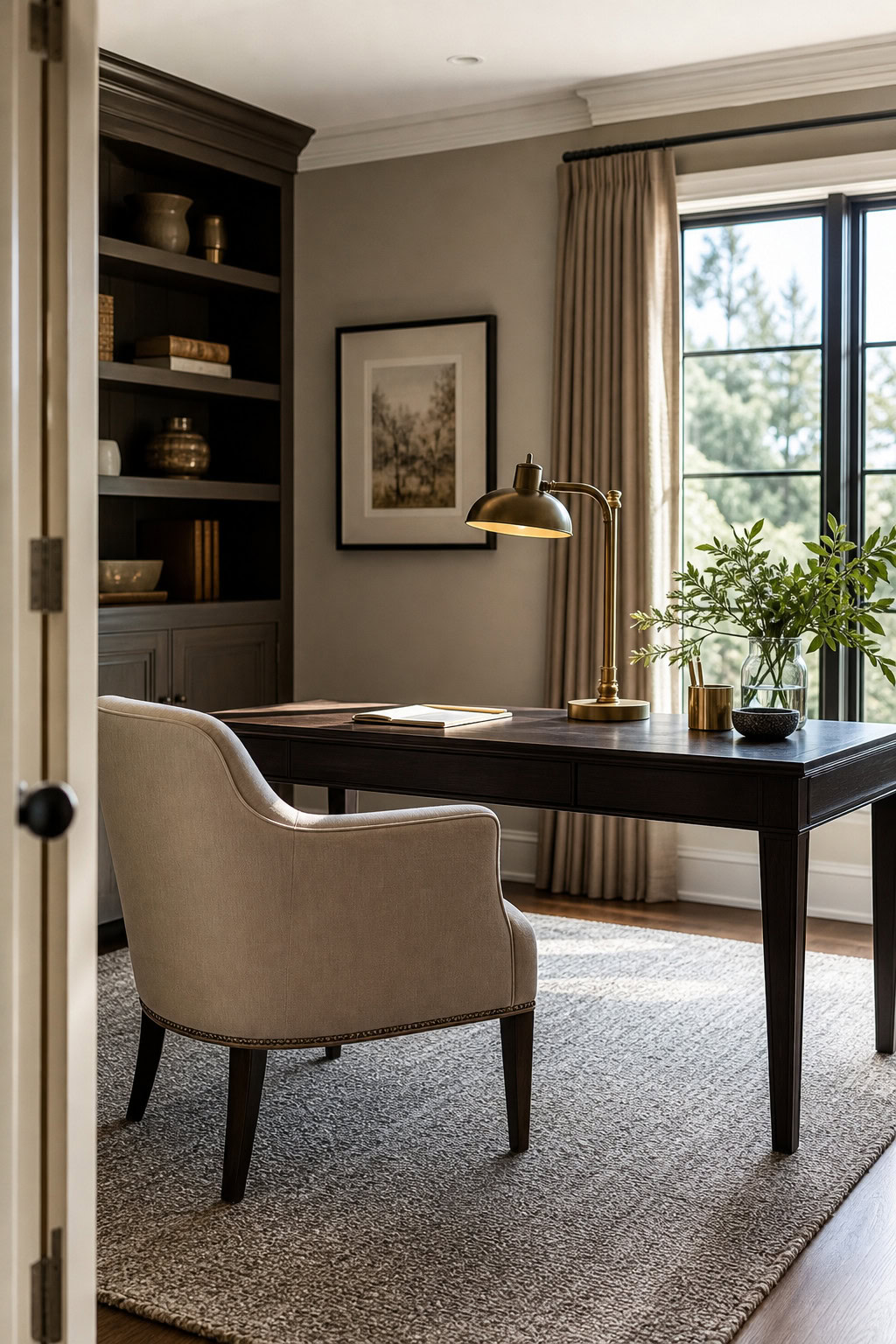
Keeping water at the desk can look elegant when it is treated as part of the setup. A small glass carafe, ceramic tumbler, or ribbed glass makes hydration feel intentional rather than like a random bottle left behind. Place it on a coaster or tray away from electronics, and choose a size that does not crowd the work area. This detail is useful for long writing sessions, calls, or creative work because it reduces trips away from the desk. A beautiful glass also adds reflection and material contrast, which can make even a simple workspace feel more considered. Choose a washable coaster or tray liner if condensation is likely during long work sessions.
Use Drawer Dividers You Never See
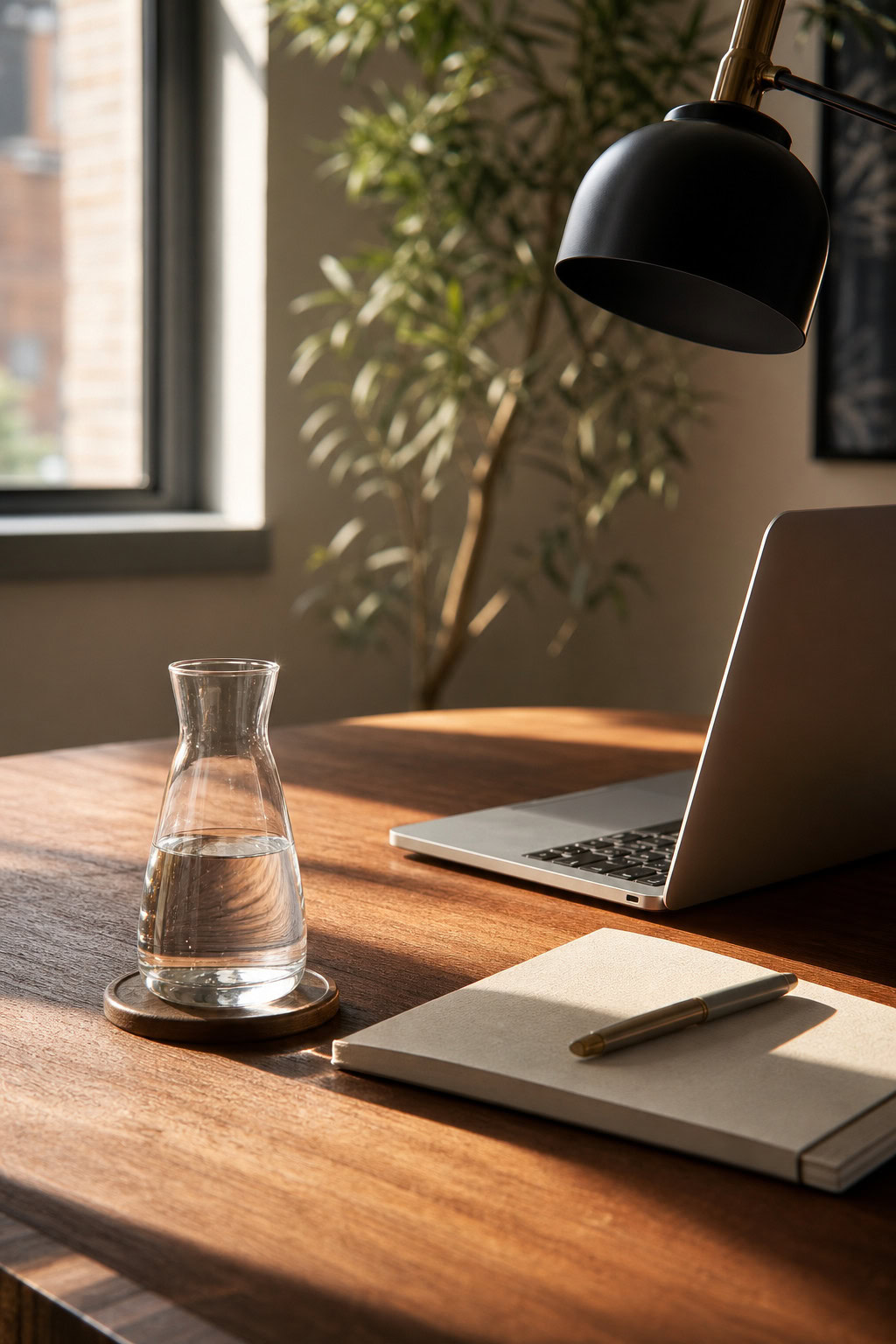
Some of the best desk decor is invisible from the room. Drawer dividers keep pens, chargers, notes, clips, and tech accessories from becoming a messy layer that eventually spills onto the desktop. Choose bamboo, acrylic, felt, or adjustable dividers depending on the drawer finish. Group items by how often you use them, with the daily tools closest to the front. A tidy drawer makes the visible desk easier to maintain because everything has a logical home. The surface can stay beautiful because the functional mess is handled quietly below. The drawer should be easy to reset with one hand, or the system will not last.
Create a Small Charging Station
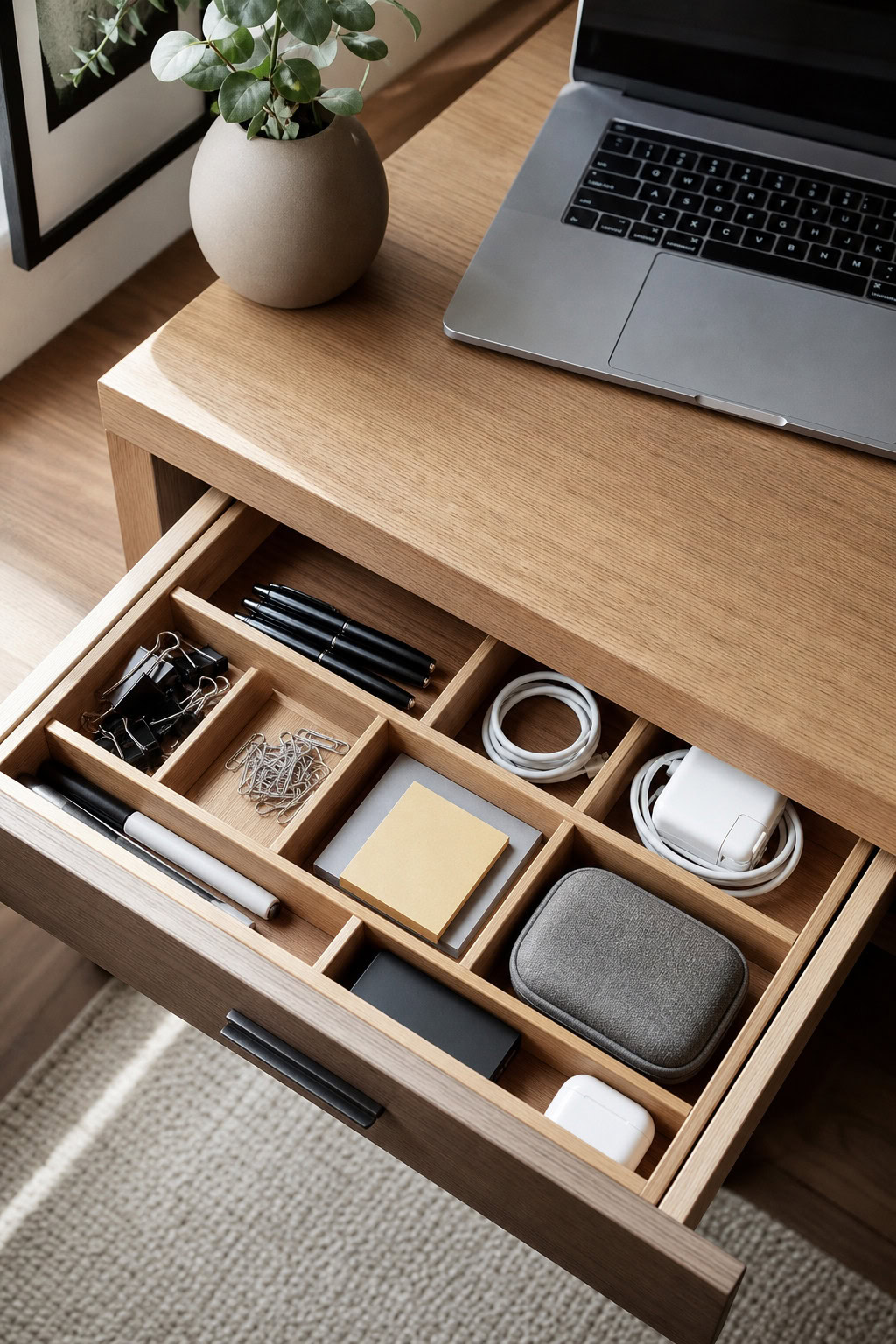
A charging station prevents devices from spreading across the desk in a tangle of cords. Use a lidded cable box, drawer insert, or compact charging dock for phone, earbuds, tablet, and watch. Place it near an outlet but away from the main writing zone. If the dock is visible, choose a finish that matches the desk, such as wood, white, black, or metal. Keep extra cables labeled and stored separately. This simple system makes the workspace look calmer and reduces the daily search for chargers, which is exactly the kind of friction good desk decor should remove. A dedicated charging spot also makes it easier to leave the desk clean overnight.
Keep One Inspiring Object in View
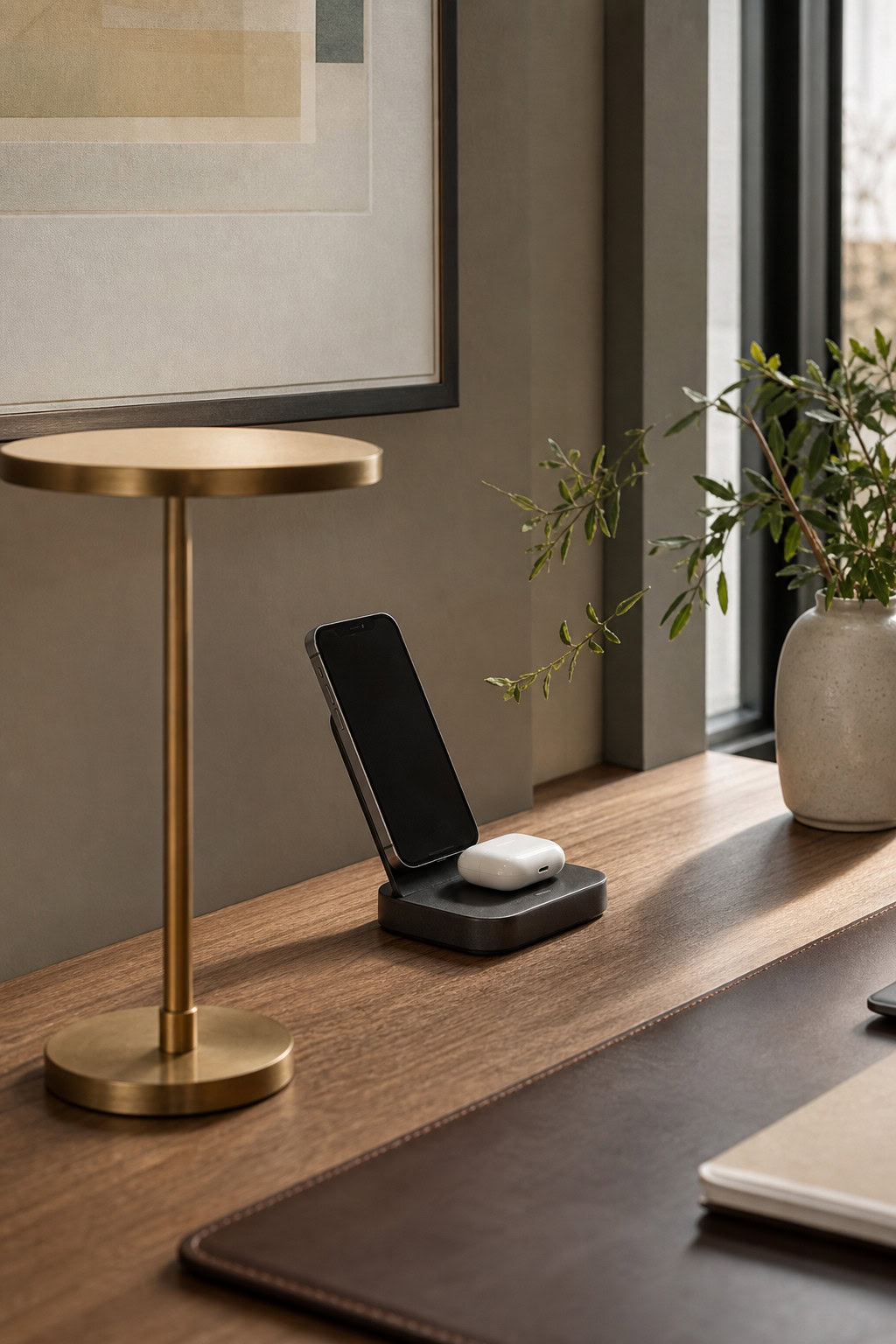
A desk should not be sterile. Keep one object in view that reminds you why the work matters: a ceramic sculpture, framed photo, travel object, small award, or handmade piece. Give it space so it reads as meaningful rather than part of a crowded arrangement. The object should be low enough not to block the screen and durable enough for daily life. This personal note can make a workspace feel grounded, especially in a home office where days can blur together. Productivity is easier to sustain when the desk feels both calm and connected to you. Change this object only when it stops feeling meaningful, not with every seasonal refresh.
Finish With an End-of-Day Reset Basket
A small reset basket beside or under the desk can keep the workspace productive over time. Use it for items that need to leave the desk at the end of the day: mail, returns, extra notebooks, fabric samples, or children's papers. Choose a structured woven, felt, or canvas basket that looks intentional in the room. Empty it regularly so it remains a reset tool rather than a permanent pile. This habit protects the desktop styling and makes the next morning easier. The most beautiful desk decor is the kind that supports a simple daily rhythm. Place the basket where you can reach it while seated, so cleanup is almost effortless.