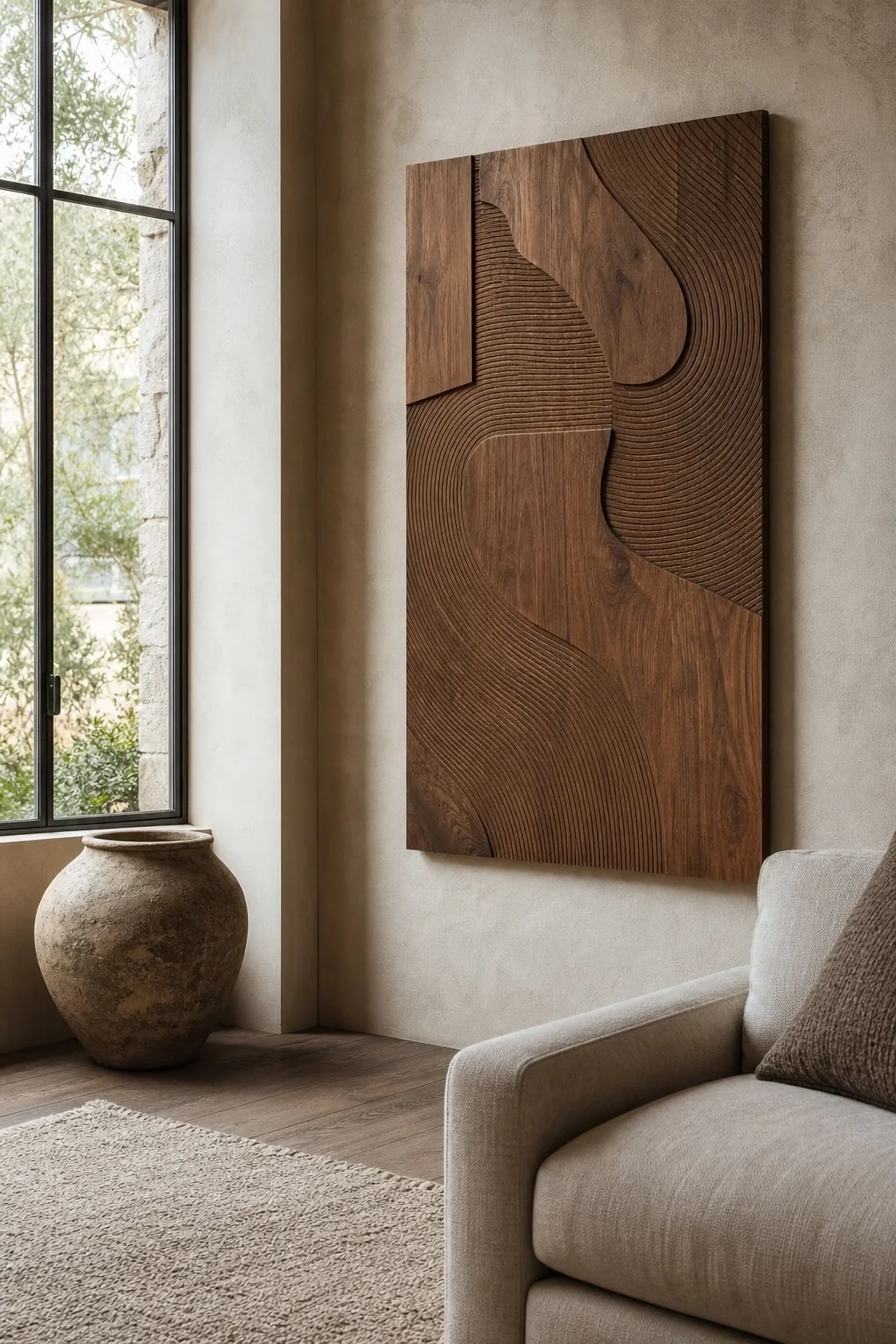
Hang a Large Carved Wood Panel
A large carved wood panel can give a plain wall the presence of architecture. Choose a piece with shallow relief, visible grain, and a finish that feels natural rather than glossy. Above a sofa, bed, or console, the panel should be wide enough to relate to the furniture below it without crowding the ceiling. Carved wood is especially effective in neutral rooms because shadow becomes part of the design. Keep surrounding accessories quiet: linen, stone, ceramic, and a simple lamp are enough. The result feels warm and collected, with more depth than a flat print and less noise than a busy gallery wall.
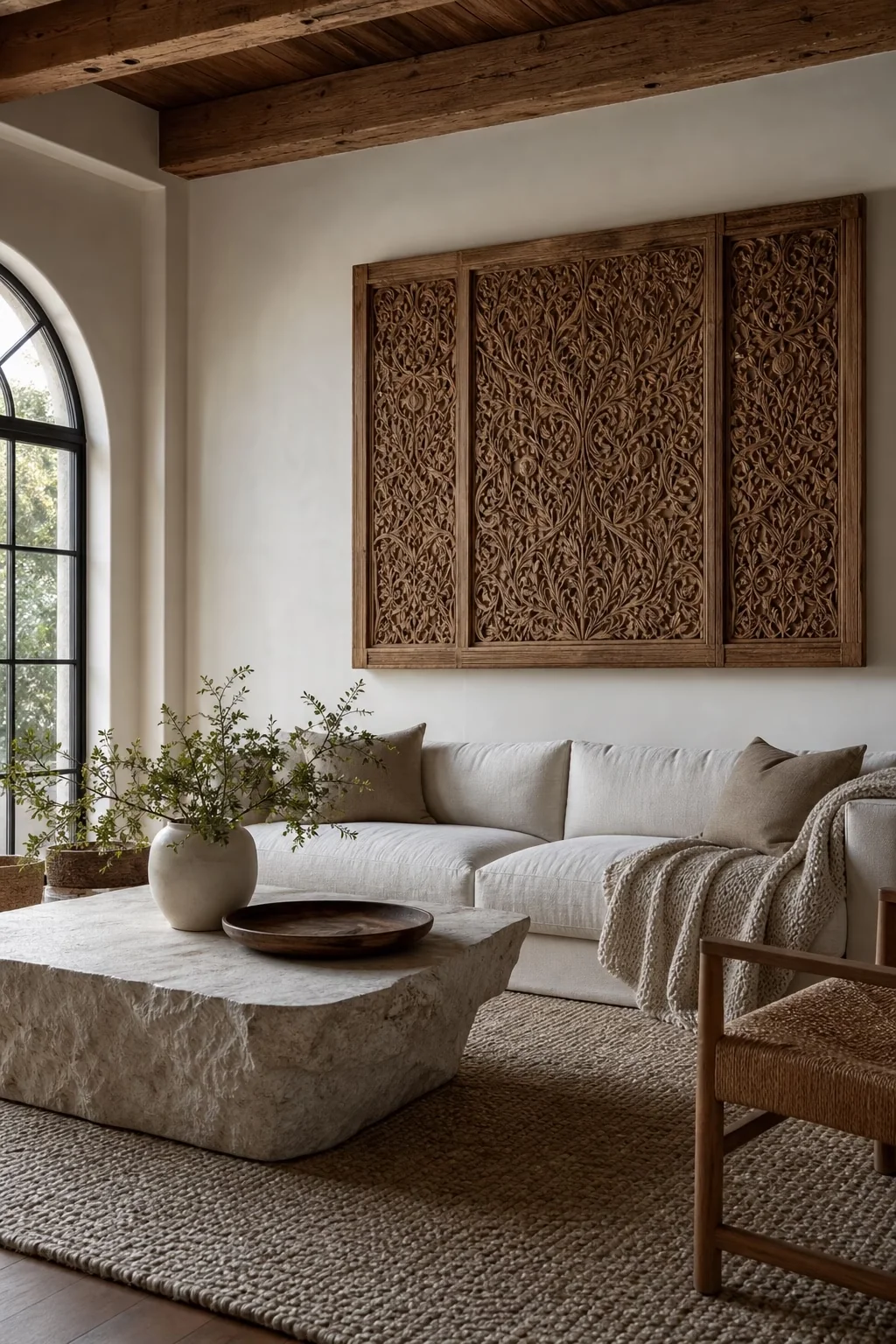
Try Slatted Wood Art for Modern Texture
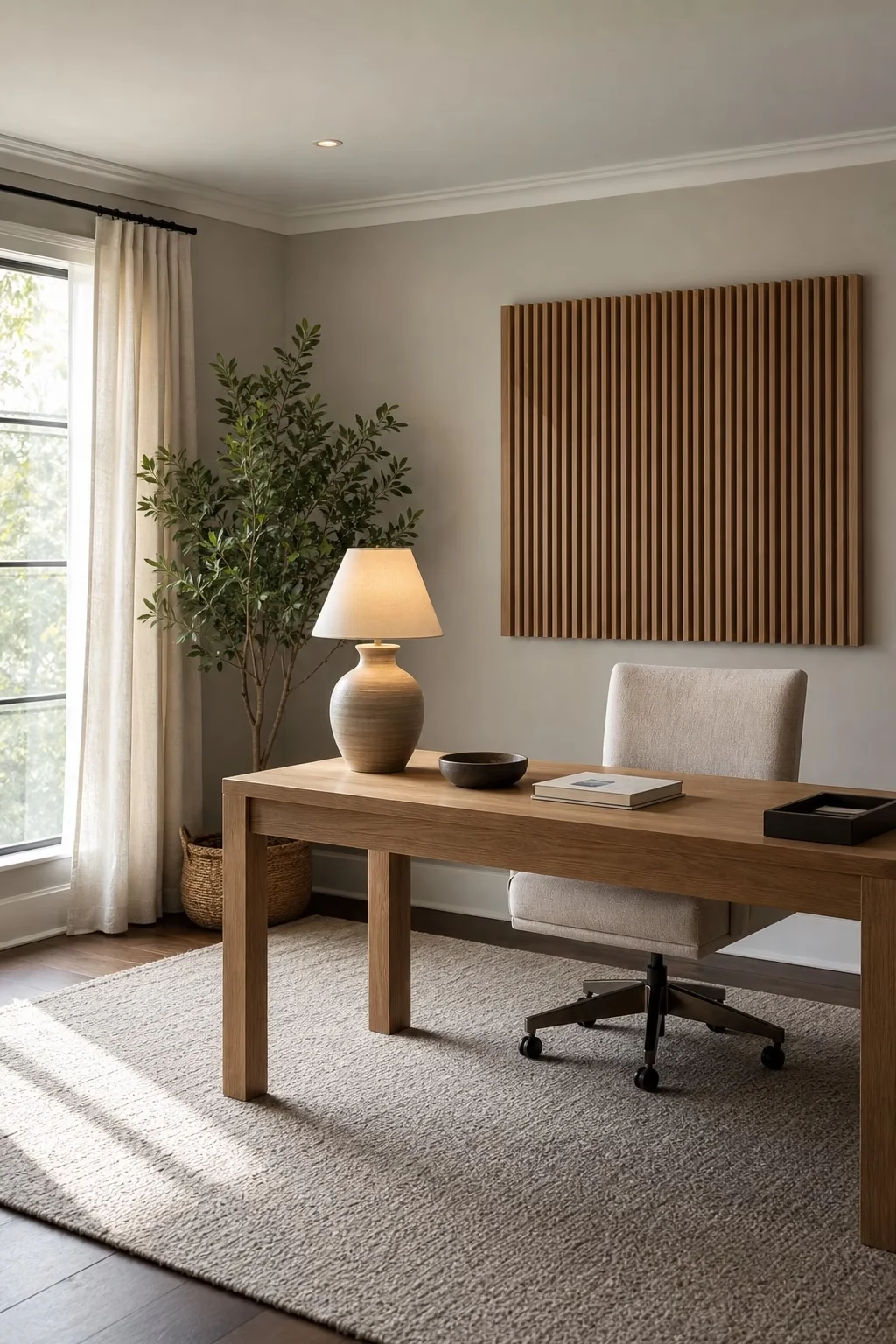
Slatted wood art is a clean way to bring texture into a modern room without adding pattern. Thin vertical or horizontal strips create rhythm, shadow, and warmth, especially when the finish is oak, walnut, ash, or teak. Hang a single framed slatted piece above a console, or use a larger panel to anchor a dining wall. The spacing should be precise so the art feels crafted, not improvised. Slats work best against smooth plaster or painted walls where their relief can be seen clearly. Pair them with soft upholstery and rounded ceramics to balance the linear geometry. It also photographs beautifully because every groove catches a little shade.
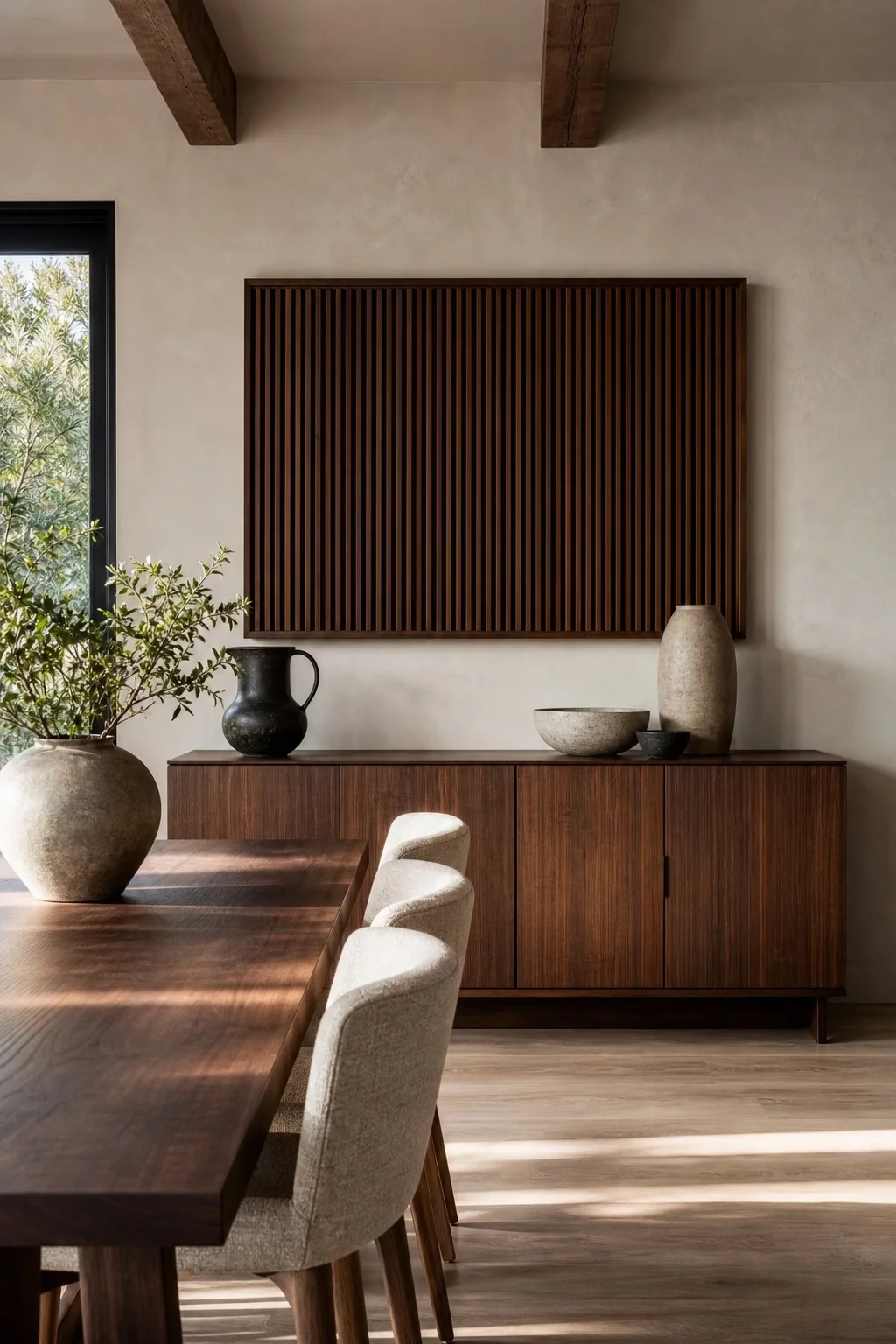
Use Reclaimed Boards With Restraint
Reclaimed wood can add history, but it looks most refined when used with restraint. Instead of covering an entire wall, consider a framed composition of weathered boards, a simple herringbone panel, or a narrow artwork above a bench. Vary the tones subtly rather than mixing too many species and stains. Sand rough edges and seal the wood so it feels clean enough for an interior. This approach suits entries, mudrooms, and relaxed living rooms where a little age feels welcome. The goal is texture and memory, not a rustic theme that overwhelms the rest of the room. One disciplined composition feels more elevated than a wall of scraps.
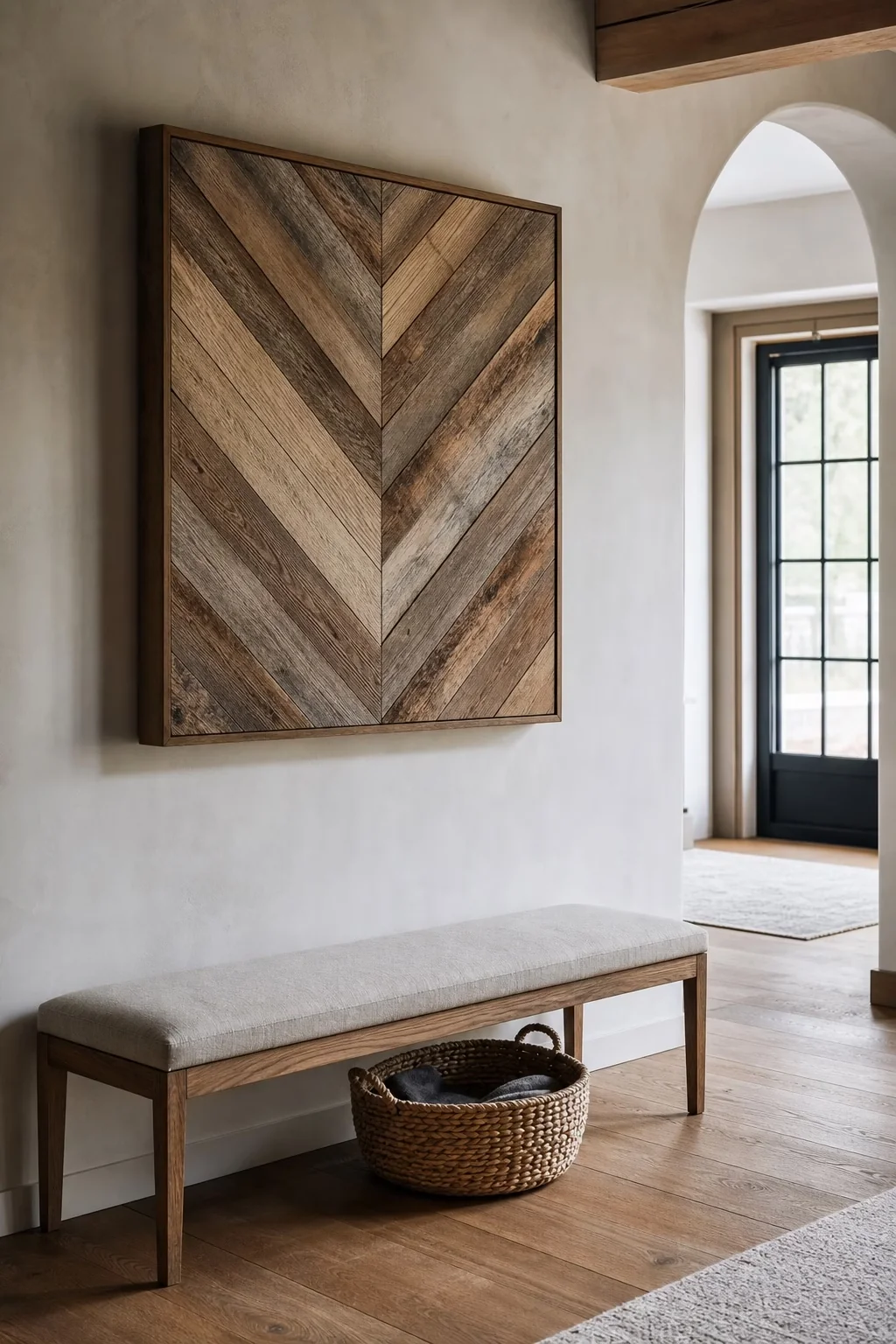
Choose a Geometric Wood Relief
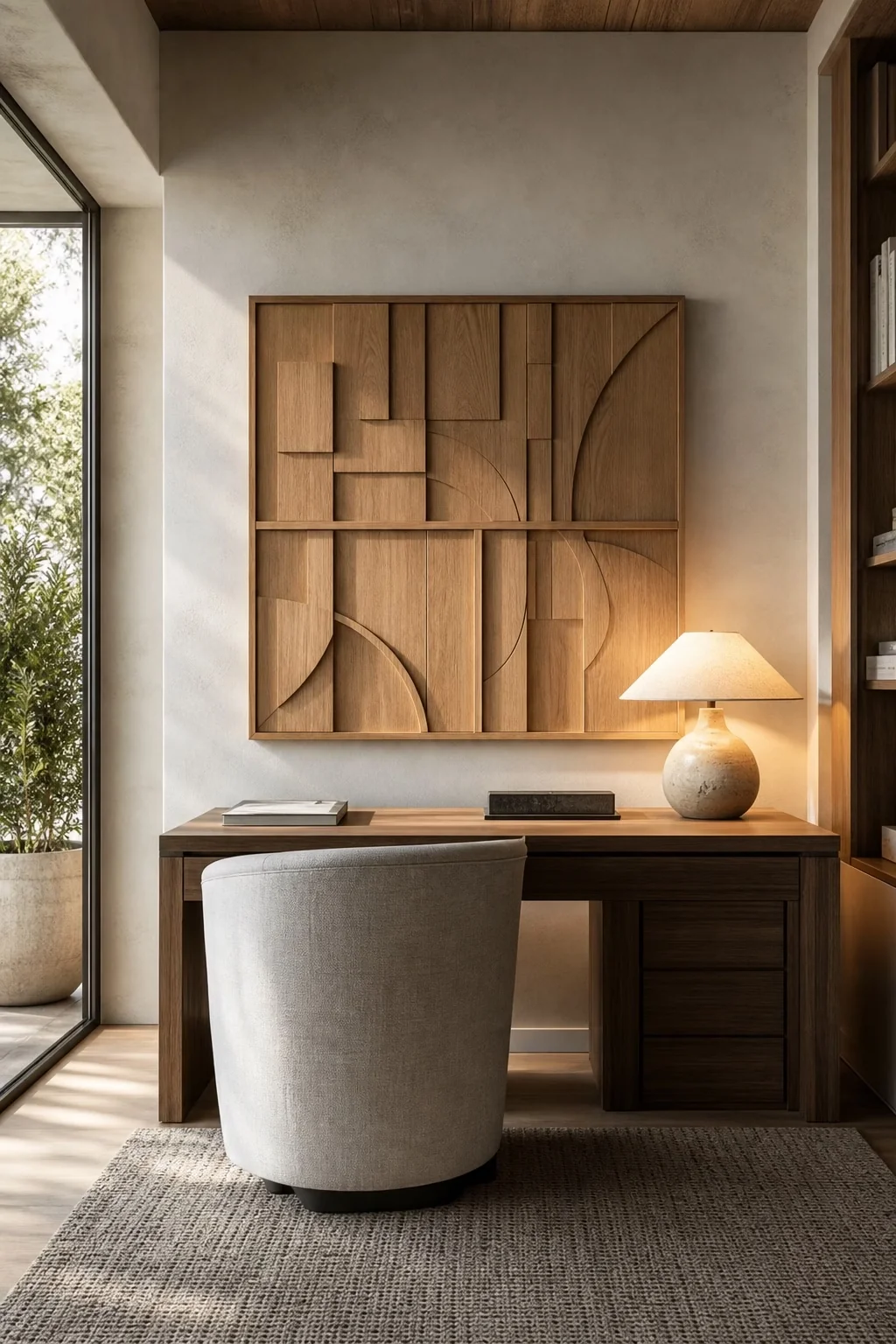
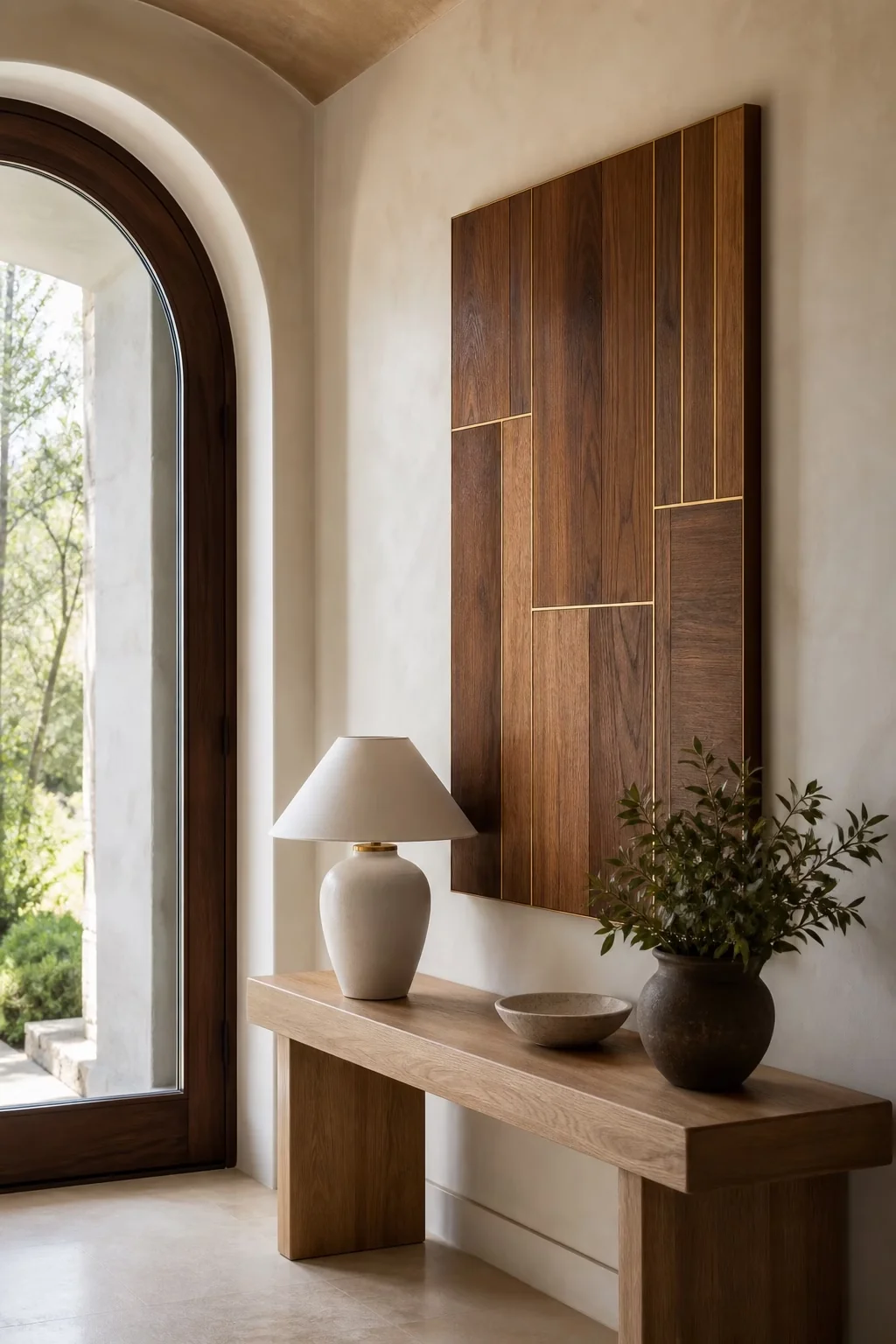
Geometric wood reliefs bring structure to a wall while still feeling natural. Look for designs with layered blocks, triangles, arcs, or stepped forms that create shadows as light moves across them. A monochrome wood finish usually looks more sophisticated than many contrasting stains. Place the piece where daylight or a nearby lamp can reveal the relief; otherwise the design may read flat. This style works well in home offices, dining rooms, and contemporary bedrooms because it adds focus without shouting. Keep furniture around it simple so the geometry feels intentional and not part of a crowded visual field. The best examples look precise while still showing honest grain.
Frame Thin Wood Veneer Like Fine Art
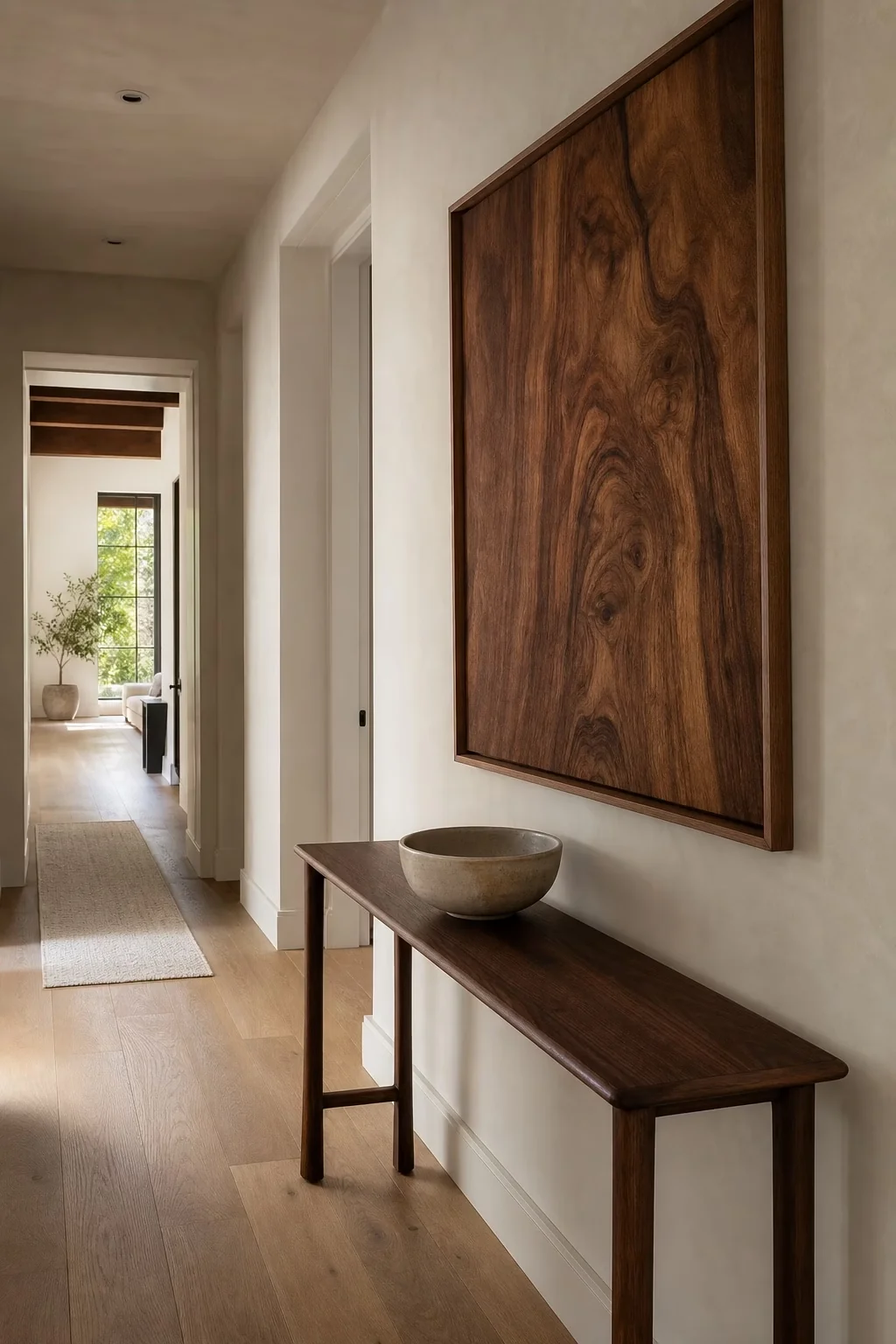
Beautiful veneer can look like an abstract landscape when it is framed well. Burl, walnut, olive ash, oak, and maple all offer grain patterns that deserve quiet attention. Mount a thin veneer panel behind glass or in a shadow-box frame, leaving enough mat or border to make it feel intentional. This idea is excellent for bedrooms and hallways because it gives warmth without heavy depth. Choose one striking grain rather than several competing samples. When treated like fine art, wood becomes less rustic and more refined, showing natural movement in a way that suits calm interiors. A slim shadow gap can make the panel feel even more special.
Install a Pair of Matching Wood Panels
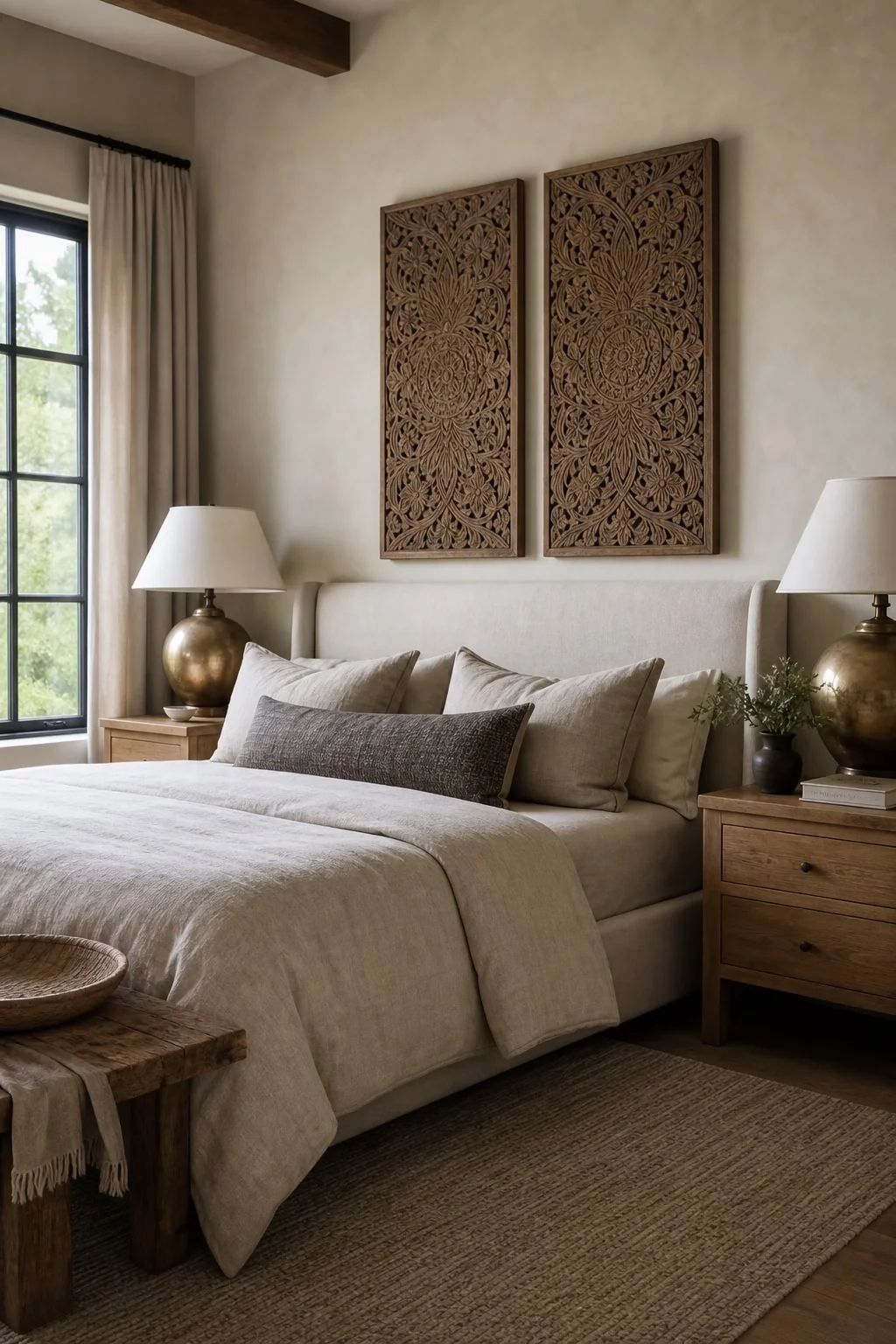
A pair of matching wood panels can bring symmetry to a bed wall, dining nook, or long entry. The panels might be carved, slatted, woven, or made from smooth planks, but they should share scale and finish. Hang them with enough space between each piece so the wall still breathes. This approach is useful when one large artwork would feel too heavy or when the furniture below has two lamps, chairs, or nightstands. Matching panels make the room feel ordered without becoming formal. The repetition also helps affordable pieces look more custom and integrated into the design. Use a level and templates so the spacing reads as custom.
Use Driftwood as a Sculptural Accent
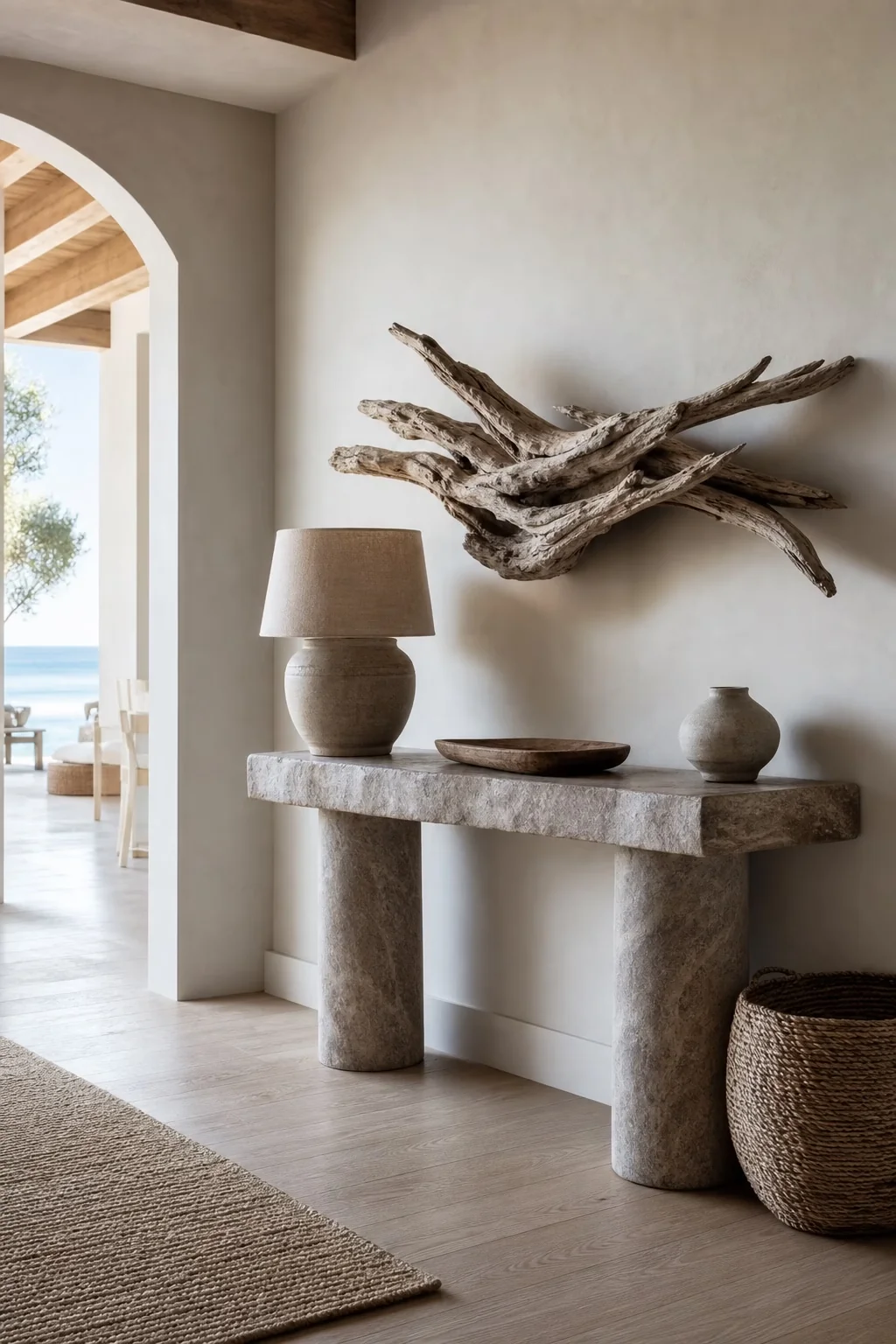
Driftwood wall art can be elegant when the piece is simple, well mounted, and given room to stand alone. Choose a sculptural branch or smooth collected form rather than many small fragments glued together. It should feel secure and clean, with a soft matte finish that keeps the natural texture visible. Driftwood works beautifully in coastal rooms, bathrooms, and entries, but it does not need shells or nautical accessories around it. Pair it with linen, stone, limewash, and pale wood for a quieter interpretation. The organic line adds movement that a rectangular print cannot provide. Give it negative space so the natural silhouette can be appreciated.
Layer Wood Art Above a Stone Console
Wooden wall art looks especially rich when placed above stone, plaster, or ceramic surfaces. A carved panel or smooth wood relief over a stone console creates a balanced contrast between warm grain and cool mineral texture. Keep the console styling low so it does not block the artwork: one lamp, a shallow bowl, or a pair of vessels is enough. This pairing is strong in entries and dining rooms because it feels substantial without requiring a large furniture footprint. The materials do the work, so the color palette can remain quiet and still feel layered. This contrast is strongest when both materials have matte finishes.
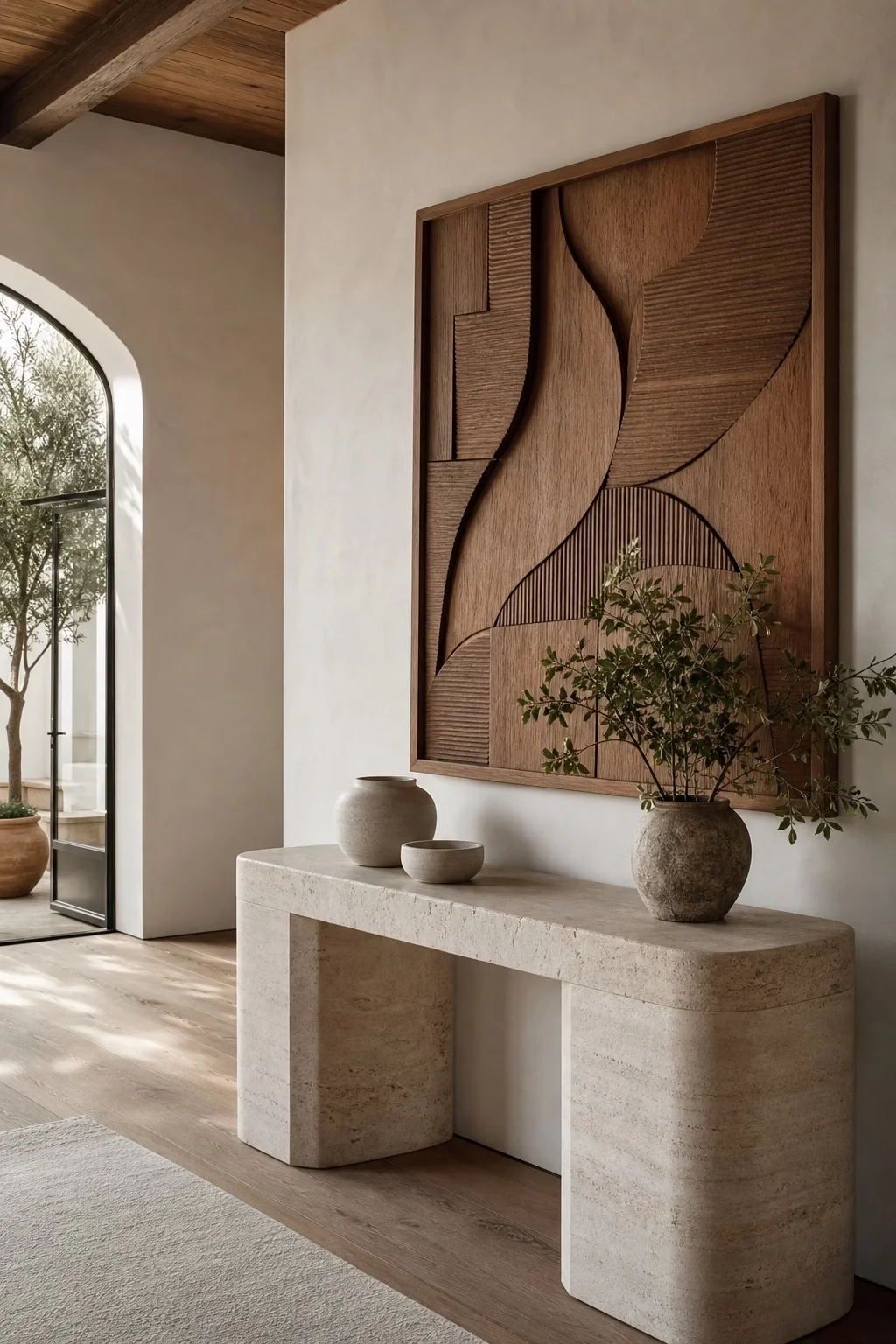
Try Round Wood Art to Break Up Lines
Round wooden wall art can soften rooms with square windows, rectangular sofas, and linear shelving. Look for carved discs, segmented wood circles, or framed round reliefs with subtle grain. The circular shape works well above a console, beside a fireplace, or in a stair landing where a rectangle would feel predictable. Scale is important: too small and the piece looks decorative; large enough and it becomes a proper focal point. Round wood art also pairs nicely with arched mirrors and curved chairs, creating a gentle rhythm. Keep nearby objects quieter so the shape has visual authority. It can also soften a room with many cabinet fronts.
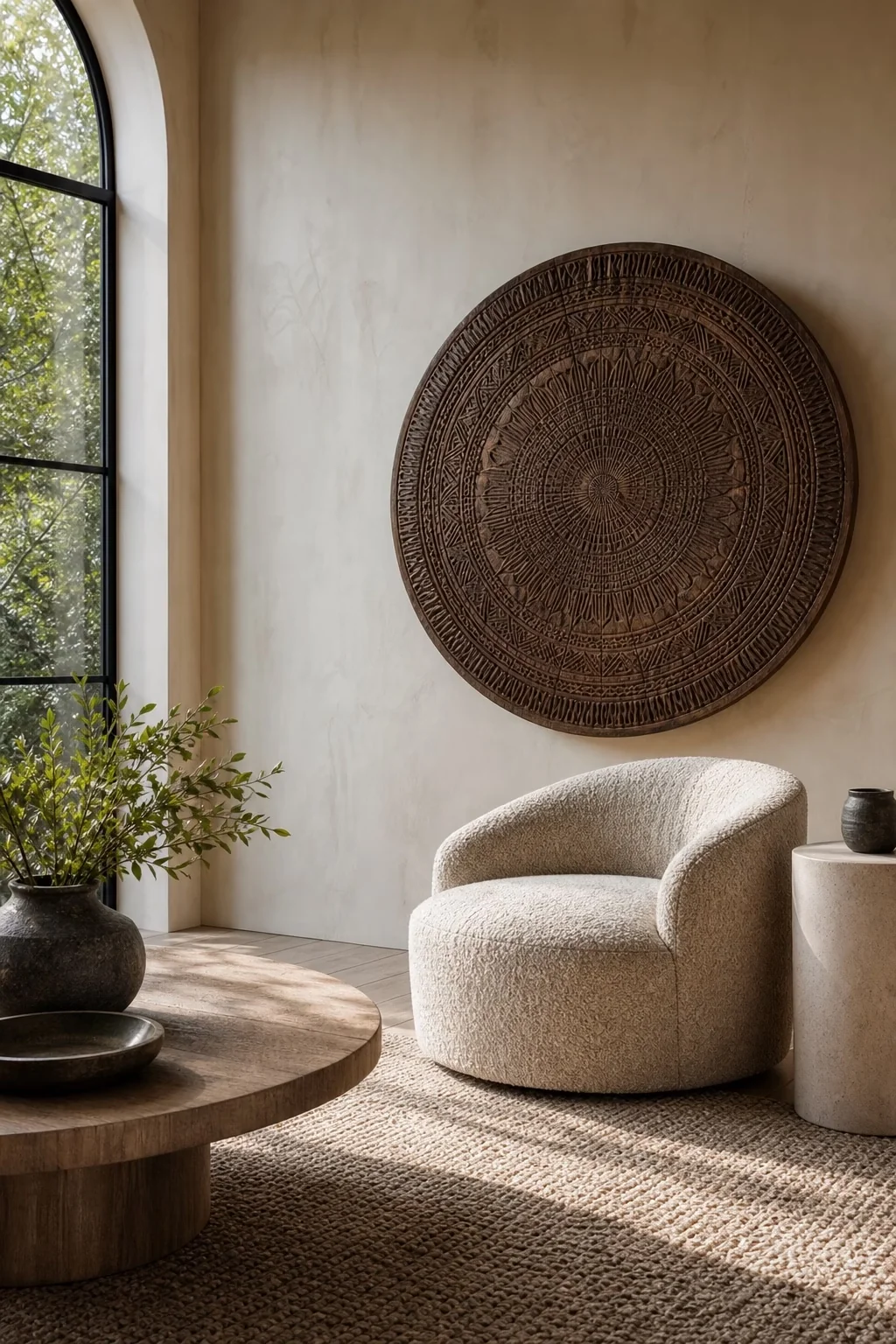
Use Wood Mosaic for Subtle Pattern
A wood mosaic can add pattern without relying on color. Small blocks, angled strips, or end-grain pieces create movement through grain direction and shadow. The best versions keep the palette tight, using related wood tones rather than strong contrast. Hang one mosaic panel where it can be viewed up close, such as an entry, hallway, or breakfast nook. Avoid placing it beside busy wallpaper or heavily grained furniture, because the eye needs a pause. This type of wall art rewards slow looking and brings handmade warmth into spaces that might otherwise feel too flat. The pattern should feel quiet enough to live with every day.
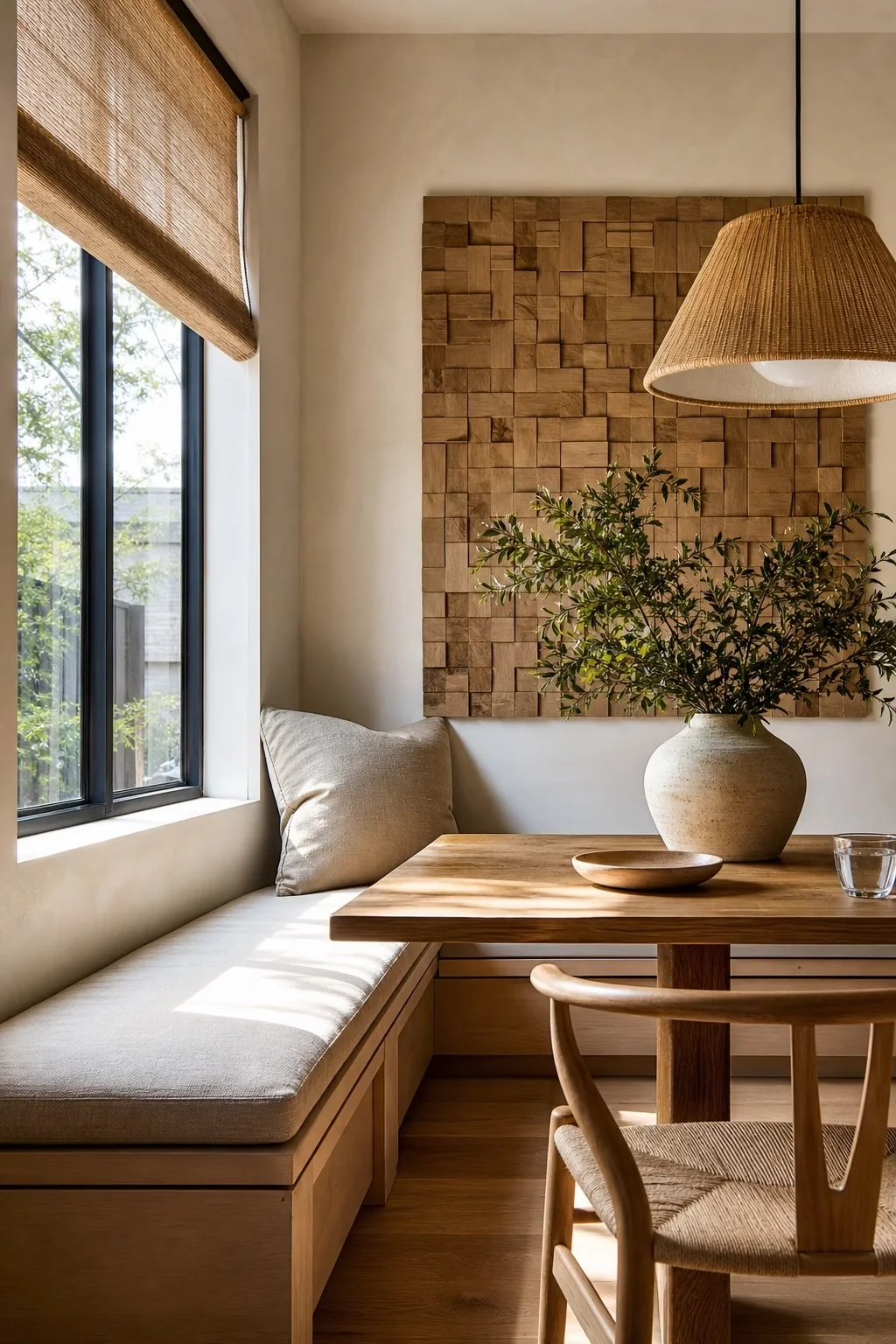
Place Wood Art Over the Headboard
Wooden wall art above a bed should be secure, calm, and proportioned carefully. Choose a piece that spans roughly two-thirds of the headboard width and avoid anything too heavy-looking directly over pillows. Carved panels, framed veneer, woven wood, or shallow reliefs all work when mounted firmly. The wood tone should relate to nightstands, flooring, or a bench rather than fighting them. In a bedroom, texture is more restful than strong contrast, so matte finishes and gentle grain are ideal. The piece gives the bed wall warmth and presence while keeping the room quieter than a busy print collection.
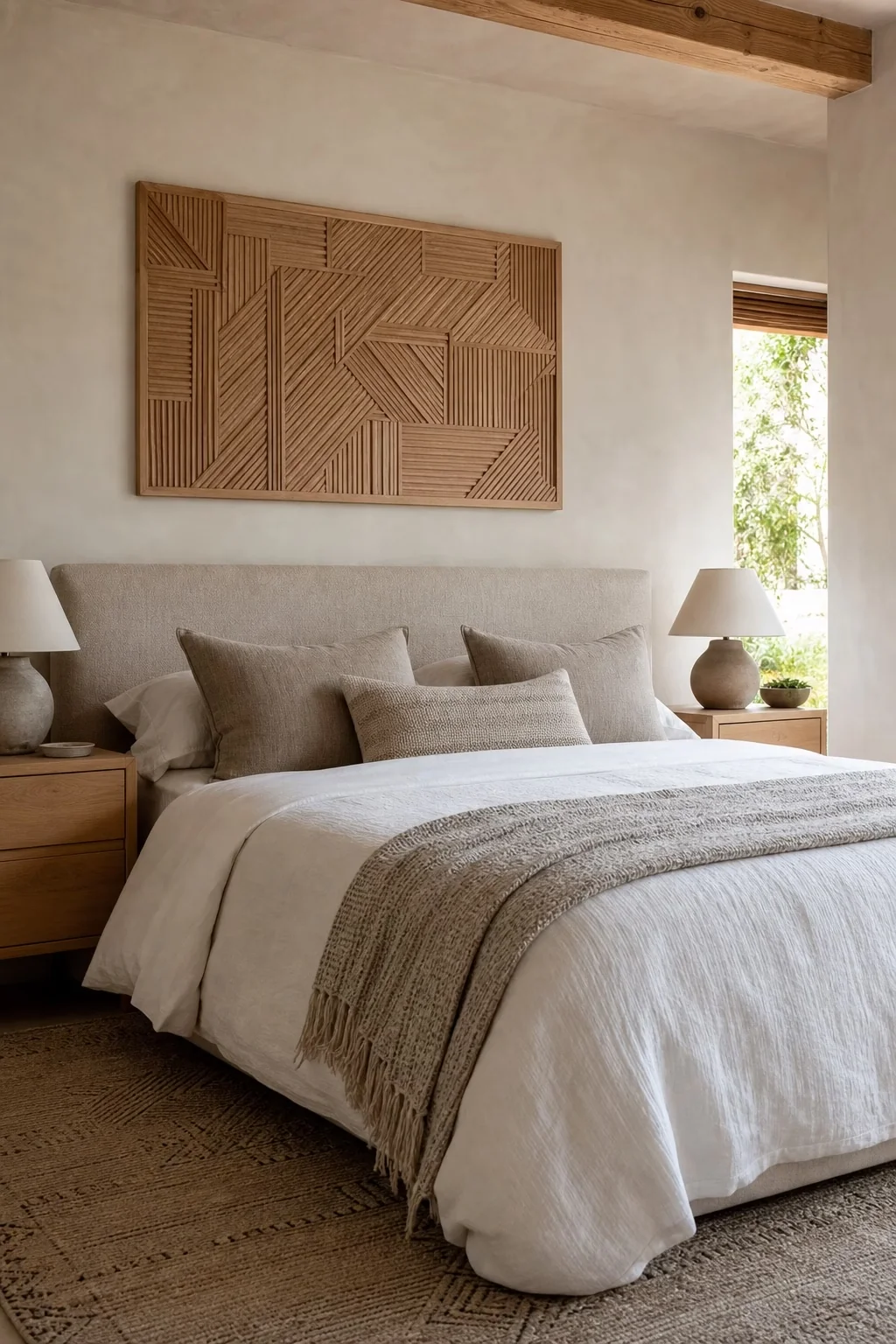
Choose Woven Wood for a Lighter Feel
Woven wood wall art has texture without the weight of a solid panel. Cane, rattan, bamboo, willow, and thin oak strips can create a relaxed surface that still feels tailored when framed properly. Use it in bedrooms, sunrooms, dining corners, or entries that need warmth but not visual heaviness. A simple rectangular frame keeps the weave from looking too casual. Pair woven wood with linen, plaster, and stone to avoid an overly tropical mood. This idea is especially useful in small rooms because the open texture catches light and shadow without making the wall feel dense. It brings texture without making a compact room feel heavy.
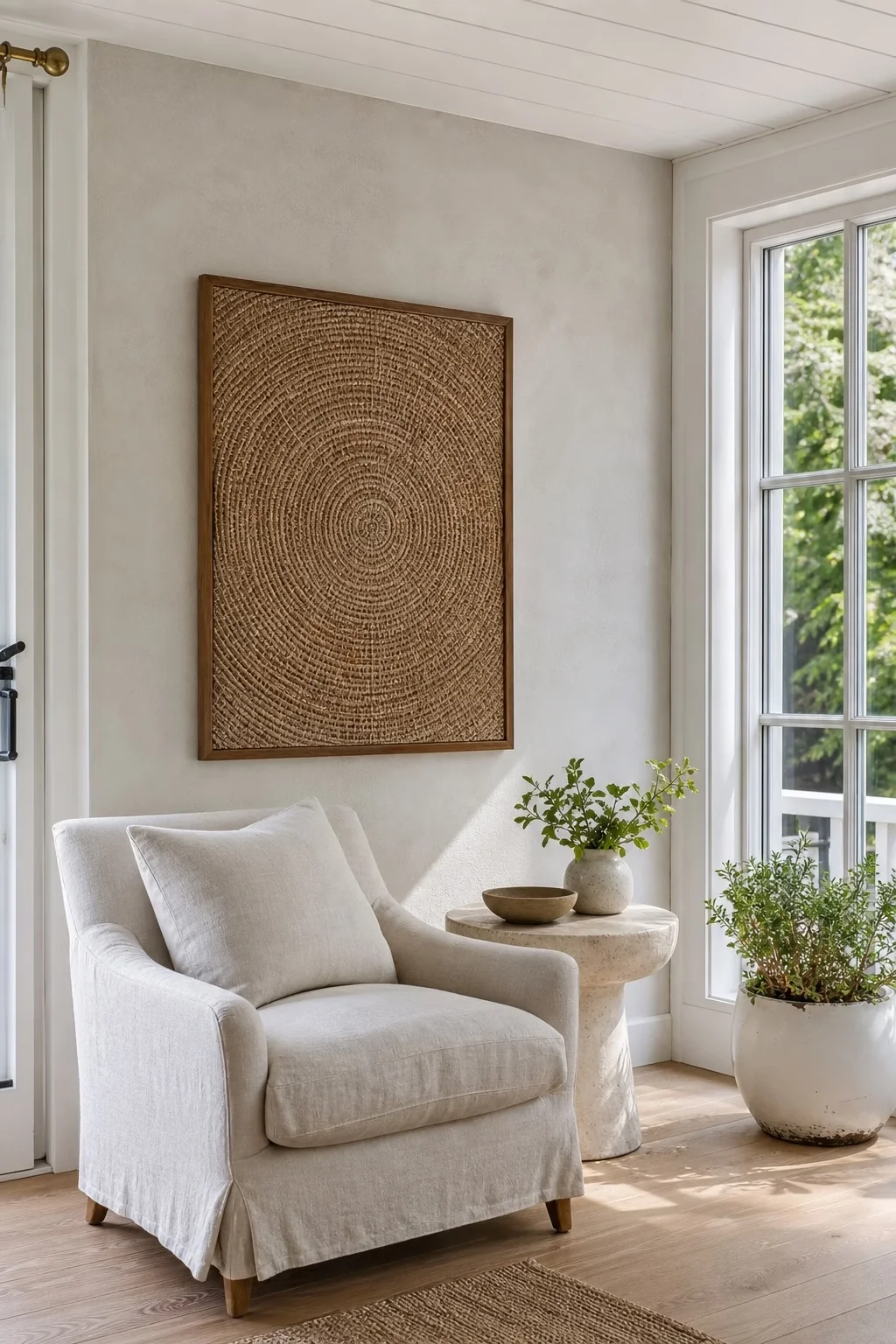
Let Wood Art Warm a White Kitchen
A white kitchen can benefit from wooden wall art when the piece is placed away from splashes and heat. Use a small carved panel, framed veneer, or slatted piece near a breakfast nook, pantry wall, or open shelf zone. The wood adds warmth without requiring a cabinet change, which makes it a practical upgrade for renters or budget-conscious remodels. Keep the finish sealed and easy to dust. Avoid fake food words or decorative signs; a material-focused piece will age better. With stone counters, simple hardware, and good daylight, wooden art can make a clean kitchen feel more human.
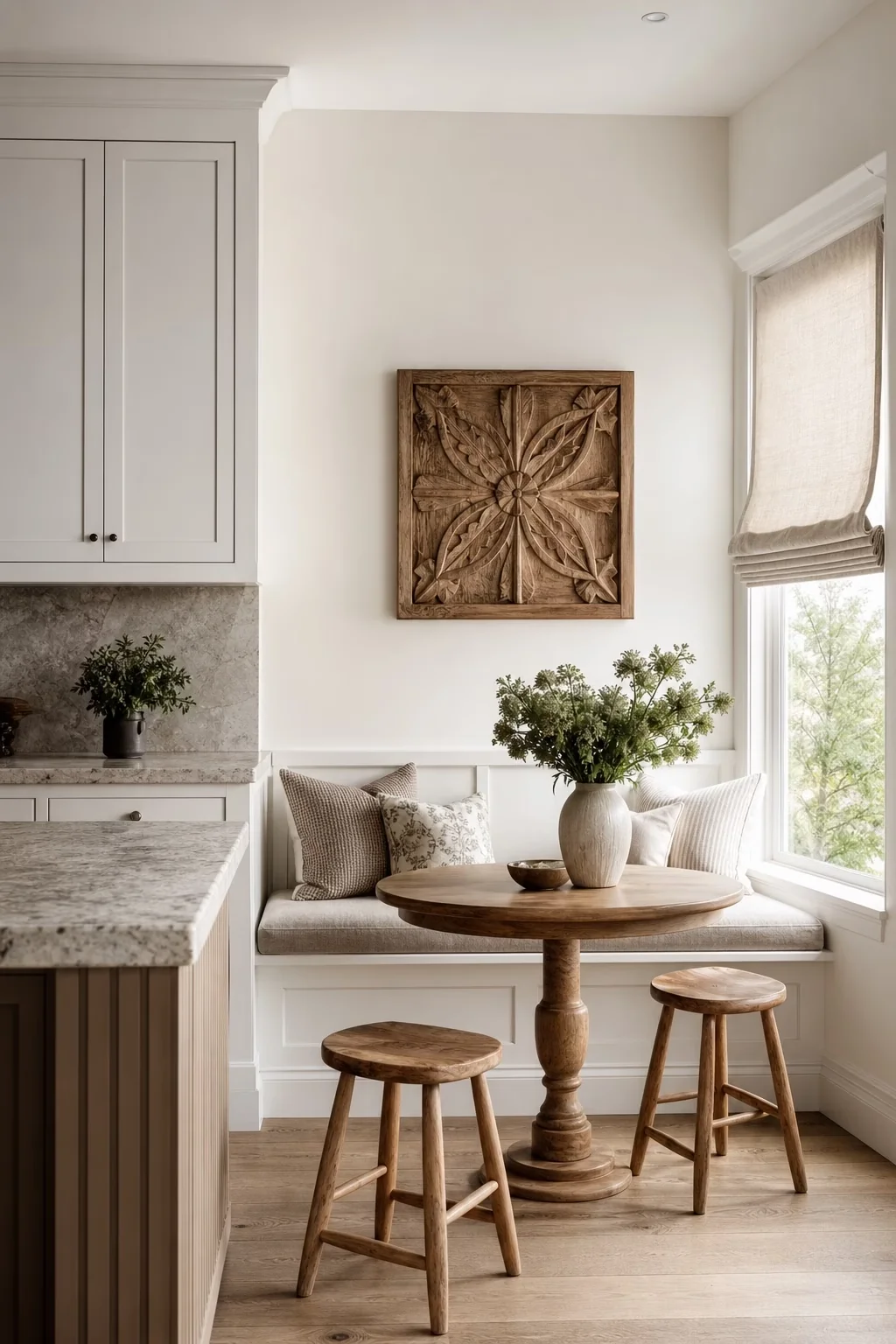
Use a Long Horizontal Panel in Dining Rooms
A long horizontal wood panel can settle a dining room wall and relate naturally to the table below it. Slatted, carved, or smooth plank compositions all work if the scale is generous and the mounting height is comfortable from seated eye level. Keep the panel narrower than the table but substantial enough to avoid floating awkwardly. This shape is useful in open-plan homes because it defines the dining zone without adding a large cabinet. Pair it with linen chairs, an iron pendant, and simple ceramics. The wall gains warmth and texture while the room stays practical for meals. The horizontal line also helps visually calm a tall blank wall.
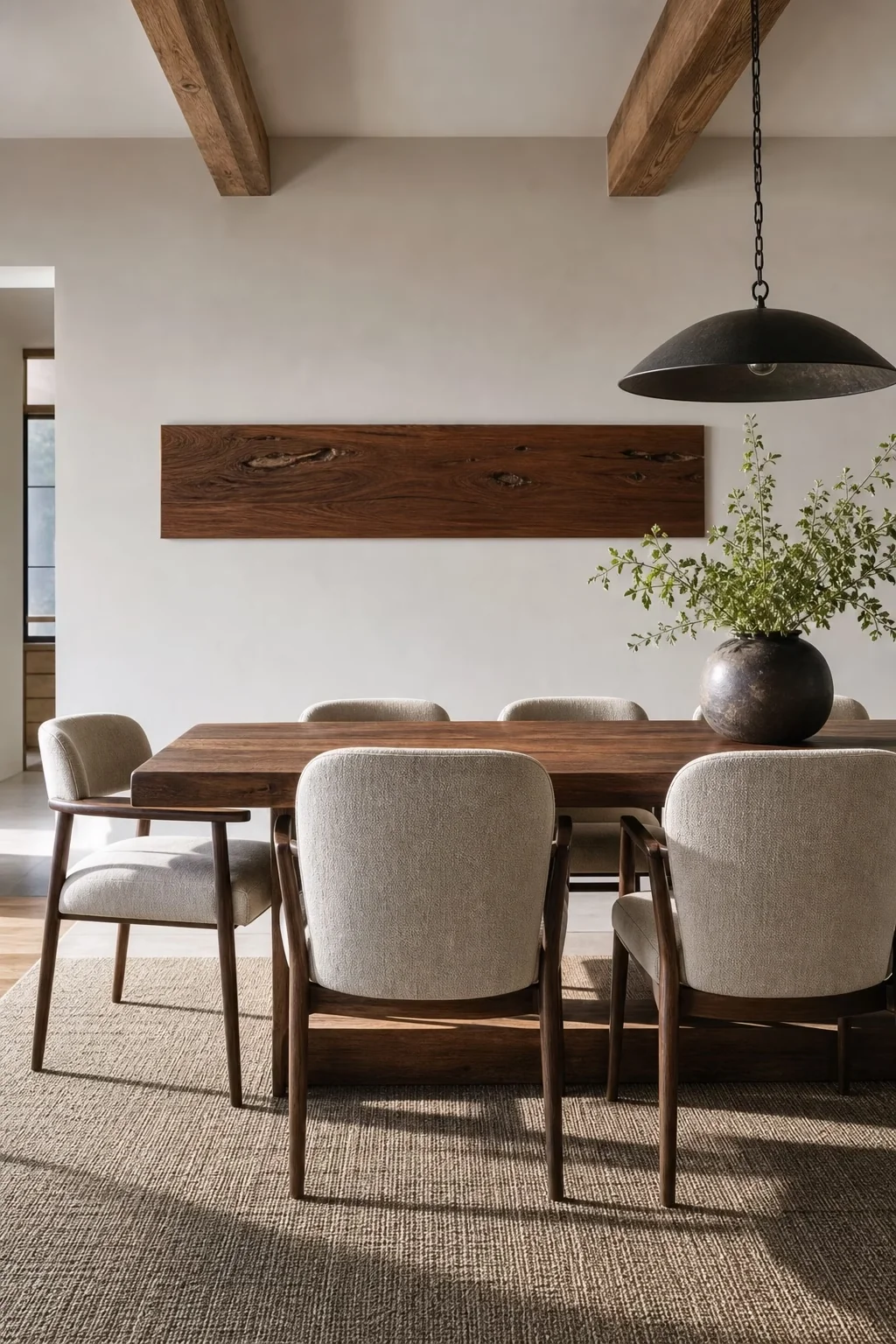
Try Blackened Wood for Quiet Drama
Blackened wood wall art adds depth without the flatness of a painted black canvas. Charred, ebonized, or dark-stained wood still shows grain and texture, which keeps the piece connected to nature. Use it in a room with enough light and softness around it: linen upholstery, pale plaster, wool rugs, and warm metal accents help balance the drama. A single dark relief above a console or fireplace can be stronger than several small pieces. This idea suits modern interiors that need contrast but not shine. The visible grain makes the darkness feel grounded and tactile. Keep the rest of the styling pale enough to show the relief.
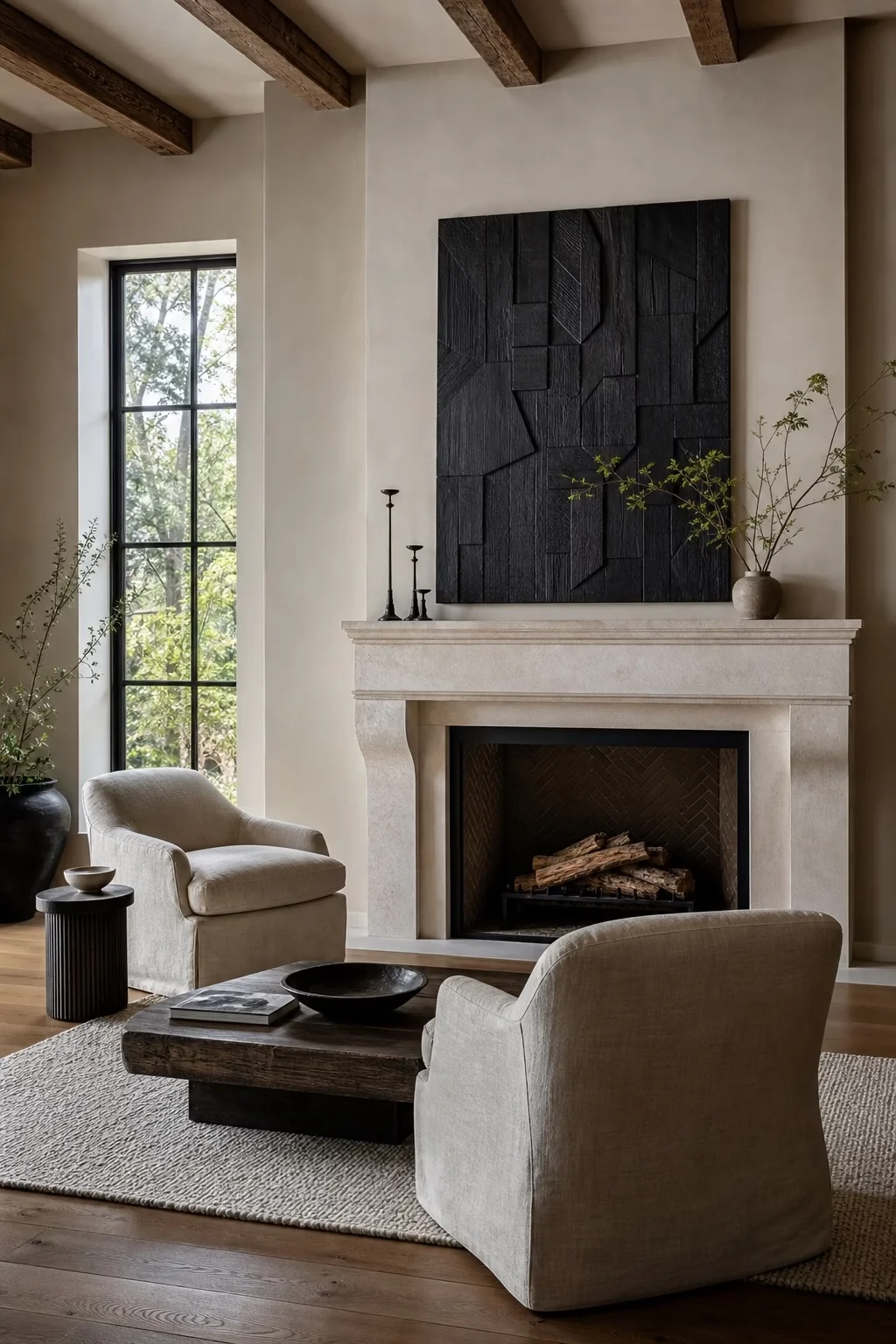
Mix Wood With Minimal Metal Details
Wooden wall art can include metal, but the combination looks best when the metal is minimal. A slim brass line, blackened steel pin, or bronze frame can sharpen the natural grain without overpowering it. This works well in contemporary entries, offices, and dining rooms where pure rustic wood might feel too soft. Keep the metal finish consistent with nearby lighting or hardware so the piece belongs to the room. Avoid overly shiny accents, which can make the art look less refined. The right balance gives you warmth and structure at once, making the wall feel designed but not busy. Think of the metal as punctuation rather than ornament.
Display a Set of Small Wood Reliefs
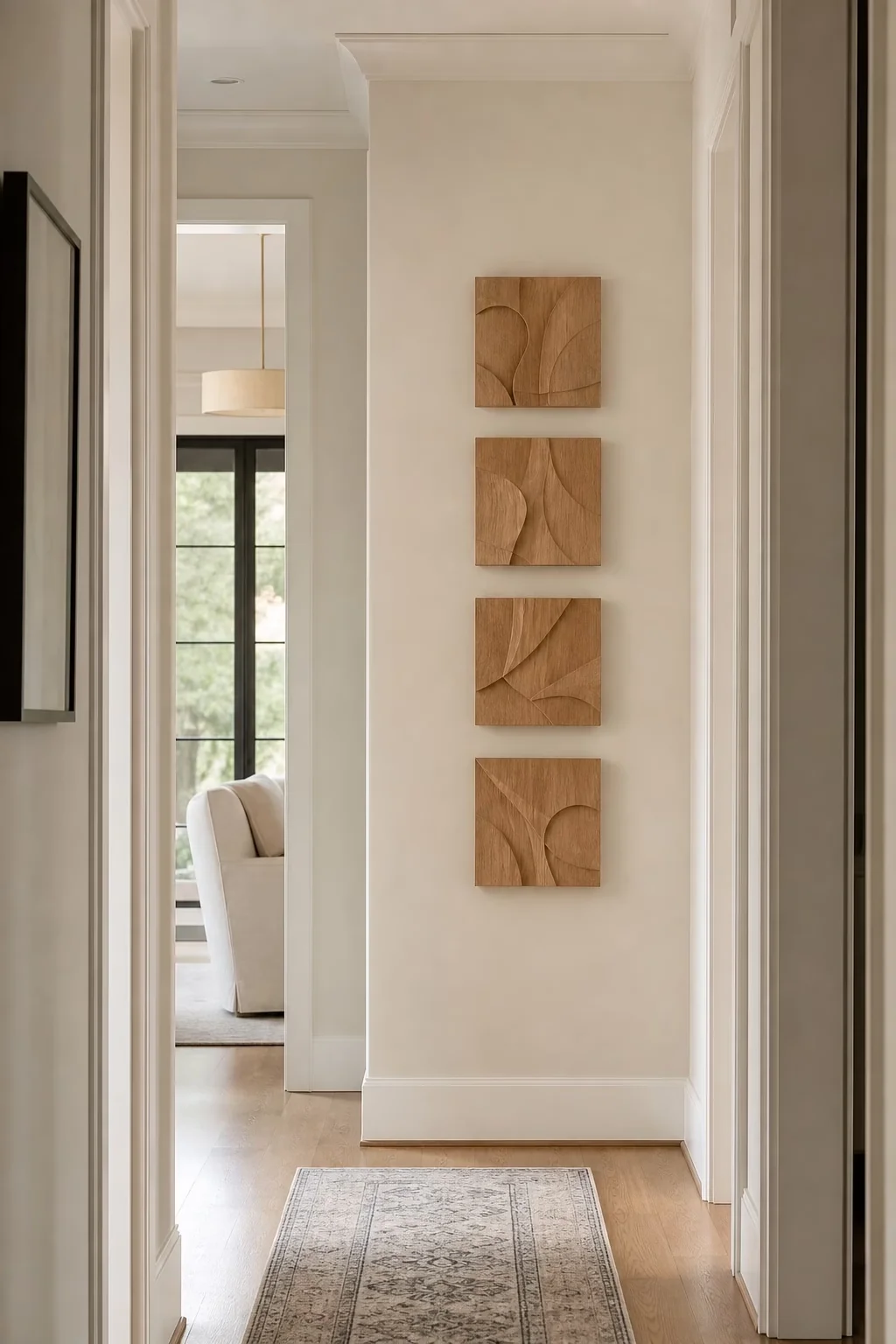
Small wood reliefs can work beautifully as a set when they are planned like a collection. Use three or four pieces with the same frame depth, related wood tone, and consistent spacing. Hang them in a row above a console, in a grid beside a reading chair, or vertically in a narrow hallway. The relief should be shallow enough that it does not catch shoulders in tight circulation areas. This approach gives a room texture and rhythm without relying on one oversized focal point. It is also easier to collect over time, as long as the scale and finish remain disciplined.
Choose Live-Edge Wood Carefully
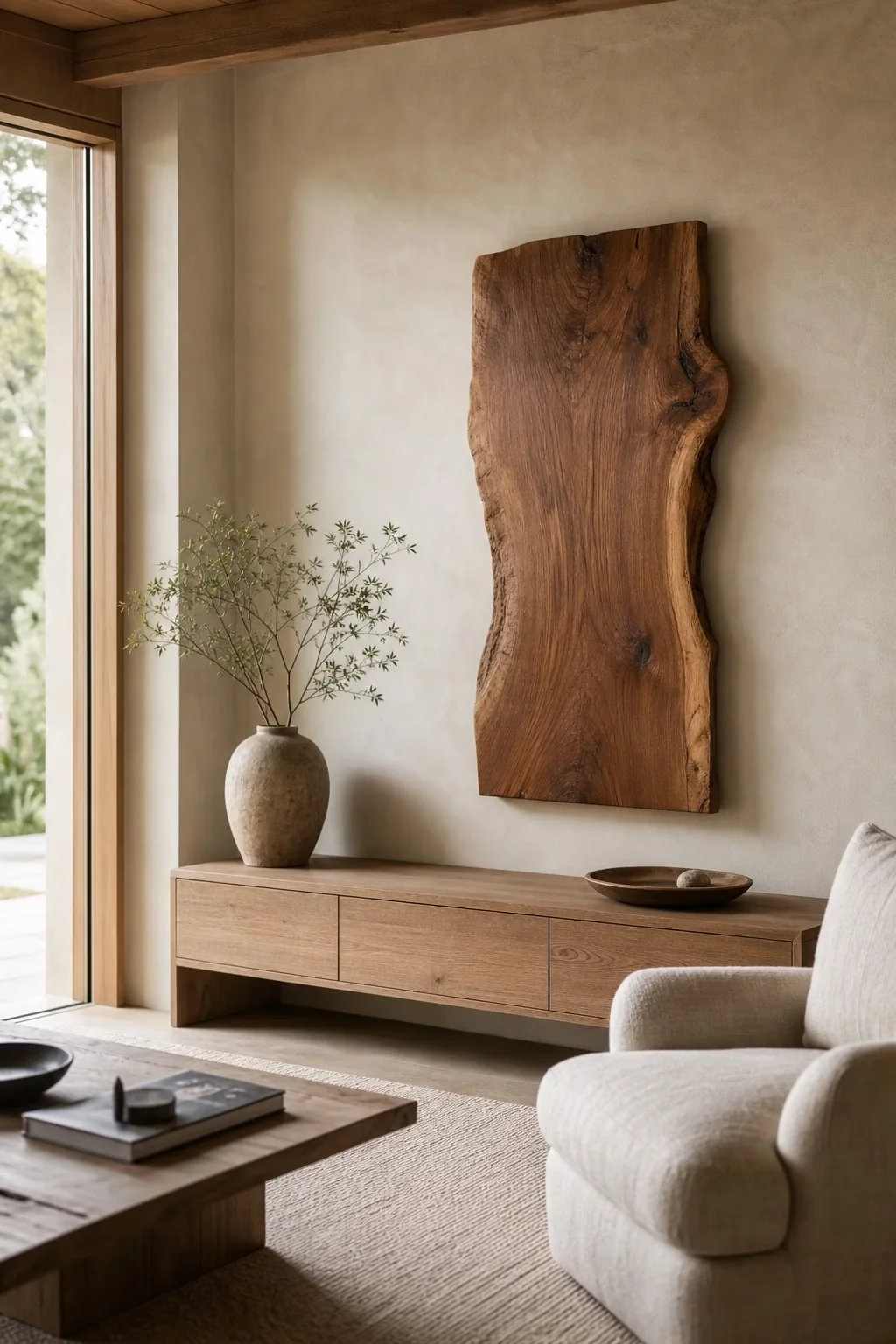
Live-edge wood art can feel organic and beautiful, but it needs careful editing. Choose a piece with a graceful outline, stable finish, and enough flat surface to read as intentional art. Avoid slabs that are too thick, too shiny, or too close to furniture scale, because they can look like a misplaced tabletop. A live-edge panel works best on a simple wall with restrained furniture below it. Let the natural edge be the main gesture and avoid surrounding it with many other rustic pieces. Used sparingly, it brings the room a direct connection to the tree without overwhelming the design.
Use Wood Art to Add Acoustic Softness
Wooden wall art can help a room feel less echoey when the piece has depth, slats, or relief. It will not replace proper acoustic treatment, but it can break up hard drywall and make a home office, dining room, or stair hall feel warmer. Pair it with rugs, curtains, and upholstered seating for a more complete effect. Slatted panels and carved reliefs are especially useful because their surfaces scatter sound and shadow. Choose a design that looks like art rather than a technical panel. The room will feel more comfortable, and the wall will gain natural texture at the same time.
Finish With a Natural Matte Seal
The finish can make or break wooden wall art. A natural matte seal usually looks more expensive than a glossy coat because it lets the grain, carving, and shadow remain visible. It also makes the piece easier to pair with plaster walls, linen upholstery, stone, and ceramic accents. If you are buying vintage or handmade work, check that the surface feels clean, stable, and appropriate for interior walls. Avoid finishes that look orange, plastic-like, or overly distressed. A quiet seal allows the design to age gracefully. The art should feel like a natural material, not a decorative imitation of one.